

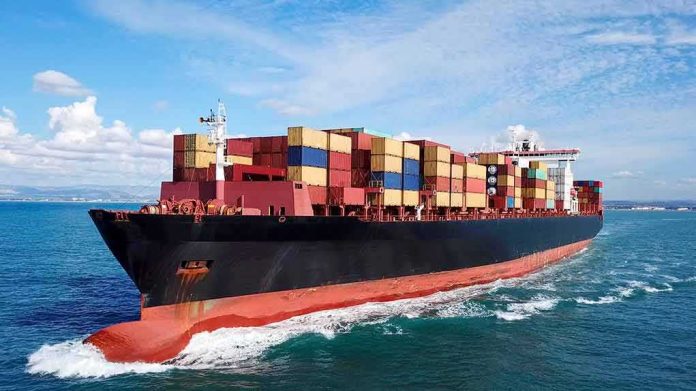
In Hawaii, the Army sent a 257-foot commercial ship on an 18-hour voyage that steered itself across open ocean after a nine-day retrofit, signaling faster, cheaper logistics on the horizon.
Story Snapshot
- The Army tested a 257-foot supply ship with autonomous navigation between Oahu and the Island of Hawaii.
- Contractors added the autonomy system in nine days before the open-sea transit.
- Soldiers loaded vehicles and observed the demo as part of a wider Pacific campaign.
- Army leaders tie autonomy to fixing a shrinking watercraft fleet in the Pacific.
What The Army Did In Hawaii
Army officials in Hawaii tested a commercial vessel, HOS Resolution, that was converted to run with autonomous navigation. The ship left Pearl Harbor and made an 18-hour run toward the Island of Hawaii in fully autonomous mode while in open sea segments, according to on-scene reporting. Defense outlets said the conversion took nine days and used a commercial autonomy package before the trial. The test fits a push to move supplies across long Pacific distances with fewer crewed ships.
Army images and captions show soldiers and contractors working together during the demo. A Defense Visual Information Distribution Service caption states Army combat engineers and Hornbeck Offshore Services contractors loaded vehicles onto HOS Resolution off the Island of Hawaii on August 18, 2026. An Army video description adds that mariners got to see and test a semi-autonomous vessel and learn how such tools might work across the Indo-Pacific area of responsibility. These records confirm Army participation and hands-on exposure for crews.
Why Autonomy Matters For Pacific Logistics
Army leaders have highlighted autonomous ship-to-shore resupply as a real capability, not just a lab idea. During Project Convergence Capstone 5 in 2025, the service demonstrated autonomous resupply from sea to shore as part of joint-force experiments across the Indo-Pacific region. Commanders face a hard math problem: fewer watercraft, longer routes, and more missions. Uncrewed or lightly crewed vessels can move fuel, food, and parts without tying up scarce crews or risking them near hostile shores.
Public reporting explains the pressure behind these tests. The Army has a watercraft shortfall in the Pacific and has relied more on contract shipping while it seeks new options. Autonomous vessels are part of a plan to fill gaps and stretch limited assets, according to Army and press accounts in recent months. Early trials like the HOS Resolution run send a signal to troops and rivals that logistics can adapt fast. They also help leaders judge where to spend scarce dollars for the most impact.
What We Know And Do Not Know From This Demo
Available reports lay out the key facts of the Hawaii event. The ship measured 257 feet, received an autonomy package reportedly installed in nine days, and executed an 18-hour open-sea autonomous transit between Oahu and the Island of Hawaii. Official photos and video confirm Army mariners observed and loaded vehicles during the demonstration. Army articles from 2025 establish that autonomous ship-to-shore resupply has already been shown in prior Pacific experiments.
Some technical specifics are not public in these records. The sources do not detail the exact sensors, control software, fail-safes, or the human oversight used during departure and approach. The Stars and Stripes account specifies autonomous mode “in open sea,” which leaves the harbor segments unclear. The Army has not released performance metrics here, such as navigation accuracy or communications issues. Even so, the demonstration aligns with stated goals to field practical autonomy for Indo-Pacific sustainment.
What This Means For Readers
For many Americans, this story hits two nerves at once. People want the military to be strong and efficient, but they also worry about waste and slow delivery. Converting a large commercial ship in nine days and running it autonomously points to a faster, cheaper path that uses tools already on the market. If scaled, this could move supplies with fewer sailors at risk, cut costs, and help the force keep pace across vast waters where every mile and hour matters.
Sources:
military.com, stripes.com, defence-blog.com, army.mil, youtube.com, defensenews.com