

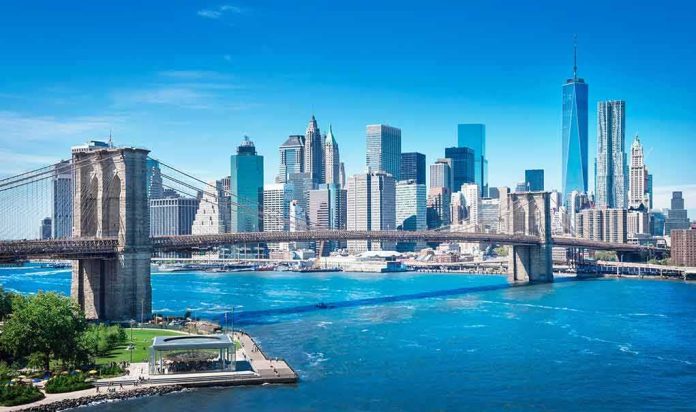
Children as young as 11 are working as illegal street vendors on the Brooklyn Bridge, selling souvenirs and snacks despite a citywide ban that has been on the books for more than two years.
Story Snapshot
- Unlicensed vendors, including some children, are back in large numbers on the Brooklyn Bridge walkway.
- A New York City rule bans all vending on bridge walkways, effective since January 2024.
- Licensed sellers, including disabled veterans, say illegal vendors are taking their business.
- Fines for illegal vending are often $50 or less, doing little to stop the practice.
- Vendor advocates say strict bans ignore the fact that many sellers need the income to survive.
Bridge Ban Ignored By Growing Crowd Of Sellers
New York City’s Department of Transportation adopted a rule in January 2024 banning any vending on elevated pedestrian walkways and bike lanes on city bridges, including the Brooklyn Bridge. The rule states these areas “may not be used for the vending of merchandise or service.” More than two years later, dozens of unlicensed sellers are back, hawking souvenirs and fruit cups to tourists crossing the span.
Among the sellers are children reportedly as young as 11 years old, working the crowded walkway alongside adults. Licensed vendors near the bridge say the young peddlers and unlicensed adults have become a constant presence, describing them as “everywhere” despite the ban meant to keep the bridge clear.
Licensed Sellers Say They’re Losing Out
Sammy, a military veteran and licensed ice cream vendor working near the bridge, said police rarely crack down hard on the illegal sellers. When officers do write tickets, the fine is typically $50 or less, a fraction of what the peddlers earn in a single day. He said the unlicensed crowd is “causing chaos” and costing the city money in enforcement it can’t seem to make stick.
Some licensed vendors are disabled veterans who hold permits under a state law from 1898 giving veterans priority access to street vending as a livelihood. Fifteen of them sued the city, arguing the bridge ban unfairly blocks a right they say the law protects, even as unlicensed sellers openly ignore the same ban.
Why The Ban Hasn’t Stuck
The Department of Transportation and police were supposed to jointly enforce the walkway ban when it took effect, clearing stalls and confiscating goods left overnight. Early enforcement did empty the bridge for a time, with officers stationed in pairs along the mile-long crossing. But research on New York City’s vending rules shows enforcement often fades once initial attention passes, leaving informal sellers to slowly return.
Academic studies of the city’s vending system describe it as confusing and inconsistently enforced, with land value and complaint volume, not clear safety standards, often driving how hard police crack down in any one spot. That pattern appears to be repeating on the Brooklyn Bridge, where a rule meant to end vending altogether has instead settled into loose, occasional ticketing that sellers simply treat as a cost of doing business.
Vendors Say They Need The Work
Street Vendor Project advocate Mohamed Attia said an outright ban was never going to solve the underlying problem. He said many sellers “need to make a living” and don’t want government handouts, arguing the city should find a middle ground rather than a total block on bridge sales. A City Council proposal floated before the ban even took effect tried to carve out limited vending zones on bridges, but it did not stop the full walkway ban from moving forward.
An 11-year-old shouldn’t be spending the day selling goods on the Brooklyn Bridge. This isn’t just an enforcement issue anymore, it’s a child welfare issue.
— Allen H. Blackwell (@MrAlenBlackwell) August 25, 2026
The clash captures a wider frustration many New Yorkers feel about city government generally. Rules get written, announced with fanfare, and then enforcement quietly fades, leaving both sides, licensed vendors following the law and residents wanting a clear walkway, feeling ignored. Whether children as young as 11 should be selling goods on a crowded bridge walkway is a separate question the ban was never designed to fully answer.
Sources:
nypost.com, newyork.com, cbsnews.com, amny.com, chelseanewsny.com, brooklynpaper.com, nyc.streetsblog.org