U.S. forces launched Operation Epic Fury and struck core Iranian Guard sites, and multiple Iranian leaders were later reported dead by state outlets.
Story Snapshot
- U.S. military began Operation Epic Fury on February 28, 2026, under presidential orders.
- Reports described more than 100 aircraft striking Iranian targets as the campaign opened.
- Iranian outlets later named senior officials killed, including Revolutionary Guard figures.
- No verified evidence confirms a senior Guard official “dropped dead on live TV.”
What The U.S. Did And When
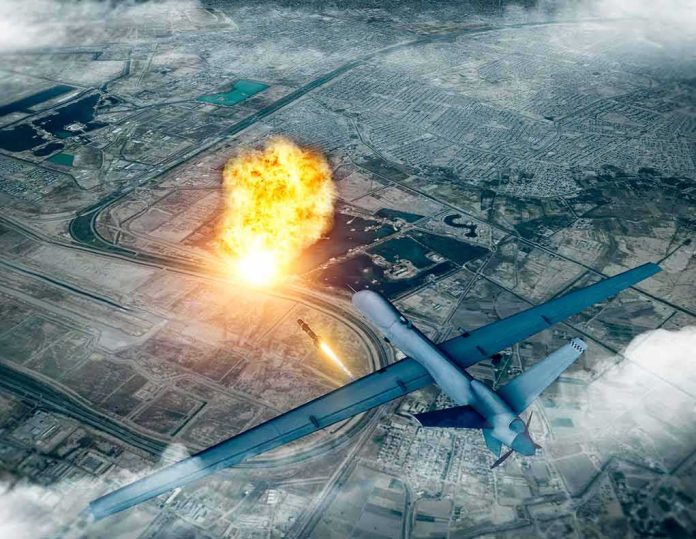
U.S. officials say the military began Operation Epic Fury at 1:15 a.m. on February 28, 2026, under orders from President Trump. Defense fact sheets list key targets tied to Iran’s Islamic Revolutionary Guard Corps, including joint and aerospace headquarters sites. Reuters reported that more than 100 aircraft took part in the opening wave, launched from land and sea platforms, signaling a broad and coordinated start to the campaign. Official materials framed the strikes as aimed at command-and-control nodes.
Later U.S. releases claimed that the strikes disrupted Iran’s leadership links. A White House statement said thousands of strikes degraded command structures and caused leadership losses across several weeks of action. Central Command documents across the first days echoed that focus on Revolutionary Guard facilities and air and missile enablers. While the operation’s early tempo was clear, the government did not publish full targeting packets, which is standard for active operations.
What Iran And Major Outlets Reported About Casualties
Iran’s state media and international outlets offered overlapping but shifting reports on senior deaths. ABC and other outlets relayed state media confirmations that Ali Shamkhani and Mohammad Pakpour had been killed in strikes during the first phase. Al Jazeera later reported an official Revolutionary Guard statement that its spokesman, Ali Mohammad Naini, died in an overnight U.S.-Israeli attack, with the Guard blaming “American-Zionist” forces for the strike. These reports matched the campaign’s timing and target types.
Some Iranian channels at first denied that top commanders were killed, before later confirmations named specific officials. That back-and-forth is common in fast-moving wars, where battlefield facts are fluid and political incentives are strong. Reuters’ timeline and U.S. fact sheets firmly establish that strikes occurred, but they do not, by themselves, verify the cause of death for each named figure. This split—firm on strikes, less firm on exact casualties—has framed public debate since late February.
The Live TV Death Claim: What We Can And Cannot Confirm
The dramatic claim that a senior Revolutionary Guard official “dropped dead on live TV at a nightly rally” lacks direct support in the collected record. None of the cited materials include broadcast files, transcripts, or station logs proving a live-on-air death. The strongest items confirm U.S. strikes, name Revolutionary Guard targets, and relay later state media death reports. That evidence supports the larger war picture but does not prove a televised death event.
CENTCOM rejected Iran's claim that the US strike was an act of aggression, calling it "absolutely false"
The IRGC says several soldiers and civilians were killed in the US strikes. #Iran#UnitedStates#Jordan— REALTIMZZ96 (@MLTTimzz) August 31, 2026
This gap matters because casualty attribution in wartime is hard to verify, and both governments and media can race ahead of proof. Responsible readers should keep two ideas in mind at once. First, the U.S. did strike core Guard sites at the outset of the operation. Second, the claim about a live TV collapse needs authenticated video and matching records to move from rumor to fact. Until that appears, it remains unverified in the public record.
Why This Story Hits Nerves At Home
Americans across the spectrum see patterns they dislike. Conservatives see a regime that funds terror and threatens shipping, and they back decisive hits on its command hubs. Liberals see the risk of wider war and the human costs that often go unseen. Both groups worry that leaders speak in slogans while facts trickle out later. Clear records on who was hit, when, and how would build trust. Vague claims and shifting lists fuel anger at institutions that already feel remote.
What To Watch Next
Watch for three things. First, declassified assessments that detail which Revolutionary Guard units were hit and which leaders were lost. Second, verifiable media artifacts—raw broadcast files, timestamps, and logs—if the live TV claim is real. Third, whether ceasefire terms hold as both sides adjust. Solid documentation will not end debate, but it can anchor it in facts. That is the only way to judge cost, success, and risk in a conflict this serious.
Sources:
thegatewaypundit.com, en.wikipedia.org, media.defense.gov, britannica.com, aljazeera.com