
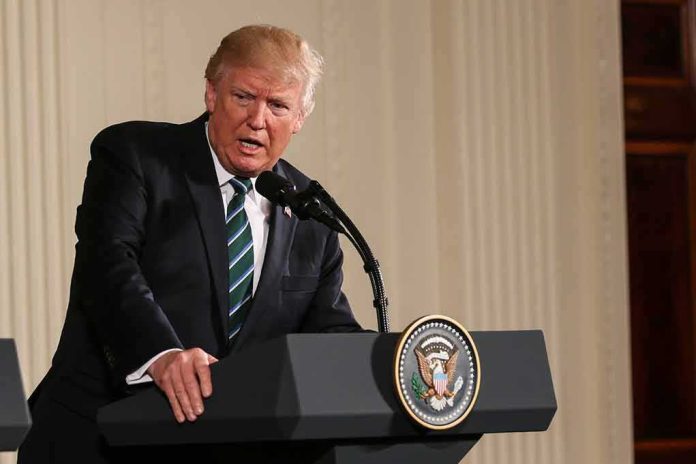
A White House state dinner for China’s leader touched off a fresh debate after a body-language expert called President Trump the clear “top dog.”
Story Snapshot
- State dinner remarks and toasts set a formal stage that some read as dominance cues.
- Trump praised “harmony, peace, and success,” projecting confidence as host.
- One expert saw warm, respectful signals, not one-sided dominance.
- Another expert said Trump sought connection, not control.
What Happened at the State Dinner
On September 24, 2026, President Trump hosted China’s President Xi Jinping for a state dinner in the East Room of the White House. Trump delivered the opening United States toast as the host, as protocol provides at such events. The White House later summarized the evening’s tone as forward-looking and cooperative. The official program featured remarks, toasts, and formal choreography typical of high-level diplomacy, including seating and speaking order set by protocol officers.
The White House video library lists a 26-minute recording of the leaders’ remarks at the dinner, providing public footage for analysts and citizens to review. That availability allows viewers to study posture, gestures, and greetings in real time. Such material often fuels commentary about power dynamics. But it also reflects the strict stagecraft of a state dinner, where many movements follow a plan rather than personal impulse.
What Trump and Xi Said on the Record
Trump’s toast struck a confident and positive note about the relationship. He said, “May all of our people know a future of harmony, peace, and success,” and described “great strides” made between the countries. Xi, in his own remarks, called for responsible conduct by both nations and highlighted mutual respect and stable ties. Both leaders’ words leaned toward cooperation, not rivalry, which can complicate claims of clear one-sided dominance.
Because the host speaks first and leads the toast, some observers read the moment as a show of control. In diplomacy, the host role is designed to signal standing and welcome, which can look like status to a casual viewer. Seating plans, entry order, and stage placement also send signals of rank by design at formal banquets. Those cues are set in advance and often mirror long-standing protocol norms.
Why Experts Split on “Top Dog” Claims
Body-language analyst Lillian Glass highlighted gestures that signaled connection and respect. She said Xi inclined his head toward Trump and that Trump turned directly toward Xi. She read Trump’s head tilt as warmth and attentiveness, which are affiliative rather than aggressive dominance signals. Another specialist, Sean Johns, said Trump aimed to make Xi feel welcomed and respected and did not see attempts by either leader to dominate the interaction.
As a candidate, #Trump PROMISED he wouldn't throw state dinners because they were expensive.
He even said be would NOT host a state dinner for China's Xi but "hive him a McDonalds hamburger and get to work"
Now, a #ballroom has become a must for Trump.https://t.co/yGX7KEfr7K
— Hispanic Citizen 🥑 (@US_Latino) November 20, 2026
Communication research shows that nonverbal signals do shape how people judge rank, calm, and trust. But experts warn against leaping from one gesture to a firm claim about a leader’s inner motives. Stronger claims need consistent patterns across time and settings, not one clip. The competing readings here stem from the same public footage. That split reflects how ambiguous visuals can be framed as dominance, deference, or simply diplomatic warmth.
Protocol Versus Personal Power Signals
State dinners follow detailed plans for who speaks first, where guests sit, and how leaders move. Those plans convey respect and hierarchy between offices, not between individuals alone. When Trump stands to open the toast, that is a host duty. When Xi answers with his own toast, that is the guest’s role. Without separating protocol from personality, viewers can mistake ceremony for personal control, or read welcome as submission.
How to Judge Claims Going Forward
Viewers who want a firmer read can watch the full, unedited video and note repeated behaviors across greetings, toasts, and table talk. Look for consistent posture, who orients to whom, who interrupts, and how often either leader mirrors the other. Compare this dinner to other Trump state dinners to see if similar cues repeat in different contexts. That approach helps sort planned protocol from personal style while keeping the focus on observable facts.
Sources:
youtube.com, govinfo.gov, fmprc.gov.cn, to.china-embassy.gov.cn, bbc.com, slguardian.org