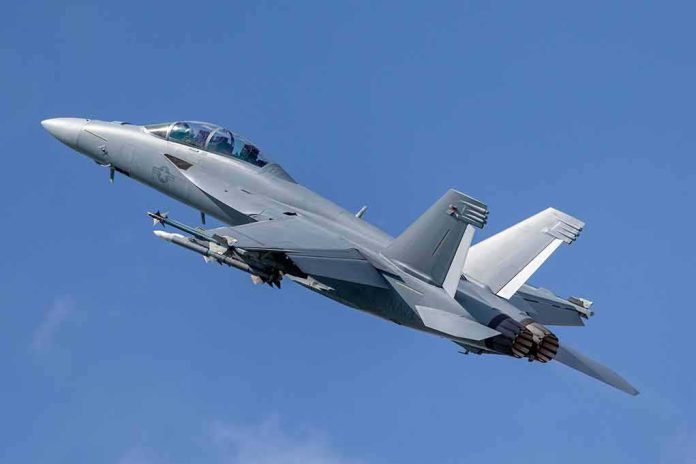
After an American F-15E was shot down over Iran, U.S. forces fought for two days to bring both airmen home alive.
Story Highlights
- A U.S. F-15E was downed over Iran; both crew members survived ejection and were rescued.
- Rescue forces used a large, complex operation across air and ground with no U.S. casualties reported at the time.
- A downed airman later described injuries, evasion, and a 50-hour ordeal before extraction.
- U.S. and Iranian statements clashed as both sides pushed their narratives of success.
What Happened Over Iran
On April 3, 2026, a U.S. F-15E Strike Eagle was shot down over Iran during a combat mission, forcing both crew members to eject. The initial recovery brought one airman out, while the second remained on the ground as U.S. forces worked to locate and extract him. U.S. Central Command later confirmed that both service members were rescued following a multi-day effort that continued into the weekend, marking a rare combat search-and-rescue deep inside hostile territory.
U.S. officials said the operation involved significant air and ground assets and ended without U.S. casualties, a claim President Trump also highlighted while praising the mission’s scope and speed. Iran issued competing claims that the rescue failed and that it downed additional aircraft, underscoring how each side sought to frame the event for strategic effect amid a broader conflict. One caveat is that some operational details remain classified due to ongoing military needs.
The 50-Hour Ordeal On The Ground
New accounts from the downed crew describe a violent ejection, serious injuries, and a long effort to avoid capture before link-up with rescuers. Reporting based on declassified footage and interviews says a shoulder-fired missile took down the jet, a damaged parachute worsened one airman’s fall, and the crew then endured nearly 50 hours on the run in hostile terrain. The airman, identified only by call sign in coverage, later credited training, teamwork, and faith while describing the moment of pickup as life-changing.
Central Command officials and defense reporters detailed a large task force that pushed aircraft, surveillance, and special operations teams into place to find, secure, and extract the airmen. The tempo stayed high as crews managed threats from ground forces and air defenses. The mission reinforced a core military promise—bring Americans home—while showing how modern sensors, communications, and quick decision-making can compress timelines even far from friendly bases.
Why This Rescue Matters Now
The shootdown and recovery show both risk and reach. Iran proved it can still threaten advanced aircraft, which challenges ideas about simple air dominance. The United States proved it can marshal complex power fast, get people on the ground, and leave without losing more lives. That mix shapes choices in the wider war: commanders must weigh strike value, rescue odds, and the political cost if a crew is left behind. Each mission now carries that calculus.
The two men seen rescuing downed F-15E weapons systems officer "Dude 44 Bravo" in Iran were Pararescuemen, PJs, reportedly from the 24th Special Tactics Squadron, the Air Force's tier one unit under Joint Special Operations Command.
Bravo's ordeal began when an Iranian…
— Spec Ops Magazine (@specopsmag) September 14, 2026
The information battle ran beside the rescue. U.S. leaders stressed success and “no one left behind,” while Iran signaled deterrence and claimed more kills. That clash is not new, but it feeds public doubts about whether the government levels with citizens. Many Americans, left and right, see elites managing the message while regular people bear the risk. This rescue delivered a win, but it also reminds us that the costs of long wars land on families, troops, and taxpayers who expect clear goals and honest results.
Sources:
nbcnews.com, af.mil, stripes.com, x.com, defensescoop.com, news.cgtn.com, timesofisrael.com, nytimes.com