
A major Ukrainian security shake-up is being used to spread a false story about who really runs the country’s war machine.
Story Snapshot
- President Volodymyr Zelensky reshuffled Ukraine’s top security and defense posts in early January 2026.
- Major General Yevhenii Khmara was appointed acting head of the Security Service of Ukraine, not acting defense minister.
- Mykhailo Fedorov, a young tech-focused minister, was nominated and then appointed as Ukraine’s new defense minister.
- Misinformation is blurring these roles, feeding confusion and distrust during a critical phase of the war.
Zelensky’s January shake-up: who got which job
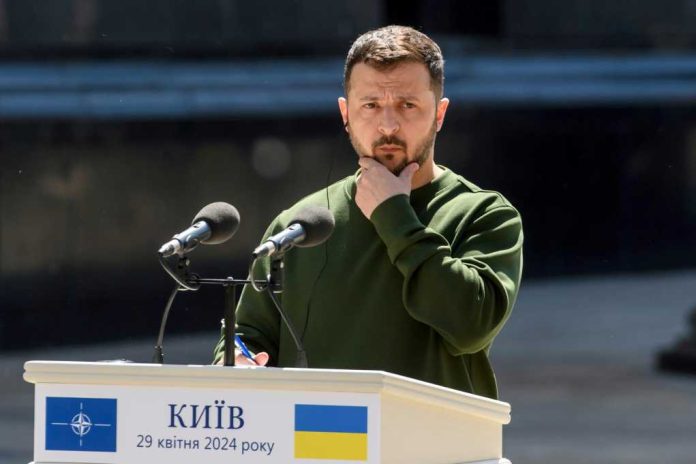
In the first days of January 2026, President Volodymyr Zelensky carried out one of his biggest wartime reshuffles of Ukraine’s security and defense leadership. He moved key figures in military intelligence, civilian intelligence, the security service, and the border guard service, and also changed his own chief of staff. As part of this reset, Zelensky said he wanted to replace the defense minister and offered that job to Mykhailo Fedorov, then minister of digital transformation. This series of moves aimed to refresh a wartime team under heavy pressure from Russia’s ongoing aggression.
On the security side, Zelensky accepted the resignation of Vasyl Malyuk, the powerful head of the Security Service of Ukraine, known as the SBU. The president then signed a decree appointing Major General Yevhenii Khmara, who had led the SBU’s elite “Alpha” special operations unit, as the acting head of the agency. Multiple Ukrainian and international outlets confirm that Khmara’s new role is at the SBU, Ukraine’s internal security and counterintelligence service, not at the Ministry of Defense. This distinction matters because it separates domestic security from military command.
Defense ministry: Fedorov, not Khmara, takes the reins
At the same time, Zelensky moved to overhaul the Defense Ministry, which manages Ukraine’s armed forces and war strategy. In his public address, he announced his decision to “change the structure” of the ministry and said he had offered the post of defense minister to Mykhailo Fedorov, then 34 years old and known for leading Ukraine’s digital transformation. Later reporting from policy institutes and Ukrainian media confirms Zelensky has nominated Fedorov as the new defense minister in this broader reshuffle. This makes Fedorov, not Khmara, the key civilian figure in charge of Ukraine’s defense policy and war management.
Major General Khmara, by contrast, remains focused on security and intelligence tasks. As acting head of the Security Service of Ukraine, he oversees counterintelligence, internal security, and operations aimed at disrupting Russian networks inside Ukraine. His background leading the SBU’s special operations unit fits that mission, which centers on raids, arrests, and covert actions rather than directing army units in battle. While both roles are crucial in wartime, they are separate chains of command. Confusing them suggests that either Ukraine’s system is chaotic or that someone wants outsiders to think it is.
How role confusion feeds the wider information war
The false claim that Khmara was named acting defense minister illustrates a larger problem in the Russia-Ukraine information war. Analysts have documented a pattern where pro-Kremlin or fringe outlets mix up positions in Ukraine’s security services and defense structures to muddy the picture of who is in charge. Reports from European and transatlantic research groups show Russian information campaigns routinely spread misleading stories about Ukrainian leadership changes, hoping to undermine trust in Kyiv’s government at home and abroad.
Ukrainian President Volodymyr Zelensky ousted the country’s popular defense minister, Mykhailo Fedorov, prompting protests in Kyiv over a fear that his removal will jeopardize the war effort just as Ukraine is scoring victories on the front line. https://t.co/fAMxI1lVAc
— The Washington Post (@washingtonpost) July 16, 2026
This type of misinformation lands in a world where many Americans, both conservative and liberal, already doubt their own leaders and institutions. They see elites, whether in Washington or foreign capitals, cutting deals and moving people around while ordinary citizens struggle with rising costs, war fatigue, and broken promises. When foreign reshuffles are misreported, it can reinforce the feeling that global security decisions are made in a fog of half-truths and spin. That matters because U.S. aid, energy prices, and even NATO commitments are tied to what happens in Ukraine.
Why clarity about Ukraine’s leadership matters for Americans
For Americans watching from afar, knowing who does what in Kyiv is not just a trivia question. Clear facts help voters judge claims about where their tax dollars go and whether U.S. policy is backing a stable partner or a shaky one. Zelensky’s move to put a tech-minded reformer like Fedorov at the Defense Ministry suggests a push toward modern, data-driven war management and tighter oversight of spending. His appointment of Khmara to the Security Service of Ukraine points to a desire for tougher internal security and more aggressive action against Russian covert threats.
When media outlets misstate these roles, they feed a wider sense that citizens everywhere are being kept in the dark. In a time when many Americans feel their own federal government serves entrenched insiders more than working families, sloppy or distorted reporting about foreign leadership can deepen anger and apathy. Sorting truth from spin in Ukraine’s reshuffle is one small but important step toward resisting that trend. It reminds readers that even in a complex war, basic facts about who holds which office still matter—and can be checked.
Sources:
insiderpaper.com, meduza.io, euromaidanpress.com, en.interfax.com.ua, youtube.com, pravda.com.ua, charter97.org, bbc.com, understandingwar.org, eeas.europa.eu, atlanticcouncil.org, pmc.ncbi.nlm.nih.gov