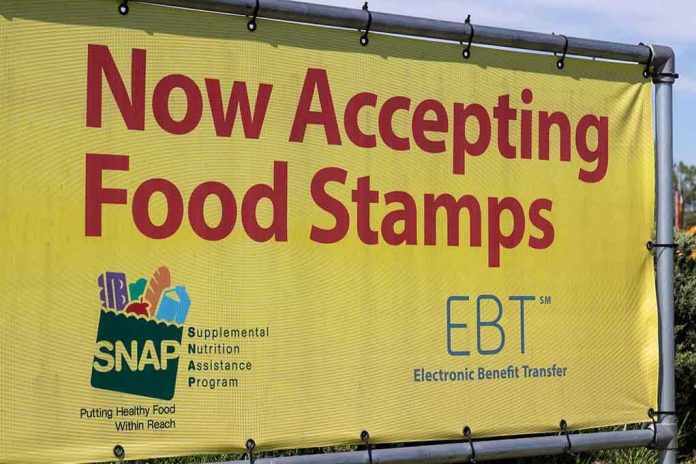
Eighteen states will ban SNAP recipients from purchasing soda, candy, and energy drinks starting in 2026, marking the most significant restriction on food stamp benefits in decades.
Story Snapshot
- USDA approves first-ever junk food restrictions for SNAP benefits in 18 states beginning 2026
- Bans target soda, candy, and energy drinks under Make America Healthy Again initiative
- States face increased administrative costs and penalties for payment errors exceeding 6%
- Work requirements expand to age 64 with immigrant eligibility changes delayed to April 2026
Federal Government Breaks Decades of Precedent
The United States Department of Agriculture granted unprecedented waivers allowing states to restrict junk food purchases through the Supplemental Nutrition Assistance Program. Agriculture Secretary Brooke Rollins and Health and Human Services Secretary Robert F. Kennedy Jr. spearheaded this initiative to restore SNAP’s original nutritional mission. The program has operated without food-specific restrictions since its inception, making this policy shift historically significant for America’s largest nutrition assistance program.
Implementation Timeline Varies Across States
The rollout schedule spans nearly the entire year of 2026, with some states beginning restrictions in January while others wait until October. This staggered approach allows states to develop administrative systems and educate both retailers and beneficiaries about the new requirements. Each participating state must establish monitoring systems to track compliance and handle violations, creating substantial logistical challenges for state welfare departments already managing complex benefit programs.
Administrative Costs and Penalties Create Financial Pressure
States implementing these restrictions face a double financial burden starting in October 2026. Federal reimbursement for administrative costs drops to 25%, requiring states to cover 75% of program management expenses. Additionally, payment error rates exceeding 6% trigger federal penalties beginning in 2027. This cost structure forces state governments to choose between maintaining current benefit levels and accepting higher operational expenses or reducing program scope to manage budgets effectively.
Work Requirements and Immigration Changes Expand Program Restrictions
Beyond junk food bans, SNAP eligibility requirements tighten significantly for working-age adults. Work requirements now extend to individuals up to age 64, potentially affecting millions of current beneficiaries who must demonstrate employment or job training participation. Immigration-related eligibility changes, originally scheduled for January 2026, received a three-month delay until April. These modifications reflect broader conservative policy goals of encouraging self-sufficiency while maintaining safety net protections for vulnerable populations.
The policy represents a fundamental shift toward treating taxpayer-funded nutrition assistance as a tool for public health improvement rather than simply hunger relief. Supporters argue these restrictions protect both individual health and fiscal responsibility by preventing government subsidization of products contributing to obesity, diabetes, and other chronic diseases plaguing American communities.
Sources:
6 more states approved for waivers to remove unhealthy foods from SNAP benefits