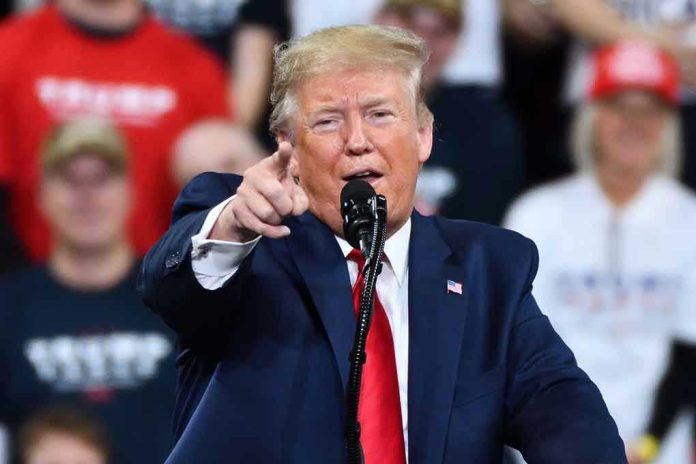
President Trump told Americans to accept slightly higher gas prices as the cost of stopping Iran from getting a nuclear weapon, sharpening a debate that hits every family budget while invoking national security.
Story Snapshot
- Trump said paying “a tiny little bit more” at the pump is worth preventing an Iranian nuclear weapon.
- He called the price impact “peanuts” compared with the stakes of Iran’s program.
- Energy experts say fighting near the Strait of Hormuz can raise global oil prices quickly.
- Gas prices rose this spring as the Iran conflict disrupted supply routes and raised risk premiums.
What Trump Said And Why It Matters
President Trump linked higher gasoline prices to the effort to stop Iran’s nuclear program during remarks in Garden City, New York. He said paying “a tiny little bit more” is worth it to block what he called a very dangerous threat. Days earlier, he told reporters that the pinch at the pump was “peanuts” compared with the risk of Iran getting a nuclear weapon, and predicted prices would ease if a deal is reached or after the conflict ends.
Trump’s message set a clear tradeoff: short-term price pain for long-term security. That framing echoes past moments when leaders asked the public to bear costs tied to wars or sanctions. It also hits a nerve. Gas prices are visible and immediate. They affect workers, retirees, and small businesses every day. Supporters may see resolve. Critics may hear indifference. Both reactions flow from the same kitchen-table reality: fuel costs shape family choices fast.
How Conflict Pushes Prices Higher
Analysts point to basic supply and risk. The Strait of Hormuz carries about one-fifth of the world’s oil. Fighting and blockades there can slow tanker traffic and tighten supply, which lifts crude prices and then gas prices in the United States. Even with strong U.S. oil output, gasoline tracks global crude because oil trades on a world market. Banks and forecasters say risk alone can add dollars per barrel when conflict threatens flows.
Recent data match that pattern. As clashes escalated, average U.S. pump prices rose compared with prior weeks and months, reflecting higher crude and strained inventories. Energy firms warned the White House that stocks of refined fuel were tight, which can magnify price spikes into summer driving season. This shock is not just about one policy lever. It reflects shipping risks, refinery capacity, and traders pricing in fear of supply loss.
The Political Stakes For Both Parties
Republicans now control Congress and the White House. That gives them the burden of results as well as the power to act. Conservatives who back a hard line on Iran may accept higher prices for a time. But many also want cheaper energy and less inflation. Liberals oppose the “America First” frame and fear harm to lower-income families. Yet many also oppose a nuclear-armed Iran. This is one of those moments where national security and pocketbook strains collide.
White House allies argue the choice is clear: prevent a nuclear crisis now rather than face higher costs and greater danger later. They stress that prices should fall when violence recedes or a deal allows oil to move more freely. Critics counter that working families cannot absorb even small increases after years of inflation and uneven wage gains. Both views speak to a larger worry that decisions in Washington often push costs onto ordinary people while the powerful stay insulated.
What To Watch Next
Watch the Strait of Hormuz. If tanker transit improves, crude prices can ease, and gas could follow within weeks. If attacks continue, risk premiums could grow, keeping prices elevated. Track refinery runs and gasoline inventories too. Tight stocks can lift prices even if crude steadies. Finally, look for any public steps to offset costs, such as targeted aid or regulatory relief. Those moves would test whether leaders can balance security aims with family budgets.
Backward looking excuse making. When Biden left office inflation was down below 3% on an annual basis. Now Trump has reignited it thru his tarriffs that US consumers pay & his no reason Iran war that’s driving up gas/diesel prices embedding inflation in all costs making em higher pic.twitter.com/rQKkzN8P1t
— Don Pasha (@aanalyst50) August 16, 2026
The core fact stands: Trump asked Americans to accept higher gas prices in the name of stopping an Iranian bomb. The economics behind the spike are straightforward and global. The politics are local and personal. When leaders frame pain at the pump as the price of safety, they also accept responsibility for making that pain brief and necessary. Many Americans on the left and right will judge the policy by one measure: does life get more secure and more affordable, soon.
Sources:
feedpress.me, yahoo.com, washingtontimes.com, usatoday.com, youtube.com, bbc.com, washingtonpost.com