
A 20-second hallway exchange at the United Nations turned a satellite modem into a global symbol of speech versus control.
Story Highlights
- Israel’s UN ambassador offered a Starlink device to an Iranian diplomat on September 24, 2026.
- The clip drew about 9 million views; Fox News says nearly 40% of Instagram viewers were in Iran.
- The Iranian diplomat did not accept the device; Danon posted the video afterward.
- Netanyahu had linked Starlink to bypassing censorship during his UN speech earlier that day.
A public offer at the UN that became a viral flashpoint
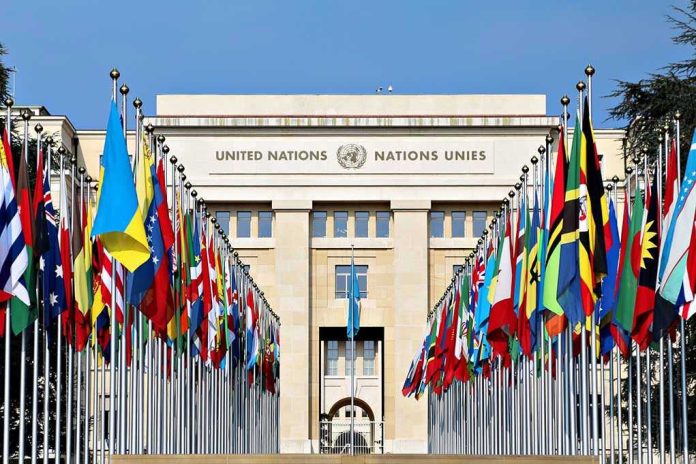
Israeli Ambassador Danny Danon approached an Iranian diplomat at the United Nations General Assembly on September 24, 2026. He held a Starlink satellite internet terminal and urged the diplomat to “take it to Tehran,” saying it could help Iranians regain freedom. The diplomat did not accept the device. News outlets reported Danon later posted the clip himself on social media, locking the message to his name and the UN setting.
Fox News Digital reported the video drew around 9 million views across platforms. The outlet said Instagram analytics showed 39.9 percent of viewers were in Iran, the largest share from any country. That figure suggests the clip pierced domestic censors to reach many inside Iran. However, the underlying analytics report was not made public in the coverage cited, limiting outside review of methods or time windows.
Why a modem became a proxy for speech and power
Prime Minister Benjamin Netanyahu had showcased a Starlink terminal in his UN speech that same day. He said the device lets people access truth and exercise freedom of thought and speech, framing it as an answer to censorship. That framing set the stage for Danon’s follow-up exchange in the hall. The pairing of a physical device and a clear message made the moment easy to share and understand online.
Inside Iran, satellite internet has grown into a lifeline during shutdowns and heavy filtering. Reporting this year has detailed crackdowns, with arrests tied to smuggled terminals and steps to jam satellite links. Iran bans Starlink, and penalties for owning or importing terminals are harsh, according to multiple outlets and expert analyses. That reality explains both the symbolism of Danon’s offer and the likely refusal by the Iranian diplomat on camera.
Competing narratives and the credibility gap in metrics
Danon’s office said the message aimed at freedom and free expression for Iranians, and claimed renewed circulation faced a disinformation push by Iran to blunt its impact. The office highlighted the large Iranian share of Instagram viewers as significant. Those claims match the clip’s tone but come from one side. The engagement numbers and geography breakdown rely on analytics “shared with Fox News Digital,” not a platform transparency report or an independent audit.
The public record confirms key facts: the UN setting, the on-camera offer, the refusal, and Danon’s later post. The reach claim and country split, while plausible given interest in Iran, rest on a single media report. That does not make them false; it does set a limit for how far we can take them without more data. For readers, the lesson is simple: demand numbers with provenance when viral posts drive diplomacy.
What this signals about speech, tech, and state control
This moment shows how small tech props can carry big messages. A router-sized terminal became a stand-in for open speech against state filters. The exchange also shows why internet tools are now part of diplomacy. Governments know a video can cross borders when people cannot. That power cuts both ways. Viral wins can look like propaganda to opponents, and both sides race to frame meaning before the next clip loads.
A video featuring Israel's U.N. ambassador, Danny Danon, offering a Starlink device to an Iranian representative has gone viral, amassing around 9 million views on social media. Notably, nearly 40% of the video’s Instagram viewers are in Iran, which is unusual for Israeli… pic.twitter.com/ZHpourHpv7
— Spot on 101 (@Spoton101) September 27, 2026
For Americans tired of elite theater, this story still matters at home. It spotlights how control of information shapes power. When leaders use platforms to speak past gatekeepers, the crowd must weigh the message and the metrics. Ask who owns the data, who verifies it, and who benefits. Free speech depends on open networks and honest numbers. Without both, even true stories can be bent by the loudest voice or the darkest filter.
Sources:
foxnews.com, iranintl.com, aa.com.tr, wionews.com, jpost.com