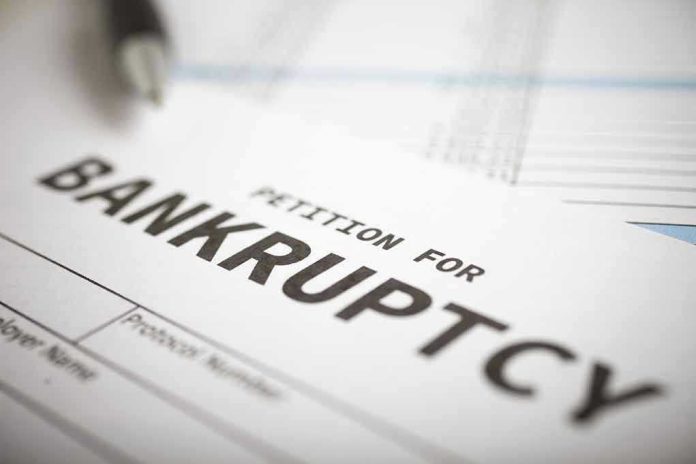
FAT Brands’ $1.45 billion debt gamble starved its empire of burger joints and pizza chains, forcing a Chapter 11 filing that exposes the brutal risks of Wall Street-fueled fast-food frenzy.
Story Snapshot
- FAT Brands filed Chapter 11 on January 26, 2026, in Texas to restructure $1.45 billion securitized debt from aggressive 2020-2021 acquisitions.
- Chains like Fatburger, Johnny Rockets, Fazoli’s, and Twin Peaks continue operations amid cash crunch of just $2.1 million unrestricted liquidity.
- Penalty interest payments hit $72 million as same-store sales declined for eight quarters, hammered by inflation and consumer shifts.
- CEO Andy Wiederhorn calls it a proactive step; experts warn whole business securitizations trap companies in downturns.
- Third such restaurant bankruptcy signals caution for franchise-heavy growth models.
Aggressive Acquisitions Fuel Debt Explosion
FAT Brands expanded rapidly post-2016, acquiring 19 brands including Fatburger from 1952 and Johnny Rockets from 1986. The company built a portfolio of 2,200 company-owned and 7,500 franchised locations in casual dining and quick-service restaurants. Between 2020 and 2021, $1.45 billion in whole business securitizations funded buys like Global Franchise Group, Fazoli’s, Twin Peaks, Nestle Toll House Café, and Smokey Bones. Management fees covered only 80 percent of costs. Inflation and stalled growth worsened the strain.
Additional pressures mounted with $47.35 million in secured loans at mid-teens interest rates, $104 million unsecured debt, and $25 million tax liabilities. FAT Brands tapped $8.6 million from unspent advertising funds for liquidity. Post-pandemic trends shifted consumers to off-premise dining with high delivery fees. Stagnating wages, tariffs on imports like Atlanta cookie dough, Ukraine war disruptions, and tight labor markets crushed cash flow. Franchise development pipeline of 1,000 units slowed dramatically.
Timeline of Cash Starvation and Filing
Penalty interest payments totaled $72 million starting 2022, coinciding with eight straight quarters of same-store sales declines. Twin Peaks, spun off via IPO last year, saw four quarters of drops. Federal tax charges dropped after $85.5 million in legal costs provided temporary relief. Recent months brought creditor demands for repayment. As of January 23, 2026, unrestricted cash dwindled to $2.1 million. On January 26, FAT Brands and five debt-holding subsidiaries filed voluntary Chapter 11 petitions in Texas.
January 27 filings by Chief Restructuring Officer John DiDonato detailed the crisis. DiDonato and Deputy Abhimanyu Gupta from Huron Consulting now oversee the process. CEO Andy Wiederhorn described debt talks as painful and slow at the early 2026 ICR Conference. He messaged employees framing the filing as proactive for sustainable growth. Restaurants stay open, but low liquidity restricts investments.
Stakeholders Clash in Complex Debt Web
Andy Wiederhorn leads efforts to slash debt for long-term viability. His sons, top executives, secured raises and retention bonuses through June 2026. Bondholders holding $1.45 billion securitized notes across subsidiaries demand repayment without agreement, prompting mediation requests. Two independent directors evaluate alternatives. Franchisees battle sales drops and lawsuits over marketing fund misuse, like Round Table Pizza and Hurricane Grill cases. The parent company does not guarantee brand debts.
Securitization trustee triggered a manager termination event but held off execution. Varied creditor note positions create hierarchy conflicts blocking consensus. DiDonato states Chapter 11 maximizes stakeholder value as the capital structure proved unsustainable. Common sense aligns with conservative fiscal caution: high-risk debt starved operations, contrasting prior legal wins against inescapable penalties.
Industry Warnings from Precedents and Experts
This marks the third whole business securitization bankruptcy in two years, following TGI Fridays and Hooters, both emerging under new owners. Court filings highlight WBS complexity as a restructuring barrier, with penalty ramps after 2023 call dates unsustainable. DiDonato notes securitizations starved the business amid extraordinary inflation and economic pressures. Restaurant Business cites acquisitions leaving insufficient funds. Restaurant Dive points to debt, economy, and litigation triad slowing franchises.
Optimists see proactive positioning for growth; pessimists flag exhausted liquidity and frozen financing. Consensus holds WBS models vulnerable in downturns. Short-term, mediation aims to restructure; long-term risks include asset sales or liquidation. Franchisees face delayed openings, employees job uncertainty at 7,500 locations, and brands operational strain. Broader effects underscore inflation and delivery fees toll on quick-service and casual dining.
Sources:
Fat Brands, burdened with heavy debt, declares bankruptcy
Why Fat Brands filed for Chapter 11 bankruptcy protections
FAT Brands Inc. Files Voluntary Chapter 11 Petitions to Bolster Capital Structure
Parent companies of Fazoli’s, Twin Peaks file for Chapter 11 bankruptcy