

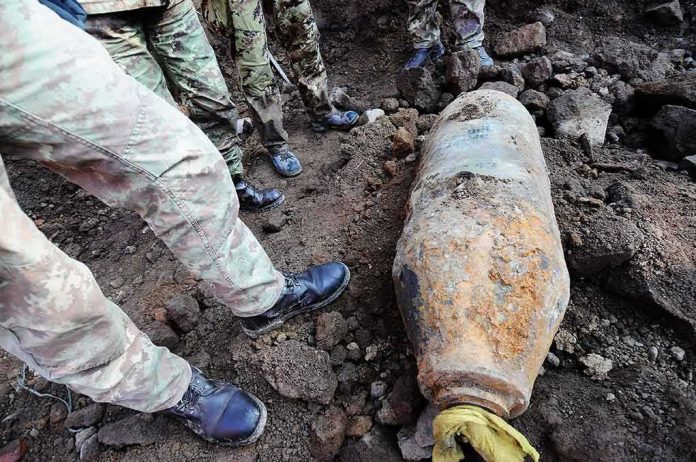
With a court-ordered pause in place, the U.S. Army says it can still blow up nearly five tons of unstable lead azide in Iowa under a separate emergency power—raising alarms about process, safety, and trust.
Story Highlights
- Federal appeals court paused the Environmental Protection Agency (EPA) emergency permit for the blast.
- Department of Justice told the court the Army can proceed under a different emergency authority.
- Army cites immediate explosion risk from 68 barrels of degraded, crystallized lead azide.
- Environmental groups warn of toxic lead dust across Iowa and into Illinois if detonated.
What the Army Found and Why It Wants to Act
Army safety staff found 68 barrels holding about 9,700 pounds of lead azide at the Iowa Army Ammunition Plant during a 2026 review. The Army’s environmental assessment says the material degraded and formed crystals, which makes it highly sensitive to shock, heat, and friction. The assessment evaluated options and identified a phased, controlled “blow-in-place” detonation to reduce handling of the unstable barrels. Lead azide is a primary explosive, so the Army argues fast removal of the hazard is necessary.
Department of Justice filings say colder weather could raise the risk of an uncontrolled blast if the barrels remain in storage. Government lawyers told the Eighth Circuit that detonation is “necessary now” to address an immediate threat. The filings identify 68 drums and describe plans to act quickly. These filings place a clear timeline and a concrete risk on the record, though they do not include full technical test data in public view.
Why a Court Put the EPA Permit on Hold
The Environmental Protection Agency issued an emergency permit on November 13 that allowed a controlled detonation with testing and cleanup afterward. Soon after, environmental groups asked a federal appeals court to stop the plan. The court issued a stay, pausing the EPA permit while it reviews the challenge. The stay does not settle the science, but it blocks the Army from using the EPA permit until the court rules.
Filings and coverage show advocates argue the permit process did not prove safer options were fully examined or that health protections were strong enough. They say the Army did not give the public enough time and information. They also question whether modeling captured real-world wind, soil, and water risks. The pause highlights a deeper fight over how emergency powers should work when hazards and health impacts collide in a rush.
The Legal Shift That Fuels Public Distrust
After the stay, the Department of Justice told the court the Army could still proceed under a separate emergency exclusion in federal waste law. That position means the Army may not need the paused EPA permit to detonate. Critics say that looks like end-running the court, even if the law allows it. The sharp turn added confusion, compressed timelines, and stronger fears that process is bending to urgency without full transparency.
That shift also raises practical questions. The EPA permit carried sampling and cleanup rules after the blast. If the Army relies on a different authority, people want to know whether the same testing, air monitoring, soil checks, and cleanup standards will still apply. The government’s filings reference emergency powers, but the public record does not yet show the full, equivalent safeguards in one place.
Community Health Concerns Across State Lines
Environmental groups and residents warn a blast could spread toxic lead dust over parts of Iowa and into Illinois. They say the dust could settle on homes, farms, gardens, schoolyards, and the Mississippi River corridor. They fear lead could linger in soil and runoff, raising long-term exposure risks for children, livestock, and wildlife. These concerns tap into a shared worry: once heavy metals are in the environment, cleanup is slow and often incomplete.
I'm a long time supporter of you Pres Trump. Please do not allow the Army to detonate Lead Azide in Iowa. I understand that a cloud of lead fallout will follow the detonation. This is 2026. I cannot believe this is even a possibility. Pls stop it!@POTUS
— Cap'n MAGA (@Brians_Tweets_) November 23, 2026
The Army and the EPA’s earlier permit describe plans for post-blast testing and cleanup. But the court record shows opponents are not satisfied that offsite spread will stay within safe bounds. They call for more transparent modeling inputs, independent expert review, and a clearer plan for monitoring air, soil, and water. The heart of the community’s question is simple: will protections match the risk if the worst-case wind or weather hits on blast day?
What Accountability Looks Like Right Now
Trust can grow if the Army releases its full assessment and the technical basis for the “immediate risk” claim. That means sharing model inputs, weather thresholds, alternatives analysis, and monitoring plans in plain language. It also means stating, on the record, that equivalent safeguards will govern if the Army proceeds under a different legal path. People across the political spectrum agree on this: government should not ask for blind trust when lives, land, and water are at stake.
Sources:
zerohedge.com, abc7chicago.com, chicago.suntimes.com, fortune.com, nbcchicago.com, nbcdfw.com, d34w7g4gy10iej.cloudfront.net, desmoinesregister.com