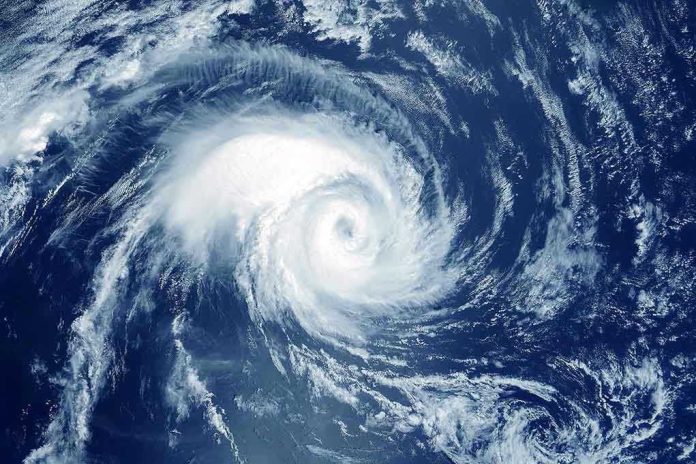
When a rare tropical storm spawns in the Malacca Strait, it doesn’t just bring rain—it unleashes a catastrophe that shatters the lives of millions across three nations simultaneously, leaving rescue teams scrambling through a humanitarian nightmare that tests the limits of international cooperation.
Quick Take
- A rare tropical storm formation in the Malacca Strait triggered unprecedented flooding across Southeast Asia, with the death toll exceeding 500 as of November 30, 2025
- Hat Yai, Thailand recorded 335 millimeters of rain in a single day—its highest rainfall in 300 years—creating catastrophic conditions across the region
- Over 4 million people have been affected, with rescue teams relying on helicopter operations to reach isolated communities blocked by landslides and debris
- The disaster spans Indonesia, Thailand, Malaysia, and Sri Lanka, requiring unprecedented cross-border humanitarian coordination and evacuation assistance
A Storm That Defies Meteorological Norms
The Malacca Strait rarely breeds tropical storms. This body of water, wedged between Malaysia and Indonesia, sits outside the typical zones where such systems develop. Yet on this occasion, atmospheric conditions aligned in an unusual way, creating a meteorological event that would reshape the region for months to come. The storm’s formation itself signals something extraordinary—a deviation from established patterns that meteorologists study but rarely witness firsthand.
Record-Breaking Rainfall Unleashes Chaos
Hat Yai received 335 millimeters of rainfall in a single 24-hour period. To grasp the significance, understand that this city’s previous highest single-day rainfall record stretched back 300 years. In one day, the region experienced weather that hadn’t occurred since the late 1700s. This wasn’t typical monsoon activity. This was nature operating at an extreme, overwhelming drainage systems designed for normal seasonal patterns and creating conditions where water transformed entire landscapes into inland seas.
The sustained rainfall across the region for approximately one week compounded the destruction. Western Indonesia, particularly Sumatra, faced a perfect storm of vulnerability—mountainous terrain combined with tropical monsoon susceptibility created conditions favorable for both flooding in lowlands and catastrophic landslides in higher elevations. Large tracts of land and entire homes simply vanished, swept away by water and debris moving with unstoppable force.
The Human Toll Mounts Daily
By November 30, 2025, confirmed deaths had surpassed 500. Indonesia reported 336 deaths with 289 still missing. Thailand’s death toll reached 170, concentrated heavily in Songkhla Province where 131 perished. Malaysia confirmed 2 deaths with approximately 24,500 people still sheltering in evacuation centers. Sri Lanka, struck by a related cyclone, reported 153 deaths. These numbers represent families destroyed, communities fractured, and futures erased. Yet they also represent incomplete accounting—rescue operations were still ongoing, missing persons lists still growing.
Millions Displaced, Desperate for Relief
Nearly 3 million people in southern Thailand alone were affected. Western Indonesia reported 1.1 million affected persons. The total exceeded 4 million across the region—a population larger than many nations, suddenly homeless and dependent on emergency assistance. Displacement on this scale creates cascading crises. Shelter becomes scarce. Food supplies dwindle. Clean water becomes precious. Medical facilities overflow. Desperation sets in quickly when basic survival needs go unmet.
Logistics of Rescue in Impossible Terrain
Access to affected communities required extraordinary measures. Roads were blocked by landslides and debris. Conventional supply delivery became impossible. Indonesian relief teams deployed helicopters to isolated towns like Palembayan in West Sumatra, landing on soccer fields to distribute food and medical supplies to dozens of waiting residents. Reuters photographers documented the scale of destruction—vast areas where homes once stood now featured only water and devastation. The isolation of affected communities meant that people waited for assistance that took days to arrive, if it arrived at all.
International Coordination Tested
Malaysia evacuated over 6,200 of its nationals from Thailand, demonstrating bilateral coordination mechanisms activated under extreme pressure. The Malaysian Foreign Ministry issued advisories requesting citizens in Indonesia’s West Sumatra to register with local consulates for potential assistance. This cross-border dimension added complexity to an already strained response system. National governments had to coordinate evacuation procedures, share resources, and manage populations displaced across international boundaries—a logistical puzzle with human lives as the stakes.
When Relief Systems Strain to Breaking Points
Reports emerged of looting in some areas, indicating that desperation was driving people to take what they needed as official relief channels proved inadequate. This speaks to a fundamental reality of large-scale disasters—when survival needs go unmet, social order deteriorates. The breakdown wasn’t moral failure but rational response to scarcity. People with hungry families don’t wait patiently when supplies sit unreachable. The humanitarian crisis extended beyond the immediate death toll into the realm of social fragmentation and community breakdown.
The Road Ahead Remains Long
As November 30 dawned, meteorological authorities lifted tropical storm warnings for Malaysia, forecasting clear skies ahead. Yet this provided only marginal comfort. The receding flood waters revealed the full extent of destruction—homes demolished, agricultural land devastated, infrastructure shattered. Reconstruction would require years, not months. The psychological trauma for survivors would extend far beyond the immediate crisis. Families separated by displacement would struggle to reunite. Livelihoods lost would take time to rebuild. The disaster’s consequences would ripple through the region’s economy and society for generations.
This tropical storm transformed from a meteorological event into a humanitarian catastrophe affecting millions across political boundaries. It exposed both the fragility of human settlements in vulnerable geographies and the capacity of regional nations to coordinate response efforts under extreme pressure. The death toll exceeded 500, but the true measure of this disaster extends far beyond casualty counts into the realm of displaced lives, shattered communities, and the long recovery that awaited Southeast Asia.
Sources:
Tropical Storm Deaths Cross 500 in Southeast Asia, Over 4 Million Affected