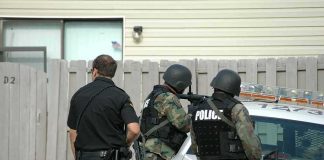
A liberal think tank’s study says the D.C. National Guard surge did not reduce violent crime, and President Trump now says a multibillion-dollar lawsuit is coming.
Story Snapshot
- Center for American Progress says Guard deployments did not cut violent crime across several cities.
- President Trump denounced the report and threatened legal action over its claims.
- News outlets report homicides fell while violent crime overall showed mixed signals in D.C..
- Analysts say some property crimes may have dropped even if violence did not.
What the report actually claims
Center for American Progress published a report on July 13 stating that National Guard deployments in Washington, Los Angeles, Memphis, and New Orleans did not reduce violent crime. The analysis found no measurable effect on violent crime, homicides, or gun victimizations across multiple data sets and time windows. The group said the deployments could cost more than one billion dollars if extended. The report was authored by Chandler Hall and is traceable and dated, allowing public scrutiny of its claims.
Media coverage summarized the methods and the takeaway. A Center for American Progress press release stressed the “no impact” finding on violent crime. The Hill quoted the author describing results across cities and time periods with the same conclusion. Local Washington coverage also echoed the core point: no clear reduction in homicides, violent crime, or gun violence from the Guard’s presence. These outlets framed the study as data-driven, not anecdotal.
How the White House responded
President Trump publicly blasted the study and said a lawsuit was being prepared. Reporting described his pushback as a demand for retraction and damages. Coverage also noted that Center for American Progress leaders stood by the work. The clash centers on credit and causation: the administration argues the surge improved safety; the report argues that the key violence metrics did not move because of troops on city streets.
Independent fact-checking and other outlets added context on trends. FactCheck.org said Trump overstated the crime drop tied to deployments and cited experts who questioned whether troops were the reason for declines. Newsweek reported that in D.C. homicides were down about one-third while total violent crime was slightly up, driven by specific assault categories. Those mixed signals make simple victory claims risky for either side.
What the data suggests about D.C.
NPR reported that the Guard presence in Washington had little to no effect on violent crime, including robberies, which were already falling before Trump returned to office. Local television coverage said researchers could not tie the surge to lower homicides or violent crime. Some reporting suggested visible troops may have deterred opportunistic theft, a narrower outcome than reducing violence. That split matters because residents worry about both types of crime, but policy often targets violence first.
NBC Washington coverage echoed that pattern. It highlighted the study’s finding that violent crime did not drop due to the Guard but acknowledged reports that some property crimes, like purse or phone thefts, may have dipped. That aligns with research showing visible patrols can deter quick, low-level offenses while having less effect on serious violence. The bottom line is that the clearest reductions were not in the categories that drive fear and loss of life.
Why this fight resonates beyond partisanship
Americans across the spectrum are tired of costly moves that feel like show over substance. This dispute hits that nerve. A high-profile deployment signaled action, but the best available research says it did not reduce violent crime. People want safety without burning tax dollars on tactics that do not work. They also want transparency on methods and data so outsiders can check the math, not just take a think tank or a politician at their word.
Trump Lawsuit Against Soros-Center
Trump announced a lawsuit against the left-wing think tank Center for American Progress (CAP) after the organization reported that the National Guard being deployed to several cities had no impact on crime.https://t.co/tw30t5SU4U
— J LAF (@IemnutzJ) September 7, 2026
Policy choices have trade-offs. If troops deter petty theft but do not move assaults or shootings, leaders must weigh cost, mission creep, and civil-military lines. The evidence so far favors investing in strategies tied to proven results on violence. Those include focused policing of the small number of high-harm people, community violence intervention, and swift case clearance. Until the administration or its critics release full data and code, the core finding on violence stands in the public record.
Sources:
thegatewaypundit.com, nbcwashington.com, americanprogress.org, theblaze.com, theatlantic.com, independent.co.uk, npr.org