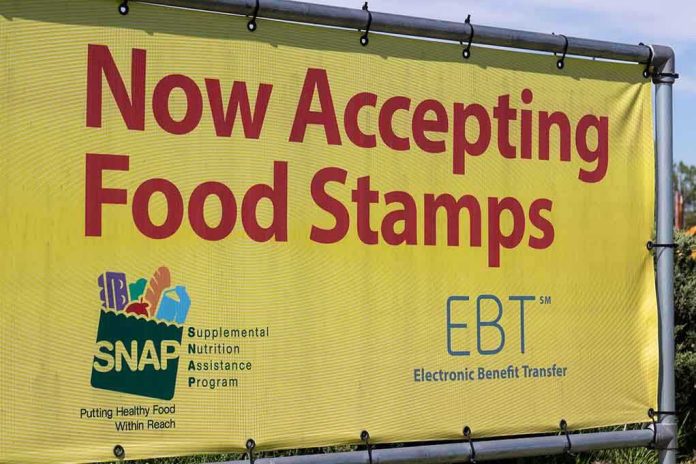
The Trump administration’s unprecedented threat to withhold SNAP funding from Democratic states over data demands has sparked a contentious debate over privacy, state compliance, and federal power.
Story Overview
- The USDA threatens to cut off SNAP funds unless states comply with data demands.
- Democratic states argue this violates privacy and serves as a tool for mass deportation.
- A federal judge issued an injunction against the USDA’s funding threat.
- The conflict highlights broader efforts to restructure federal-state social program funding.
USDA’s Data Demands and State Resistance
The Trump administration, through USDA Secretary Brooke Rollins, demands detailed data on SNAP recipients, citing fraud prevention as the motive. This includes immigration status and social security numbers. The request, made in February 2025, met resistance from 22 Democratic-led states and Washington D.C., who viewed it as a privacy violation and unlawful overreach. They sued in July 2025, fearing the data could be used for mass deportation, not just fraud prevention.
Despite the federal court ruling in October 2025 prohibiting the USDA from withholding funds based on noncompliance, Secretary Rollins announced in December 2025 that the administration would proceed with the threat. This defiance raises questions about the enforcement of judicial orders and the limits of executive power.
Legal Battles and Political Tensions
The USDA claims that 28 states have complied with their data request, while Democratic states refuse, citing legal and ethical concerns. The administration argues that compliance would save $9 billion annually by reducing fraud. However, Democratic officials counter that the demand is a guise for immigration enforcement, not fiscal responsibility. This dispute underscores a broader political struggle between federal and state governments, with the judiciary playing a crucial mediating role.
The Republican-controlled Congress supports the administration’s stance, aligning with their ongoing legislative efforts to restructure SNAP financing. The “One Big Beautiful Bill” proposed by Congress aims to shift more administrative costs to states, fundamentally altering the federal-state funding dynamic for social programs.
Implications for SNAP Recipients
With nearly 42 million Americans relying on SNAP benefits, the stakes are high. If funds are withheld, states could face operational disruptions in benefit processing, affecting vulnerable populations like low-income families, the elderly, and people with disabilities. The USDA’s own analysis indicates potential for significant savings, but opponents argue that the real cost may be increased food insecurity and hardship for those who rely on these benefits.
The ongoing legal battle and political negotiations will determine the future of SNAP funding and federal-state relations in social program administration. As the December 8 deadline for state responses approaches, the situation remains tense, with potential widespread impacts on state budgets and recipient livelihoods.