Prime Minister Mark Carney’s Beijing visit sparked viral claims of him hailing a “New World Order” and bowing to Beijing, but official records reveal a calculated trade pivot amid U.S. tensions—what risks does this diversification truly pose to Canada’s sovereignty?
Story Snapshot
- Carney visited Beijing January 2026, signing MOUs on energy, EVs, and agri-food exports worth $3 billion annually.
- Canada reversed 100% Chinese EV tariffs to quotas of 49,000 vehicles, prioritizing economic resilience over protectionism.
- Sensational social media narratives of “globalism” and anti-U.S. bias lack evidence in government statements.
- Ontario Premier Doug Ford warns of auto job losses, highlighting provincial-federal tensions.
- Partnership aims for 50% export growth to China by 2030, reducing U.S. market reliance.
Carney’s Rise to Power and Beijing Timeline
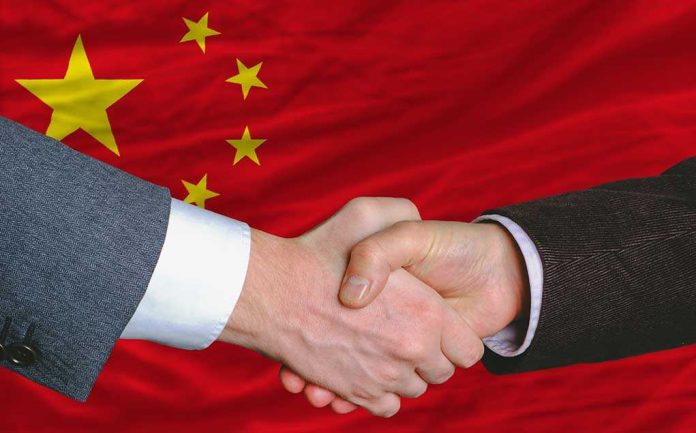
Mark Carney assumed office as Prime Minister in March 2025 after leading Liberals to victory in April elections. His campaign countered U.S. President Trump’s annexation threats, framing Canada as sovereign amid trade uncertainties. Carney, former Bank of Canada and England governor, prioritized economic diversification. In October 2025, Canada imposed 100% tariffs on Chinese EVs, aligning with U.S. policy. By January 2026, Carney traveled to Beijing, meeting President Xi Jinping, Premier Li Qiang, and NPC Chairman Zhao Leji. They announced a strategic partnership focused on energy, clean tech, electric vehicles, and agri-food.
Joint statements emphasized mutual benefits without effusive praise or “New World Order” rhetoric. Carney described the deal as building “on the best of our past,” targeting resilient growth. This marked the first prime ministerial visit since 2017, following strained ties from the 2018 Meng Wanzhou arrest and Huawei disputes.
Core Agreements and Economic Calculations
Canada secured tariff reductions unlocking $3 billion in agri-food exports like beef, canola, and pet food by March 2026. EV imports shifted from 100% tariffs to a quota of 49,000 vehicles at 6.1% duty, scaling to 70,000 over five years—under 3% of Canada’s 1.8 million annual sales. Memorandums of understanding covered energy cooperation, transnational crime, and cultural exchanges. Carney projected 50% export growth to China by 2030, doubling non-U.S. trade in a decade.
Businesses in clean tech and agriculture stand to gain from joint ventures in batteries, solar, and wind. Consumers benefit from affordable EVs under $35,000. Carney dismissed auto sector risks as “low single-digit,” aligning with his economist background favoring pragmatic trade over isolationism.
Domestic Pushback and Protectionist Concerns
Ontario Premier Doug Ford opposed EV quota expansions, insisting Canada “can’t back down” to safeguard 100,000 auto jobs. Unions echo fears of cheap Chinese imports flooding North American markets, threatening domestic manufacturing. Carney’s government views the impact as minimal, prioritizing supply chain resilience and consumer choice. This federal-provincial rift underscores tensions between global trade ambitions and regional protectionism.
From an American conservative lens, Ford’s stance embodies common-sense self-reliance: protect workers first, avoid subsidizing foreign competitors through market access. Carney’s diversification, while fiscally rational, risks eroding North American unity against Beijing’s state-driven economy—facts support caution over blind optimism.
Strategic Implications for Sovereignty and Alliances
Carney’s pivot responds to U.S. trade pressures under Trump, aiming to lessen over-reliance on one partner. China, Canada’s second-largest export market for agri-food, offers stability in a “divided world.” Long-term goals include EV manufacturing jobs and multilateral engagement via APEC and climate initiatives. Yet, social media amplifies unverified claims of Carney praising Xi effusively or rejecting America—official releases contain no such language.
These narratives, lacking primary source backing, fuel partisan spin. Carney’s record shows continuity from Trudeau’s hawkish policies, now tempered by engagement. True risks lie not in conspiracy but in unbalanced concessions that could weaken G7 cohesion and invite Beijing’s influence.