A machete attack on random Grand Central commuters ended in seconds when an NYPD detective’s repeated commands failed—and that split-second decision is now shaping New York’s subway safety debate.
Story Snapshot
- NYPD officials say a 44-year-old man stabbed three strangers with a machete at Grand Central Terminal on April 11, 2026, before police fatally shot him.
- Commissioner Jessica Tisch said the suspect ignored more than 20 orders to drop the weapon and advanced toward officers with the machete extended.
- The victims—two men and a woman, ages reported in the mid-60s to mid-80s—were hospitalized in stable condition, including one with a severe head injury.
- Authorities said there was no indication the incident was terrorism; the attacks appeared random and unprovoked.
What happened at Grand Central—and why it escalated fast
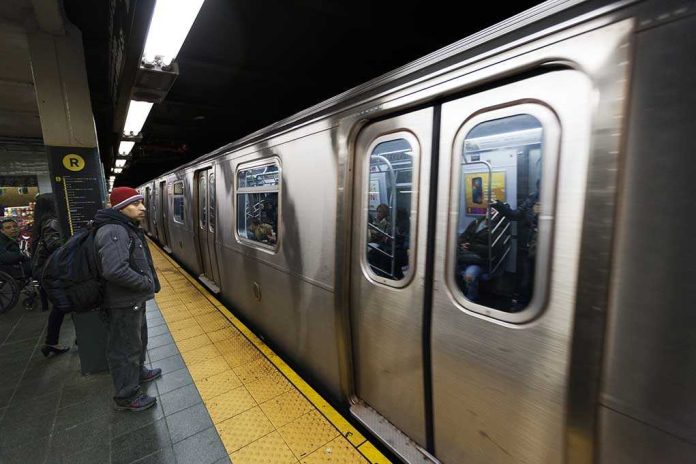
Police said Anthony Griffin, 44, traveled from Queens to Manhattan on the 7 line on the morning of April 11 and began attacking strangers after arriving at Grand Central Terminal. Officials described multiple slashings on busy subway platforms, with victims ranging from their mid-60s to mid-80s. The scene drew transit detectives assigned to subway patrol, who quickly encountered both injured riders and the suspect still armed.
Commissioner Jessica Tisch said detectives gave Griffin more than 20 commands to drop the machete, but he did not comply. Police said he moved erratically, held the blade outward, and advanced toward officers. A detective fired two shots, striking Griffin, and officers immediately began lifesaving efforts until EMS arrived. Griffin was taken to Bellevue Hospital and pronounced dead, according to police statements reported by multiple outlets.
Victims, injuries, and what authorities have confirmed so far
Authorities said three unrelated riders were injured in the attack. Reports described one elderly male victim suffering severe trauma, including an open skull fracture, while the other victims sustained serious lacerations. Police also reported minor injuries to two officers during the confrontation and response. The weapon was recovered, and trains were halted and then restored after the immediate emergency and early investigative work concluded.
Officials emphasized that early indicators did not point to terrorism and that the suspect’s behavior appeared driven by apparent delusion rather than an organized cause. Multiple reports said Griffin claimed to be “Lucifer” during the incident. Police also said that while Griffin had prior arrests, he did not have a known “emotionally disturbed person” designation in law-enforcement records—an important detail because it affects how risk is flagged before a crisis occurs.
Bodycam scrutiny, use-of-force reviews, and the public trust problem
The NYPD said the shooting will be reviewed under standard internal procedures, and officials indicated body-worn camera footage would be handled under department policy. That matters because public confidence now hinges on transparency in high-stakes use-of-force cases—especially in a city where many voters distrust both government institutions and media narratives. Clear timelines, consistent releases, and corroborated evidence can reduce misinformation on all sides.
The broader transit-safety question voters keep circling back to
This incident landed in a familiar political pressure cooker: commuters want safety, civil-liberties advocates want accountability, and taxpayers are wary of expensive plans that don’t change street-level reality. Reports tied the attack to wider concerns about post-COVID transit disorder and the difficulty of keeping major hubs safe when violent episodes appear sudden and random. Limited public details about prior warnings underscore the challenge of prevention once someone enters the system armed.
The immediate takeaway is straightforward: a visible police presence and rapid response likely prevented additional victims once the suspect refused to drop the weapon. The longer-term question is harder and more political: whether New York’s leadership can pair enforcement with workable interventions—without falling back on slogans, bureaucratic blame-shifting, or policies that prioritize process over public safety. For many Americans, that tension reinforces a growing belief that government reacts after tragedy instead of preventing it.
Sources:
Machete-wielding suspect claiming ‘Lucifer’ shot by police after allegedly stabbing 3 at transit hub
Slashing suspect shot by police after injuring 3 at Grand Central subway station in New York