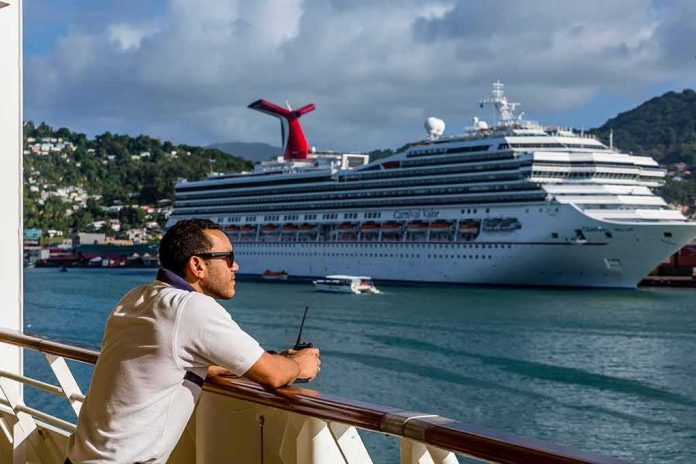
A routine cruise excursion ended with a $50,000 air evacuation bill and a young traveler wondering who pays when fun turns into trauma.
Story Highlights
- A Louisiana passenger suffered a severe injury during a rope swing excursion in Honduras.
- Shipboard care and an emergency air evacuation reportedly pushed costs above $50,000.
- Maritime law often leaves injured passengers paying upfront while fault is sorted out.
- Short legal deadlines and sparse records can decide whether victims get reimbursed.
What Happened During the Shore Excursion
New York Post reporting says 28-year-old Kirsten Lindsey was injured on a rope swing during a Carnival cruise stop in Honduras. Her partner described a line that was “incorrectly attached” and tightened between her legs before a fall, causing severe trauma and rapid swelling. The account stems from his statements and a fundraising page tied to the incident. No operator incident report appears in public sources cited so far, and company statements are not included in the record.
A YouTube segment summarizing the case says onboard medical care cost about $4,000 and the air evacuation to a Florida hospital cost about $50,000. That puts the total near $53,500, though itemized billing records have not been published in the sources provided. The video focuses on the high price of medical transport from foreign ports and the sticker shock that often follows emergency decisions at sea.
Why the Bills Landed on the Passenger First
Legal guides on cruise injuries explain that maritime law governs these cases. They note cruise lines generally do not pay medical bills as they come in, even for serious events, and passengers often must front costs and seek reimbursement later if negligence is proven. This structure can surprise travelers who assume the cruise line covers emergency care by default, only to find contract terms shift costs to them during the trip.
Consumer travel resources show that ship infirmary visits can run into the thousands, and evacuations by air are especially expensive. Helicopter or fixed-wing flights from islands to mainland hospitals can climb rapidly with medical staff, oxygen, and landing fees. Those costs can exceed the treatment bill itself, as the reported $50,000 flight in this case suggests. Insurance can help, but only if bought ahead and if policy terms fit the event.
The Open Questions About Fault and Responsibility
Cruise news coverage recounts the same core story but does not include a primary-source incident file from the operator. There is no published equipment log, staffing roster, or formal finding on whether the line was attached correctly. Without those records, it is not clear who bears legal responsibility for the swing setup, warnings, or supervision. That evidence gap leaves the public with a vivid narrative but few hard documents on fault.
Attorneys who handle cruise cases say success often turns on fast action and paperwork. Typical passenger contracts require written notice within six months and lawsuits within one year, often in Miami, Florida. Lawyers urge travelers to save medical notes, bills, and photos, and to gather witness names. These steps can make or break recovery of medical costs, lost wages, and future care if negligence can be shown under maritime standards.
Why This Resonates Beyond One Painful Accident
This story taps a broader worry shared by many Americans: systems seem built to protect large organizations first, while average people navigate fine print and high bills. Here, the passenger suffered a sudden injury during a vacation activity and then faced a massive charge before any neutral review of fault. That sequence is common in cruise injuries, where the law places speed, records, and contract deadlines above assumptions about who should pay.
What was supposed to be a memorable first cruise became a nightmare for a young Louisiana woman who suffered a catastrophic injury during a rope swing excursion in Honduras.https://t.co/Ejm4SFvAxb
— Border Report (@BorderReportcom) July 21, 2026
For families planning travel, the lesson is practical, not political. Ask who runs each excursion, what safety rules apply, and how medical evacuation works from that port. Confirm whether your travel insurance covers air ambulance and preexisting conditions. If something goes wrong, report it in writing, get copies of records, and keep every receipt. Those steps cannot undo the harm, but they can keep a bad day from becoming a long-term financial hit.
Sources:
nypost.com, cuerialawfirm.com, naylorlaw.com, maritimeinjuryguide.org, leaders-in-law.com, forthepeople.com, thetravel.com