Two U.S. fighter pilots scrambled on 9/11 ready to ram a hijacked airliner to stop it from hitting Washington, D.C.
Story Snapshot
- Air National Guard pilots took off unarmed and planned a ramming strike on United Flight 93 if needed
- The National Museum of the U.S. Air Force documents the ramming mission as part of Heather Penney’s service record
- Leaders discussed and issued shootdown authority that morning, though it reached units too late to matter
- The episode shows bravery on the line and systemic breakdowns in command and communication
What Pilots Prepared To Do Over Washington
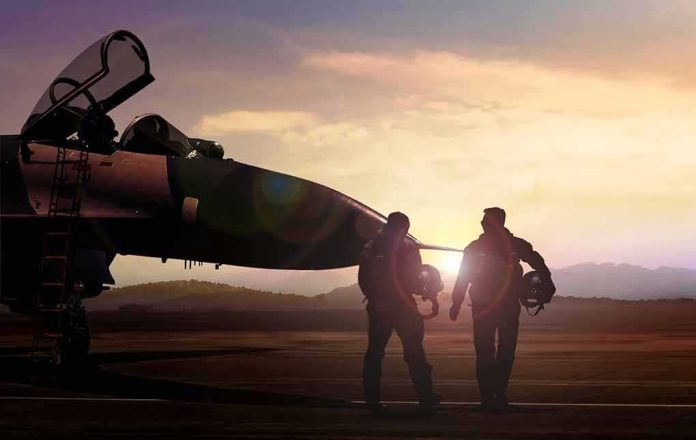
On September 11, 2001, two District of Columbia Air National Guard pilots launched in F-16 jets without missiles. Lieutenant Heather “Lucky” Penney and her flight lead, Lieutenant Colonel Marc Sasseville, planned a last-resort move. They would ram United Airlines Flight 93 if they found it headed for the capital. Penney has described how Sasseville would hit the cockpit and she would strike the tail to break control of the plane. The Air Force museum also records this ramming mission in her biography.
The pilots faced a simple fact. Their jets were not armed, and time was short. They took off knowing they might not come back. Penney has said the goal was to stop the plane before it reached key sites in Washington. This plan matched the chaos of that morning, when no one knew how many planes were still a threat. Flight 93 later crashed in Pennsylvania after passengers fought the hijackers, ending the threat without an intercept.
Who Gave The Orders And When They Landed
That morning, national leaders discussed the use of force to defend the country. Accounts and records state that President George W. Bush gave Vice President Dick Cheney authority to order a shootdown if needed. The 9/11 Commission wrote that the authorization reached the air defense sector only after Flight 93 had already crashed, making it moot for that aircraft. This timing gap shows the difference between high-level intent and front-line execution during a fast-moving attack.
Witness testimony and transcripts describe how the order moved through the system while controllers tracked threats nationwide. Communication lines among the Federal Aviation Administration, the military command center, and the air defense sectors were strained. Units scrambled fighters, but often with little or wrong information on where to go. This is why local pilots like Penney acted on immediate options, including ramming, given their lack of weapons and the urgent risk to the capital.
Courage In The Cockpit And Gaps In The System
Heather Penney’s account has remained consistent over the years, and trusted institutions have documented it. The National Museum of the U.S. Air Force states she was known for flying a ramming mission against Flight 93. Mainstream outlets have also reported her description of how she and Sasseville divided the targets on the hijacked jet, with one aiming for the cockpit and one for the tail. These reports align on the core facts of intent, method, and the lack of onboard weapons.
The 9/11 Commission and later reviews found serious problems in how orders and warnings flowed that day. The Commission reported that shootdown authority was not communicated to the air defense sector until 28 minutes after Flight 93 crashed. A separate report highlighted delays in passing the order to pilots and noted the military got no more than nine minutes’ notice on any of the four hijackings. These findings point to system failures, not a lack of will to act.
Why This Still Matters In Today’s America
The 9/11 air response shows two truths at once. Individual Americans in uniform were ready to risk everything to protect others. At the same time, the larger system many rely on broke down under pressure. People across the political spectrum see versions of this today. They worry about slow, confused government responses while ordinary citizens carry the burden. This story is a reminder to honor courage and fix the pipes that move orders, data, and decisions when seconds count.
Sources:
military.com, heatherpenney.com, en.wikipedia.org, abcnews.go.com, abcnews.com, cla.purdue.edu, independent.co.uk, americanradioworks.publicradio.org