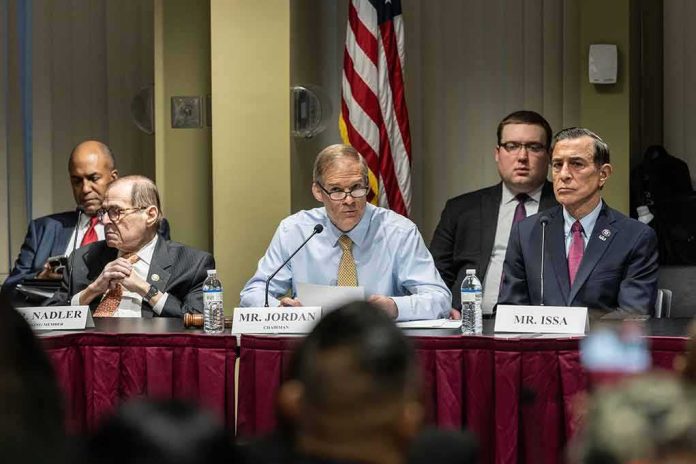
Senators revealed Justice Department records showing Jack Smith’s team obtained text data involving 44 lawmakers, turning a heated perjury accusation into a broader fight over government overreach.
Story Highlights
- Republicans said prosecutors secretly obtained texts tied to 44 members of Congress.
- Josh Hawley’s perjury claim stumbled as details proved more complex than a yes-or-no.
- Jack Smith said the records were lawful and relevant to the Trump probe.
- Both sides framed the same facts as either routine law enforcement or political abuse.
What Sparked The Clash At The Senate Hearing
Senator Josh Hawley said Jack Smith lied under oath about seeking lawmakers’ text messages. During the hearing, Hawley pressed for a simple answer and argued prior testimony conflicted with new records. Reporting and transcripts showed Smith’s office did seek phone data linked to Congress, but the scope involved toll and metadata records. That nuance undercut a clean perjury claim, even as it raised fresh alarms about how far prosecutors went and why.
Senate Republicans presented committee materials that said Smith’s team obtained text messages tied to 44 members of Congress during the Trump investigation. The release named Republicans such as Chuck Grassley, Ron Johnson, and Josh Hawley, and said prosecutors accessed texts to and from these officials. That claim, if accurate, marked a major expansion of the probe’s reach into the legislative branch, and fueled a narrative that the Justice Department crossed a bright line.
How Prosecutors Defended The Subpoenas
Jack Smith told senators that investigators sought congressional toll records because they were relevant to the Trump case, not to investigate lawmakers themselves. He said his decisions followed facts and law, and that he had no partisan loyalties. Smith also denied violating the Constitution’s Speech and Debate protections and said his team worked to comply with legal rules and internal policies. Supporters framed the steps as standard tools used in complex cases.
Reuters and other outlets reported that Smith stood by his charging decisions and would not be swayed by threats or politics. He argued the investigation developed strong evidence and that the same calls for restraint would not stop lawful steps. This defense landed with Democrats on the panel, who highlighted his record and the seriousness of the underlying crimes alleged against Trump. The divide showed how identical facts can appear as either misuse or method.
Why The “44 Lawmakers” Claim Hits A Nerve
Senate materials alleged prosecutors obtained communications linked to dozens of elected officials. That scale shocked many viewers and fed a wider fear that top officials use secret orders to watch political rivals. Critics argued that even if judges approved the orders, the reach into Congress risks chilling speech and constituent work. They said it looked like a dragnet around Republicans close to Trump, not a narrow request tied to a limited set of calls.
Smith’s backers countered that metadata and toll records are common in public corruption and conspiracy cases. They said the target was Trump’s effort to stay in power, and that phones of people in his orbit were naturally part of the trail. They noted that subpoenas are not wiretaps and often exclude content or protected speech. The dispute turns on whether investigators drew lines tightly enough to honor privacy and the Constitution while following the evidence.
The Deeper Stakes For Trust In Government
Americans on the left and right worry that powerful insiders bend rules and protect their own. This hearing amplified that anxiety. Republicans said the Justice Department turned tools of justice into political weapons. Democrats said the system must have room to hold a president to account. The lack of full public records on sealed subpoenas and filters left space for both stories to grow, keeping mistrust high and answers partial for now.
Fox News host Sean Hannity deleted his social media posts supporting Sen. Eric Schmitt (R-MO) after it was revealed that Schmitt botched a line of questioning during a Senate Judiciary Committee hearing involving former Special Counsel Jack Smith.https://t.co/TGJXMcquaj
— Steve (@Stevenof1) September 30, 2026
Two things can be true at once. Prosecutors can have legal authority, and still reach too far for the moment. Lawmakers can face hard questions in a national probe, and still deserve strong guardrails. Clearer disclosure about what judges approved, what content was actually read, and how privilege was protected would help. Until then, the fight over “44 lawmakers” will keep feeding a shared fear: that our institutions serve politics before the people.
Sources:
abcnews.com, pbs.org, judiciary.senate.gov, nytimes.com