

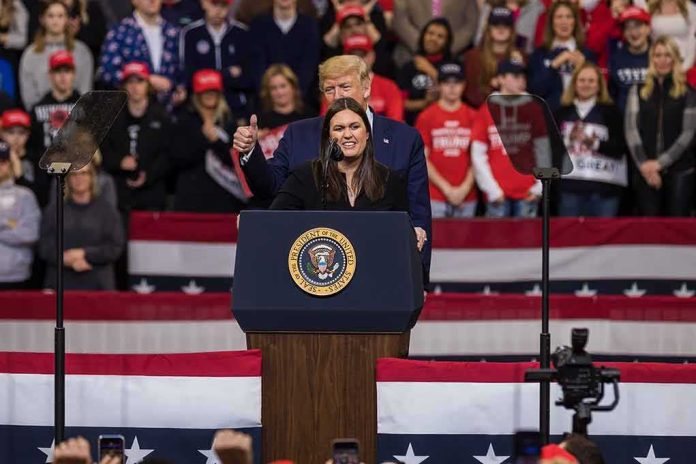
At a Mississippi rally, President Trump said men told him rising 401(k)s made their wives “finally” love them again, tying market gains to marriage turnarounds.
Story Snapshot
- Trump linked reported 401(k) gains to improved spousal affection in rally remarks.
- He cited a New York police officer who said his wife now sees him as a “genius” with money.
- Research shows money fights are common in marriages and often hard to resolve.
- The remarks came amid broader debate over how economics shape family life.
What Trump Said At The Rally
At a rally in Corinth, Mississippi, President Trump told supporters that men have approached him with thanks. He said they claimed their wives “finally” love them because their retirement accounts rose. He urged people to check their 401(k)s and rattled off gains like “60%,” “65%,” and “up 64%.” He shared one story about a New York police officer whose wife now thinks he is a “genius” with money, based on market gains.
Trump’s remarks placed personal family pride next to stock market performance. He did not present account statements or name the people. The setting was a campaign-style speech where praise and humor often mix with policy points. The language drew a straight line from higher balances to warmer marriages, suggesting money momentum has social effects in the home.
The Financial-Marriage Link In Research
Relationship scholars have long found that money is a frequent source of stress between partners. One study of 100 couples recorded hundreds of conflicts and found money issues were common and tough to resolve. These fights often lasted longer and felt more serious than many other arguments. Money stress can drain patience and trust over time, which can weaken a relationship’s daily tone and make small issues feel larger.
Newer reviews echo that pattern. They link frequent money disagreements with lower relationship quality and higher risk of breakup, even when income and debt levels are controlled. This means money conflict is not only about dollars and cents. It is also about control, security, and respect. When partners feel safer and more aligned on money, they often fight less and connect more, which supports a calmer home life.
How Market Gains Could Shape Home Life
Household finances can affect how couples plan, save, and spend. When retirement accounts rise, some families feel less pressure. That relief can ease fights about bills, debt, or big goals. A spouse who handles investments may also feel more confident. That confidence can look like skill to a partner who watches account balances grow. Trump’s story taps into that everyday hope: that better finances can lower stress and raise goodwill at home.
Still, experts warn that money confidence and money harmony are not the same thing. Partners often clash over values, habits, or risk tolerance. Some are natural savers, others are spenders. Even in good markets, those differences can flare. The research suggests couples who talk openly, set shared goals, and budget together tend to avoid repeat fights. Gains help, but shared plans and steady communication do much of the heavy lifting.
Why The Message Resonates Across Politics
Americans across party lines feel squeezed by costs and let down by leaders. Many think the system serves the well connected first. In that climate, any sign of financial relief hits home. A bigger nest egg feels like a win you can see on a screen. Tying that to family peace speaks to a core worry: people want stability, dignity, and a fair shot to care for those they love. That desire runs deeper than political labels.
Trump’s framing also reflects a broader playbook in modern politics: connect national outcomes to kitchen-table life. Whether voters credit policy, markets, or luck, they judge results by what reaches their wallets and homes. For many, the test is simple: Can we pay the bills, save a little, and sleep at night? Claims that link those gains to calmer marriages land because they map public metrics to private peace in a single, vivid line.