

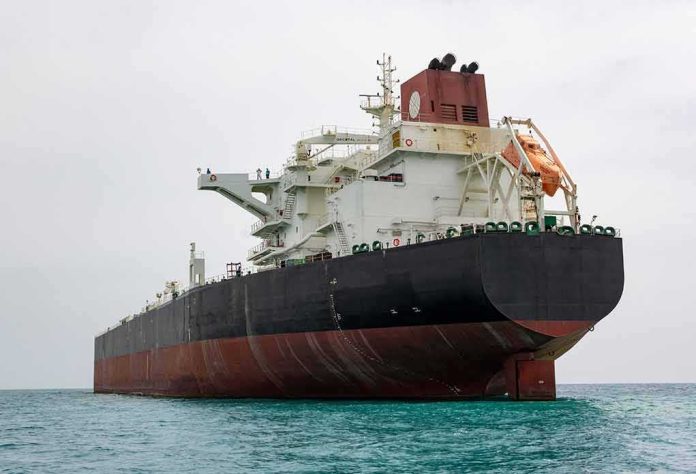
Iran says the Strait of Hormuz will stay closed to normal operations until the United States meets seven specific demands, even as Washington and Israel quietly draw up plans to strike Iran once the midterm elections are over.
Quick Take
- Iran has laid out seven conditions before it will return to nuclear talks, including a Middle East ceasefire, unfrozen assets, and an end to the U.S. naval blockade.
- An Iranian official says the Strait of Hormuz, a key oil shipping route, cannot reopen until those seven conditions are met.
- The White House has said it will not strike Iran before the November 3 midterms, but the Pentagon has already built attack plans for afterward.
- The core dispute: Washington wants Iran to give up nuclear ambitions first, while Iran wants sanctions and military pressure lifted first.
Tehran Lists Seven Demands Before Talks Resume
Iran’s government has drawn a clear line on what it wants before restarting negotiations with the United States. Jordan News reported on October 31 that Iran’s seven conditions are a Middle East ceasefire, release of frozen Iranian assets, an end to oil-sector sanctions, an end to the U.S. naval blockade, war compensation, a U.S. troop withdrawal from the region, and an end to threats and interference.
Strait of Hormuz Tied Directly to the Demands
An Iranian official made the stakes concrete. Iran International quoted the official, identified as Rezaei, saying on October 31 that “the Strait of Hormuz cannot reopen unless Iran’s seven conditions are met”. The strait is one of the world’s busiest oil shipping lanes, so any restriction there carries weight far beyond the region, touching global energy prices and supply chains that everyday consumers feel at the pump.
Iran’s list directly answers specific U.S. pressure tactics that have been in place for months. Each of the seven demands matches a real policy: the blockade, the frozen funds, the sanctions, and the military buildup. Jordan News reported that these measures are precisely what Tehran wants rolled back before it will sit down at the table again.
Washington Prepares Options for After the Election
At the same time, the United States is not standing still. ABC News reported on October 22 that American and Israeli militaries have prepared plans for renewed strikes on Iran, while the White House confirmed no attack would happen before the November 3 midterm elections. The Pentagon has reportedly briefed the Defense Secretary on strike options built to avoid needing follow-up waves, according to separate reporting on the planning process.
The timing is not an accident. Multiple outlets have reported that officials view the period right after the midterms as the most likely window for any U.S. action, partly to avoid disrupting oil markets or domestic politics before Americans vote. That timing places Iran’s public demands and Washington’s private military planning on a collision course just weeks apart.
Core Disagreement Blocks Any Quick Resolution
The main sticking point is simple to state but hard to solve. The United States wants Iran to make nuclear concessions before any sanctions relief. Iran wants the blockade lifted, its assets unfrozen, and permission to sell oil before it negotiates on its nuclear program at all, according to Jordan News reporting on the current impasse. Neither side has shown public willingness to move first.
NEW: Senior officials from the Mecca Pact’s three signatories met with senior Iranian officials in Tehran on October 26 to discuss a new US-Iran deal in concert with ongoing Pakistani and Qatari efforts.
Read more ⬇️ https://t.co/7Ax5kkxQE1
— Institute for the Study of War (@TheStudyofWar) October 27, 2026
This standoff echoes a pattern seen before in U.S.-Iran relations. The 2015 nuclear deal traded Iranian nuclear limits for sanctions relief, cutting Iran’s enriched-uranium stockpile by 98 percent and capping enrichment levels. That agreement fell apart after the United States withdrew in 2018, a history that likely shapes why Iran now wants guarantees against renewed pressure before giving up any leverage again.
For Americans watching gas prices and war headlines at the same time, the situation reflects a broader frustration many already feel: major decisions about war, sanctions, and energy costs are being shaped behind closed doors, on timelines tied to elections rather than public debate. Whether the two sides find a path to talks or the Pentagon’s post-election options move forward, the outcome will land on ordinary households through fuel prices and regional stability alike.
Sources:
thegatewaypundit.com, nytimes.com, bostonglobe.com