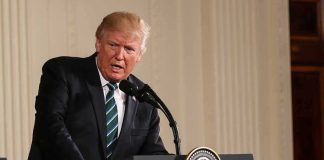

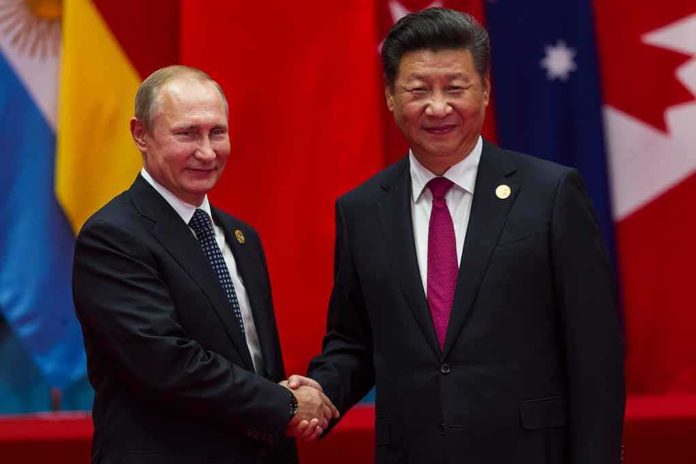
Three nuclear-armed leaders gathered in one room in China as cameras rolled and the world watched for what would come next.
Story Snapshot
- President Trump, China’s Xi, and Russia’s Putin gathered at APEC events in Shenzhen and exchanged greetings.
- News outlets reported a planned first-ever three-way meeting among the leaders during the summit.
- Expected topics included nuclear limits, ending the war in Ukraine, and wider strategic stability.
- Officials had not released a joint readout of completed trilateral talks at the time of reporting.
Leaders Converge In Shenzhen With Global Stakes On The Table
President Trump, China’s President Xi Jinping, and Russia’s President Vladimir Putin appeared together at APEC events in Shenzhen, greeting one another before a group photo and banquet. On-site reporting described the three leaders interacting during the welcome dinner, underscoring the high-profile nature of the gathering. The scene signaled more than ceremony. It placed the heads of the three largest nuclear powers in the same venue as wars and arms control questions pressed worldwide.
News organizations reported that the leaders planned a first-ever trilateral meeting on the sidelines of APEC. An Associated Press account said a United States official confirmed a scheduled three-way session and noted President Trump’s intent to raise nuclear-weapons limits and the war in Ukraine. Additional coverage framed the encounter as unprecedented in the modern era, with a focus on strategic stability and the possibility of de-escalation in active conflicts.
What Was Expected To Be Discussed And Why It Matters
Reports pointed to a tight agenda if the three-way talks occurred as planned. Expected topics included capping nuclear risks, steps to end Russia’s war in Ukraine, and wider regional flashpoints tied to Iran and global energy flows. These issues affect food prices, fuel costs, and family budgets back home. They also shape whether American troops face greater danger overseas. A real shift on any one of these topics could change both markets and daily life in the United States.
Chinese officials previewed “in-depth discussions” on issues central to peace and stability, while financial press coverage emphasized strategic aims behind the gathering. For Washington, that includes testing whether great-power talks can cool wars without new troop deployments or higher defense costs. For Beijing, it includes projecting leadership in Asia’s economic hub. For Moscow, it includes breaking isolation and seeking leverage over the Ukraine battlefield and sanctions pressure.
Symbolism, Substance, And The Limits Of Public Information
Visual moments at summits carry meaning. A handshake, stage placement, or shared table can signal status and intent even before diplomats put pen to paper. Research on summit diplomacy finds that these images help leaders message strength, reliability, and openness to deal-making, and can shape public views of what is possible next. That helps explain why a brief greeting among the three drew intense attention ahead of any formal statements.
🇨🇳🇺🇸🇷🇺 Three men in one room in Shenzhen, and the rest of the world waiting outside.
Xi Jinping, Donald Trump and Vladimir Putin have just started their first-ever three-way meeting, at the APEC summit. Likely on the table: Ukraine, Iran and Hormuz, tariffs, Taiwan and nuclear… pic.twitter.com/Kk1gXwqEma
— Monte Cristo (@Montecristo_on) November 19, 2026
At the time of reporting, outlets described the trilateral session as scheduled or planned, and did not carry a joint public readout of completed three-way talks. Reports did, however, confirm the leaders’ joint appearances and the expected agenda if talks proceeded. That leaves the focus on what is verifiable now: the three leaders met at APEC events, planned to talk, and aimed their agendas at the world’s most urgent security questions.
Sources:
youtube.com, aljazeera.com, apnews.com, cnbc.com, cambridge.org