
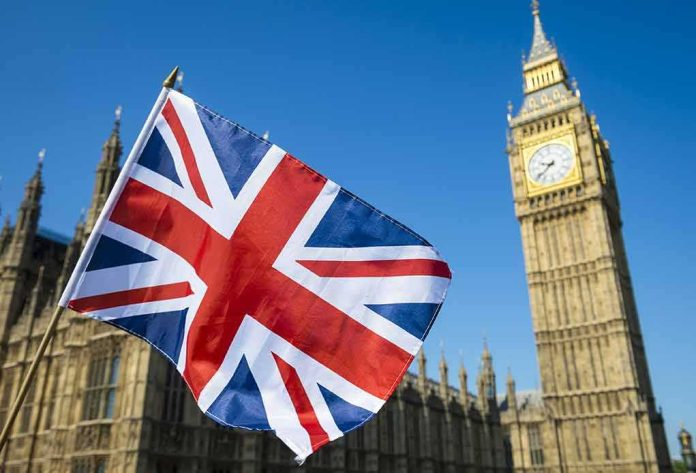
Britain’s leader said “the Brexit we were given has not worked,” and he is asking Europe to explore a new deal.
Story Snapshot
- Andy Burnham said the current Brexit deal failed and wants talks on a closer EU relationship.
- The government framed reconnection with Europe as a way to boost trade with the UK’s largest market.
- Parliamentary evidence says deeper alignment could lift gross domestic product by up to about 2% in some scenarios.
- Opponents warn reopening the Brexit question could revive toxic divisions and distract from daily costs.
Burnham’s Case: Brexit Underperformed, Reset Now, Options Later
Andy Burnham used a high-profile foreign policy speech to argue the current Brexit settlement “has not worked,” saying the United Kingdom lost more than it gained and should discuss long-term options with European partners. He framed this as a reset that does not rerun the 2016 vote, with choices left to the British people in a future Parliament. He ruled out rejoining the European Union during this Parliament, positioning the plan as step-by-step rather than a quick return.
Burnham linked the push to wider global trends. He warned against isolation and protectionism and called for practical cooperation with nearby allies to improve security and prosperity. This sequencing matters. It invites talks first, decisions later, and avoids a shock to rules on free movement or a rushed bid to rejoin. That framing aims to calm voters who fear sudden change while signaling to businesses that trade friction is on the agenda for repair.
The Economic Pitch: Cut Friction With the Nearest, Largest Market
Downing Street’s summit message emphasized reconnecting with “our nearest neighbours and our largest market,” arguing that better ties can support growth and stability. Parliamentary written evidence outlined how aligning rules on goods, and possibly services, can ease customs checks, slash delays, and lower costs for exporters and importers. Those scenarios estimate gains of roughly 1%–1.5% of gross domestic product for goods alignment and 1.7%–2.2% when services are included.
These figures are model-based estimates, not a forecast of guaranteed gains. They do not reveal who would win or lose, what it would cost to implement, or whether European Union leaders would accept the specific terms. Still, they provide a clear mechanism: fewer barriers mean smoother trade, which can lift output. For many small and mid-size firms on tight margins, even modest cuts in paperwork and delays can matter for jobs and paychecks.
The Political Risks: Division Fears, Voter Fatigue, and Mixed Signals
Critics across parties warn that reopening the Brexit fight could rekindle old wounds. Reporting describes some lawmakers calling the debate “toxic,” and some Scottish members worrying it could fuel a fresh push for independence. Others say another round of European wrangling could crowd out action on inflation, mortgages, and energy bills. That message targets voters who feel London debates big ideas but misses their rising daily costs.
REVEALED 👀 Kemi Badenoch's director of strategy, Lord Gilbert of Panteg, has reportedly advised her to "shift the narrative away from Brexit", on the day Andy Burnham and Nigel Farage are both in Brussels fighting over Britain's place in Europe. Gilbert told the Lords in 2016 he…
— Raheem J. Kassam (@RaheemKassam) November 20, 2026
There is also skepticism about process and patience. Research cited by media reports suggests many voters are tired of the Brexit saga and uneasy with steps that might mean new budget payments or currency debates, even if they like closer ties in principle. Burnham’s stance tries to bridge that mood by ruling out a fast return while exploring alignment. That can read as cautious leadership to some, and as muddled signals to others who want a firmer endpoint now.
What Matters for Readers: Trade-offs, Timing, and Trust
For families and small businesses, the core question is simple: will this lower costs and raise incomes soon? The economic case says less friction can help the real economy, but any shift needs negotiation, legal changes, and time. The political case says move in steps and let voters decide on bigger leaps later. The risk case says do not reopen a culture war that distracts from bills due this month. The gap between promise and delivery will decide which view wins.
Sources:
apnews.com, us.cnn.com, lexpress.eu, politico.eu, latimes.com, theasialive.com