

A rare government order to hunt and kill a great white shark followed a fatal attack steps from shore at a busy Perth beach.
Story Snapshot
- Greg O’Neill, 63, was identified as the swimmer killed at Sorrento Beach in Perth’s north.
- Witnesses reported a large shark struck about 10:30 a.m., close to shore, during a morning swim.
- Western Australia issued a rare catch-and-kill order targeting the suspected great white.
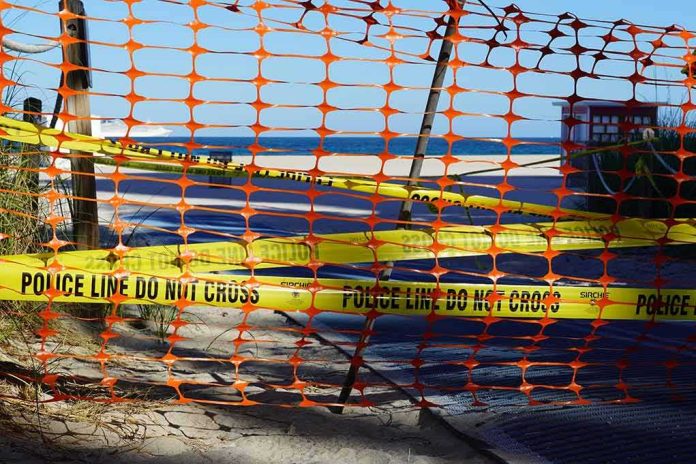
- Beaches were closed as police and fisheries searched for the shark and O’Neill’s body.
What Happened at Sorrento Beach
Western Australia police and lifesavers responded Friday morning after a shark attacked a swimmer near the shoreline at Sorrento Beach. Multiple outlets named the victim as Greg O’Neill, a 63-year-old husband, father, and grandfather-to-be. Reports said he was swimming with a friend only meters from shore when a large shark pulled him under. Authorities said they were confident the swimmer died as a result of the attack. His body had not been recovered as searches continued.
Officials closed Sorrento Beach and other northern Perth beaches while patrols searched for the shark. Western Australia’s fisheries minister, Jackie Jarvis, authorized a catch-and-kill order aimed at the shark believed responsible. Media described the shark as a large great white, though species identification can vary in early reports. The order empowered fisheries officers to destroy the animal if captured. The government did not announce a broader shark cull.
Why This Response Stands Out
Government leaders in Western Australia rarely approve kill orders after shark attacks. Jarvis said the move was very unusual and likely the first such order in roughly a decade. The step shows how a single fatality near a popular beach can drive fast action. Officials often move to show control and reduce fear, even as investigations continue. This response followed a pattern seen in past incidents where safety measures ramp up quickly after a death.
Research shows shark risk in Western Australia is real but uncommon. Over the long run, fatal attacks there have risen and fallen in waves. One review counted 35 shark-bite incidents between 1990 and 2009 in the state, with six deaths. Another public case study found periods with no deaths and later clusters of incidents. These swings help explain why each fatal event near a city beach becomes a major public issue with strong calls for action.
The Debate Over Catch-and-Kill
Experts and past reviews have questioned whether hunting a single shark after an attack improves safety. An Australian Broadcasting Corporation analysis noted there is no clear evidence that preemptively killing sharks makes swimmers safer. Such actions are often reactive and occur after the harm is done. Western Australian policy has shifted over the years, with targeted measures sometimes used when an individual shark is seen as a serious threat.
Capture gear has been set 1.5km off Sorrento Beach as the family of shark attack victim Greg O’Neill pays tribute to the much-loved swimmer.
READ IN COMMENTShttps://t.co/Sw84UCoaGc
— The West Australian (@westaustralian) September 20, 2026
For families and beach communities, these debates are not abstract. O’Neill’s relatives described him as a devoted family man and grandfather-to-be, adding human weight to the loss reported across major outlets. Beach closures, patrols, and the rare kill order show the state’s focus on visible steps. Whether those steps reduce future risk remains a live question in policy circles, even as this investigation and search continue.
Sources:
foxnews.com, abc.net.au, nine.com.au, aol.com, ground.news, nypost.com, dailymail.com, 7news.com.au