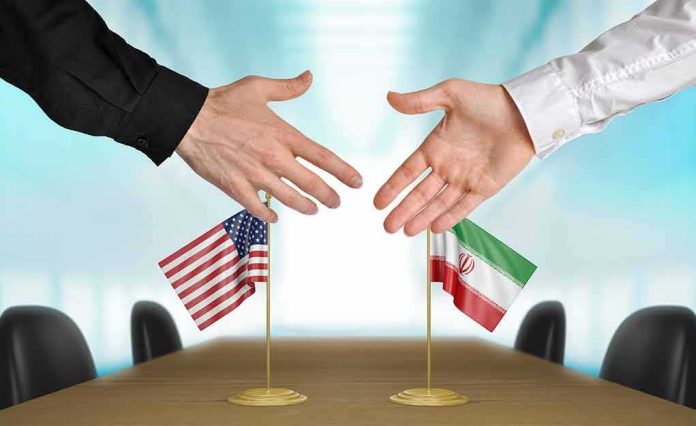
President Trump says there’s a “good chance” for a new Iran nuclear deal even as he warns the United States could start bombing again if talks fail.
Story Snapshot
- Trump is pushing a new Iran agreement built on a 60-day memorandum of understanding, not a final peace treaty.
- The framework reopens the Strait of Hormuz and pauses fighting, but leaves nuclear and sanctions issues for later talks.
- Trump says there is a “good chance” of a deal while stressing the U.S. is still “locked and loaded” if Iran does not comply.
- Confusing signals highlight why many Americans see foreign policy as run by distant elites, not focused on their daily lives.
What Trump’s “good chance” for an Iran deal really means
President Trump is telling reporters there is a “good chance” the United States and Iran will reach a lasting deal, but the current document is only a temporary framework. The memorandum of understanding was signed by Trump, Iran’s President Masoud Pezeshkian, and Pakistan’s leader as mediator. It stops active fighting and sets rules for reopening the Strait of Hormuz, a key shipping lane for world oil. It also starts a 60‑day window for tougher talks on nuclear issues and sanctions.
The White House calls this memorandum a “historic breakthrough” that will make sure Iran never gets a nuclear weapon and reopen the Strait “to free navigation.” That language sounds final, but the text itself says both sides still have up to 60 days, and more if they agree, to hammer out a full agreement. Trump has said publicly that Iran “must agree” to give up nuclear weapons and fully open the Strait with no tolls before he will sign a true deal. So this stage is more of a truce plus a roadmap than a finished peace.
The deal so far: ceasefire, open strait, money on the table
News reports say the framework includes several big promises from both sides. Iran pledges never to develop a nuclear weapon and to allow traffic through the Strait of Hormuz without tolls for at least 60 days. In return, the United States promises to lift its naval blockade on Iranian ports and start lifting sanctions that have choked Iran’s economy. CNBC reports the talks also include a massive $300 billion plan to rebuild Iran and unlock frozen Iranian assets, money that critics say looks like another huge payout.
For many conservative readers, this feels like déjà vu: cash and economic relief for a hostile regime that has long chanted “Death to America.” Past deals, including the 2015 nuclear agreement that Trump later quit, raised similar fears about rewarding bad behavior. For many liberals, the ceasefire and reopening of energy routes look like a win for diplomacy over endless war. But both sides can see that key issues—how much uranium Iran can enrich, how inspections work, and how quickly sanctions come back if Iran cheats—are all pushed into that 60‑day negotiation period. That gap between big promises and unresolved details feeds public distrust.
Talks under the shadow of “locked and loaded”
Trump continues to mix hopeful talk with very hard threats. He has said there is “a good chance” that “something could happen” with Iran, but warns the United States will “go back to dropping bombs” if Iran does not stick to the accord. At the G7 summit in France, he told reporters he would bomb Iran “relentlessly” if it broke the terms. CNN reports that senior officers briefed him on low munitions levels and risks of escalation even as he allowed a pause in strikes to give talks “space.”
This blend of diplomacy and threat is standard for Washington, but it looks strange from the outside. The current memorandum itself bars both sides from using force and calls for an “everlasting cessation of military actions.” Yet at the same time, the president and his team stress that “all options” remain on the table and that the United States is “locked and loaded” for major strikes. To an average American trying to pay $4 gas and keep up with rising prices, this can feel like leaders playing war and peace on a distant chessboard while regular people face the bill.
Why many Americans see a deep state game instead of clear policy
This Iran episode fits a pattern that has worn down trust on both the right and the left. First, the White House announces a “deal” and calls it a historic success. Then reporters reveal that it is only a memorandum of understanding, with the hardest issues pushed into secret talks and future side documents. Iran has not even fully confirmed the terms in public, according to coverage of Trump’s announcement. People hear “peace,” “deal,” and “breakthrough,” but learn later that almost everything important still sits in the fine print.
⚡ Trump on Iran: 'I have plenty of time.' Signal of no rush to compromise amid stalled nuclear talks. Oil & gold on edge. Is this a bluff?
— Dino Vibes Daily (@DinoLeadingNews) July 27, 2026
Conservatives remember years of “globalist” foreign policy and worry that elites in Washington and foreign capitals are once again trading American leverage for short‑term calm in oil markets. Liberals see a president who pulled out of the last Iran deal, launched a new war, and now claims credit for ending it without showing a stable path to peace. Both groups share a feeling that foreign policy is made by a small circle far above them, more focused on headlines, markets, and reelection than on clear, honest explanations.
What to watch over the next 60 days
The next two months will show whether Trump’s “good chance” turns into a real agreement or another half‑finished deal. Analysts note that the memorandum sets a 60‑day timetable to tackle the toughest topics: strict limits on Iran’s nuclear program, detailed inspections, and how much sanctions relief Iran truly gets. A White House official has already said that highly enriched uranium and sanctions relief will be top issues in this phase. If those items stay vague or secret, expect skepticism to grow.
For citizens across the political spectrum, the stakes are simple, even if the diplomacy is complex. A durable, transparent deal could reduce war risk, steady energy prices, and show that leaders can solve hard problems without endless spin. A shaky, unclear deal—sold as victory while threats of new bombing hang overhead—would confirm the fear that the government serves its own class of insiders first. Given that Trump has walked away from one Iran deal before, many Americans will judge this new push not by words like “historic,” but by whether clear terms and real results ever reach the public.
Sources:
insiderpaper.com, trumpwhitehouse.archives.gov, npr.org, bbc.com, timesofisrael.com, cnbc.com, cfr.org