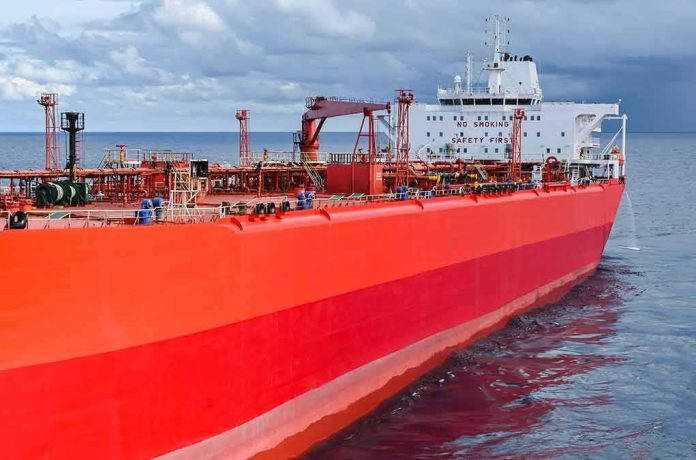
Commercial shipping through the Strait of Hormuz has plunged to single-digit tanker transits as new vessel attacks and warnings spook operators and insurers.
Story Snapshot
- Maritime advisories say traffic remains far below normal, with few tankers moving each day.
- Incident reports describe explosions and a tanker hit by an unknown projectile near Oman.
- The United Arab Emirates accused Iran of striking Abu Dhabi National Oil Company vessels.
- Oman condemned repeated attacks but did not name the attacker.
What Official Maritime Advisories Say About Traffic
Joint Maritime Information Center advisories dated August 2 and August 9 reported reduced commercial traffic through the Strait of Hormuz. The August 9 note cited multiple incidents and said independent tracking showed single-digit tanker transits in both directions. These advisories guide shipmasters and insurers. They do not declare the strait closed. They do show operators choosing to wait, reroute, or reduce speed due to risk and higher costs.
Maritime warnings often lag the news cycle but shape real choices. When insurers raise war-risk premiums and owners see fresh incident alerts, traffic can fall fast even without a legal closure. The August 2 advisory also said traffic “remained at reduced levels,” pointing to a trend across days, not a one-off scare. This pattern matches past chokepoint crises, where perceived danger drives decisions as much as formal orders do.
What We Know About Recent Attacks and Blame
United Kingdom Maritime Trade Operations reports and media accounts describe a tanker struck by an unknown projectile near Oman, damaging the engine room and leaving the ship not under command. No casualties were reported in that case. Separate reporting noted two explosions near a transiting tanker southeast of Kumzar, Oman. These details point to real hazards but stop short of naming a culprit in official safety alerts.
The United Arab Emirates alleged Iran targeted Abu Dhabi National Oil Company vessels on two separate dates this month. Those claims came from the government and the company’s statements, which said two ships were attacked while crossing the strait. Iran did not immediately respond in those reports. These are accusations by a government and a state energy firm, not a public forensic report. They highlight the stakes but leave open-source attribution incomplete.
Oman’s Role and the Geography Problem
Oman’s Foreign Ministry condemned repeated attacks on vessels transiting the strait and warned about threats to maritime safety and regional stability. Oman did not identify who was responsible. Some incidents occurred near or within Omani waters, adding confusion about location and jurisdiction. Geography matters here. Events near the strait, in the Gulf of Oman, or within the narrow channel get blurred together in public debate, which makes clear attribution harder.
🚨 HORMUZ JUST ENTERED A MORE DANGEROUS PHASE.
IRAN SAYS IT IS SHIFTING FROM DEFENCE TO OFFENCE.
🦅 EAGLE INTELLIGENCE | MORNING WATCH
18 AUGUST 2026For the past several days, Eagle Intelligence has been asking one question:
When will ordinary ships return to Hormuz?
This… pic.twitter.com/BoD2toGmnX
— Eagle Intelligence Maritime (@EagleIntelMari) August 17, 2026
This mix of sites also fuels political spin. One side cites strikes “in Hormuz.” Another points to attacks “near Oman.” Maritime users care about risk in the whole approach, not a legal line on a map. If a ship can be hit nine nautical miles from the chokepoint, many owners will still hold back. That is why reduced traffic is visible even when authorities do not declare a closure. Safety, insurance, and timing rule the day.
Why This Matters for Americans
Energy costs and supply chains feel these shocks. When traffic drops, oil and gas flows slow and prices can climb. Families and small firms then pay more for fuel, shipping, and goods. Leaders on both sides claim to defend “freedom of navigation,” yet the system still leaves basic needs exposed to narrow waterways and distant actors. Many Americans see this as another case where global risks hit home while Washington argues and delays fixes.
People want honest answers: Who is attacking ships, what is the plan to protect traffic, and how soon can trade normalize? The advisories confirm danger and depressed movement. The claims by governments raise alarms but lack shared public proof. Until facts are clearer and security improves, many ships will wait. That keeps pressure on prices and on leaders to deliver more than speeches and threats.
What to Watch Next
Watch for three concrete signs. First, daily tanker counts rising back into double digits would show confidence returning. Second, a joint, named-security arrangement on routing and escorts could lower risk. Third, a public, evidence-backed attribution for recent strikes would reduce rumor and set red lines. Until then, expect fits and starts. The strait is not formally shut, but the fear factor is doing the job just the same.
Sources:
youtube.com, gcaptain.com, dbce.org, en.wikipedia.org