Lithuania is in active talks with the United States about hosting American nuclear weapons on its soil — a move that could redraw the deterrence map on NATO’s eastern flank and put nuclear warheads just miles from Russia’s Kaliningrad exclave.
Story Snapshot
- Lithuania’s Defence Minister confirmed the country is participating in working-level allied discussions on expanding US nuclear deployments in Europe.
- Lithuanian top officials, including the president and parliament speaker, say they do not rule out constitutional amendments needed to allow nuclear hosting.
- Washington is reportedly weighing whether to expand nuclear-sharing arrangements beyond the six North Atlantic Treaty Organization (NATO) countries that currently host US weapons.
- The talks remain classified, and no deployment decision, timeline, or specific weapons system has been publicly confirmed.
Lithuania Steps Into the Nuclear Conversation
Lithuania’s Defence Minister Robertas Kaunas publicly confirmed that his country is not sitting on the sidelines of a major allied discussion. “Discussions are indeed taking place… Lithuania is certainly not standing on the sidelines,” Kaunas told Lithuanian national broadcaster LRT, adding that “nuclear capabilities contribute to deterrence and security.” His remarks make Lithuania one of the few NATO frontline states to openly acknowledge participating in these sensitive conversations rather than deflecting questions entirely.
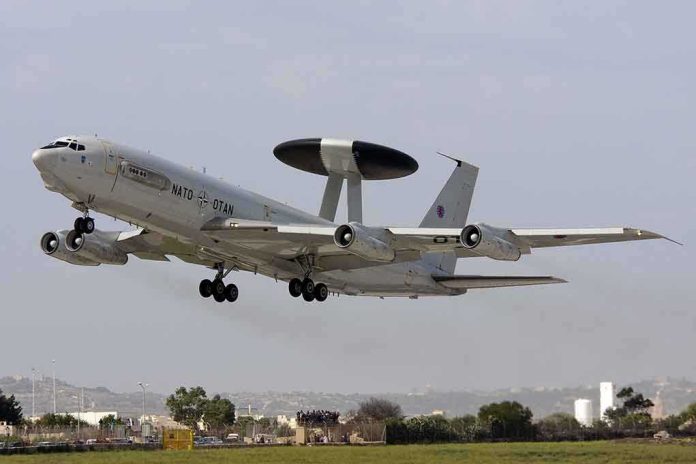
The discussions are occurring at a working level within allied structures, Kaunas explained, signaling genuine institutional engagement rather than political posturing. He declined to go into further detail because the talks are classified. The Financial Times, cited by LRT, reported that Washington is considering expanding nuclear-sharing arrangements beyond the six NATO member states that currently host US nuclear weapons, with additional dual-capable aircraft as part of the potential expansion package.
A Constitutional Hurdle — and the Will to Clear It
Hosting US nuclear weapons in Lithuania is not currently legal under the country’s constitution, which bars both weapons of mass destruction and foreign military bases on Lithuanian territory. That legal barrier is significant, but it does not appear to be a dealbreaker for Lithuanian leadership. President Gitanas Nausėda, parliament Speaker Juozas Olekas, and National Security and Defence Committee chairman Rimantas Sinkevičius have all publicly stated they do not rule out pursuing constitutional amendments to clear the path.
The willingness to even discuss amending the constitution reflects how dramatically the security calculus in the Baltic region has shifted since Russia’s full-scale invasion of Ukraine. Lithuania’s official defense posture already aligns with NATO’s nuclear deterrence framework — the country supports the retention and potential use of nuclear weapons on its behalf as part of collective defense, according to the International Campaign to Abolish Nuclear Weapons country profile for Lithuania. Support for the hosting idea has also emerged from some opposition politicians, suggesting a real domestic constituency exists beyond the governing coalition.
What This Means for the Broader NATO Deterrence Picture
Lithuania’s geographic position makes this discussion strategically significant. The country shares a border with Russia’s Kaliningrad exclave — a heavily militarized Russian territory on the Baltic Sea — as well as with Belarus, where Russia has already stationed tactical nuclear weapons. From a deterrence standpoint, advocates argue that expanding NATO’s nuclear-sharing footprint eastward signals allied resolve and raises the cost of Russian aggression against frontline states that Moscow might otherwise view as vulnerable.
https://twitter.com/LinasKojala/status/2062498891224756391
Critics and anti-nuclear advocacy groups counter that any deployment would provoke Moscow and risk escalation. Russia’s government has already characterized Baltic deterrence moves as anti-Russian provocation. However, the core deterrence argument — that nuclear-armed adversaries respond to capability and credibility, not to gestures of restraint — is grounded in decades of Cold War strategic history and remains the foundation of NATO’s own nuclear policy. For American conservatives who have long argued that strength deters aggression and weakness invites it, Lithuania’s willingness to take on the political and legal risk of hosting US nuclear assets represents exactly the kind of burden-sharing that Washington has urged European allies to embrace. The talks are early, the details are classified, and no deployment is imminent — but the conversation itself marks a meaningful shift in how NATO’s eastern flank is thinking about its own survival.
Sources:
[1] Web – POWDER KEG BALTICS: Lithuania Wants To Host US Nukes in Its Territory
[2] Web – Lithuania involved in discussions on possible US nuclear … – LRT
[3] Web – Lithuania | Treaty on the Prohibition of Nuclear Weapons
[4] Web – Lithuania in talks with U.S. on deploying American nuclear weapons