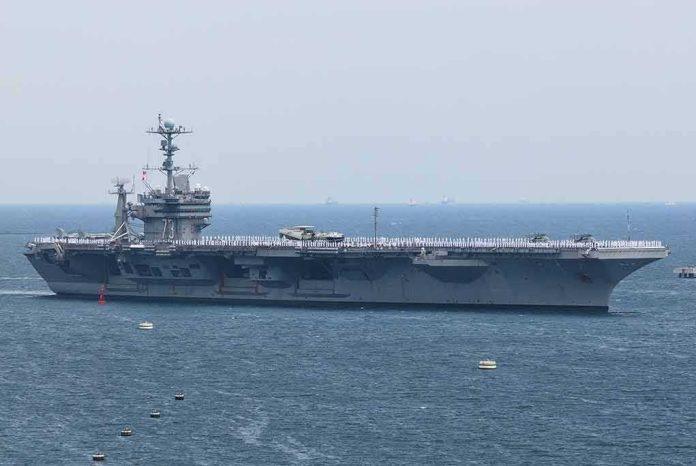
President Trump rejected reports of food shortages on the USS Abraham Lincoln as the Navy issued firm denials while families and lawmakers alleged severe problems aboard the carrier.
Story Snapshot
- President Trump called food-shortage coverage about the USS Lincoln “fake” as the Navy denied the claims.
- Military families and some lawmakers alleged scarce meals, broken plumbing, and low morale on the long-deployed carrier.
- Navy leaders said the ship met nutrition standards and had adequate supplies during deployment.
- The clash reflects a wider trust gap when officials offer assurances and families share vivid accounts.
What President Trump And The Navy Said
President Trump dismissed reports of food shortages on the USS Abraham Lincoln, calling them a “fake” story and saying the carrier had enough supplies. His pushback matched statements from the Navy’s top leadership. The Office of the Chief of Naval Operations said reports about food shortages and poor quality aboard the USS Abraham Lincoln and USS Tripoli were false. Military leaders later said the Lincoln’s strike group maintained required nutrition and days of food on hand.
Navy assurances also came with images of meals posted by officials, aimed at showing normal service aboard deployed ships. The message from leadership was consistent: the fleet’s logistics worked, and crews received adequate nutrition. These claims did not detail daily menus or any short gaps, but they asserted that required standards were met across the deployment. The firm tone underscored a desire to quell public worry and to support sailors during operations far from home waters.
What Families And Lawmakers Reported
Accounts from military families painted a harsher picture. Relatives told reporters that sailors faced meager meals at times, describing portions as small as half a cup of rice and two tortillas. They also raised concerns about broken toilets, moldy showers, and long stretches without hot water. Some lawmakers echoed these claims and pressed for answers about shipboard conditions and mental health strain tied to the long deployment.
Local coverage in San Diego amplified the family reports, which centered on scarce food and basic supply problems. These stories did not prove a fleet-wide failure, but they described lived experiences that clashed with official statements. The tension grew as each side held to its version of events. Families asked for accountability and transparency. Navy leaders stressed resilience, adequate stockpiles, and mission readiness during a demanding deployment cycle.
Why This Dispute Hit A Nerve
This clash resonated because it touches a broader concern: people across the political spectrum feel distant from those in charge. Many Americans believe leaders protect the system before they protect people. When the Navy answers with blanket denials and photos, and families answer with personal stories, the public sees a familiar gap. That gap grows when specific logs, inspections, or independent reviews are not quickly shared in detail.
So Kevin you are in the military. Can you tell me how the Trump and the Republicans are treating our military? Can you tell me how the men and woman are doing on the USS Abraham Lincoln? Because I hear they are running out of food and are jumping ship.
— paul flynn (@WallyHenry62) August 17, 2026
Clear facts still matter. The Navy says nutrition standards were met and supplies were sufficient. Families and some lawmakers say daily life sometimes fell short, with small meals and failing facilities. Both can be partly true if short-term lapses happened even while overall inventories looked fine. The fastest way to rebuild trust is concrete proof: release timelines of resupply, menu records, galley inspection notes, and repair logs, then address any gaps with fixes sailors can feel.
Sources:
facebook.com, bbc.com, sandiegouniontribune.com, middleeasteye.net, nine.com.au, youtube.com, wionews.com