

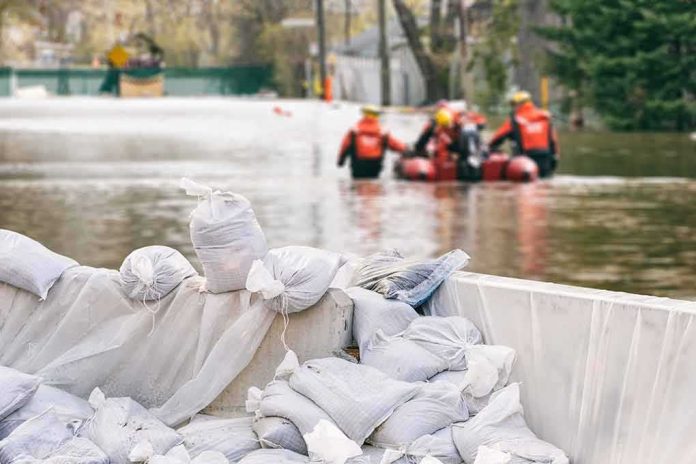
Nepal began burying unidentified flood victims after taking DNA samples as the official death toll surged and thousands remained missing.
Story Snapshot
- Nepal reported hundreds dead and thousands missing after severe floods.
- Authorities started temporary burials with DNA preserved for later IDs.
- Chitwan officials mapped graves in Devghat to allow exhumation.
- Limited morgue space and health risks drove the burial decision.
Rising Toll And Urgent Rescue Operations
Nepal’s disaster count climbed quickly over several days as rescue teams reached remote valleys. Officials reported hundreds dead and more than two thousand missing, reflecting the scale of damage and blocked roads across the Himalayas. Police earlier confirmed hundreds of fatalities, showing how fast numbers rose as bodies were recovered and reports arrived from outlying districts. Rescuers used helicopters and boats where roads failed. Authorities warned that many villages remained cut off, slowing searches and aid delivery.
Local hospitals struggled to store remains as heat sped up decay. District leaders said public health risks grew as days passed without refrigeration. Reporters in Chitwan saw body recovery far beyond morgue limits, with decomposition forcing a shift to burial. A ground report described dozens already interred and more planned as trenches were prepared to manage the overflow. Families kept posting photos of missing loved ones, while police urged people to file details to help future identifications.
Why Authorities Turned To Temporary Burial
Chitwan’s District Security Committee chose an open site in Devghat, Bharatpur Metropolitan City-1, for burials. Officials said teams collected DNA samples and assigned unique numbers before burial. Workers logged each grave’s location so bodies could be exhumed later if matches emerged. A senior district official said the choice balanced dignity and health needs. International guidance supports tagging, logging, and preserving evidence when disaster deaths exceed morgue and lab capacity. The process aimed to protect both families’ rights and community safety.
Police, rescue workers, and local administrators documented remains before interment. Reporters described identification markers placed above and below ground, along with recorded coordinates to create a usable map for future checks. This follows disaster victim identification steps described by the International Criminal Police Organization, which stress chain of custody and careful recordkeeping to link remains to families later. India sent forensic support to help with DNA analysis capacity, as Nepal’s labs faced a growing backlog.
Competing Demands: Speed, Dignity, And Cultural Care
Nepalese leaders framed the decision as a last resort shaped by public health. They said bodies could not remain exposed as heat and rainfall raised disease concerns among survivors and workers. Health references and disaster manuals emphasize respectful handling, unique tags, and burial methods that allow later exhumation when needed. The plan in Devghat sought to meet those standards by pairing DNA sampling with clear grave records and numbers that can be checked against family reports.
Chitwan’s Devghat forest is being used for mass burials after the August 26 flash floods in Nepal. Authorities have buried 96 unidentified bodies and are collecting DNA samples to help families identify victims later.
VOICEOVER: Suha Nisviya S A
PRODUCER: Lavanya R
VIDEO… pic.twitter.com/mdctZGRgl3— The Federal (@TheFederal_News) August 31, 2026
Rapidly changing counts created stress and confusion for families. Reported deaths rose as access improved and more bodies were found, a common pattern in large disasters. Officials and aid groups asked the public to focus on accurate reporting of missing persons and to submit dental records, photos, and DNA from relatives to speed matches. The goal is to move from temporary burial toward confirmed identifications and final rites once lab work, records, and family data align.
Sources:
youtube.com, khaleejtimes.com, thejournal.ie, english.news.cn, ljmu.ac.uk, humanitarianlibrary.org