
Federal prosecutors say four accused Mexican cartel members tried to trade fentanyl and methamphetamine for rocket launchers and machine guns in the Czech Republic.
Story Snapshot
- Four alleged Jalisco New Generation Cartel (CJNG) members face federal charges after arrests in the Czech Republic.
- Prosecutors say the men offered fentanyl and methamphetamine as payment for military-grade weapons.
- The alleged arsenal included machine guns, rocket-propelled grenade launchers, and mortar launchers.
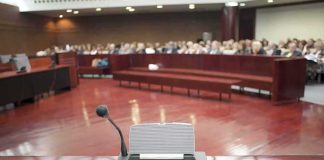
- Two defendants were extradited and appeared in federal court in Tampa, Florida.
- The case is part of a wider U.S. crackdown that includes fresh rewards for senior CJNG leaders.
Cartel Suspects Charged After Czech Arrests
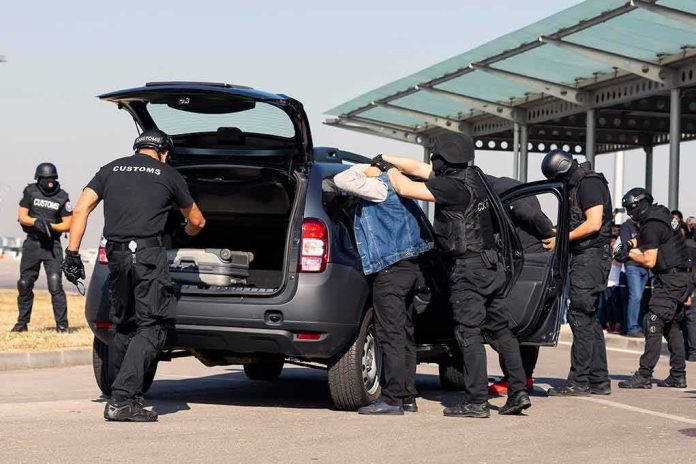
The U.S. Justice Department unsealed indictments against four men accused of being CJNG members. They were arrested in the Czech Republic in June 2026. Charges include conspiracy to commit narco-terrorism, drug importation, and firearms trafficking. Two of the men, Edgar Alejandro Lopez Velasco and Jose Miguel Alvarado Morales, were extradited to the United States. They appeared in federal court in Tampa this week.
Prosecutors say the scheme worked like a swap. Instead of cash, the men allegedly offered drugs bound for American streets in exchange for weapons overseas. The Justice Department said the defendants “paid in the form of fentanyl and methamphetamine imported into the United States for distribution”. That claim sits at the center of the government’s case.
Weapons List Reads Like a War Zone Order
Investigators say two of the defendants, Lopez Velasco and Diaz Jimenez, personally negotiated the arms deal in the Czech Republic. According to prosecutors, they sought “different kinds of European machine guns, rocket-propelled grenade launchers, mortar launchers, and accompanying ammunition and ordnance”. The government claims these weapons were meant for attacks on rival cartels, civilians, police, and Mexican military personnel.
Court filings tie each defendant to a specific cartel role. Lopez Velasco is described as a representative for a high-ranking CJNG figure. Diaz Jimenez allegedly ran a clandestine fentanyl lab. Gaxiola Lopez is accused of acting as a go-between for drug and weapons deals, while Alvarado Morales allegedly represented another senior cartel leader. Together, prosecutors say, they formed one coordinated supply chain.
Part of a Bigger Federal Push Against the Cartel
This case did not happen in isolation. The Treasury Department has separately sanctioned CJNG-linked figures accused of moving high-caliber firearms from the United States into Mexico. Just days before the Tampa charges became public, the federal government announced new indictments and more than $100 million in rewards for information leading to the capture of senior CJNG leaders.
The investigation reportedly involved cooperation between the United States, Mexico, and the Czech Republic, pointing to an evidence-gathering effort that crossed multiple borders. Still, the publicly available record leans heavily on Justice Department statements and news coverage repeating them. The full indictment, Czech police records, and any underlying surveillance material have not yet been made public, which limits outside verification of some details.
None of that changes the core facts already on record. Four men connected to one of Mexico’s most violent criminal organizations were arrested overseas, brought into the American justice system, and now face charges carrying potential life sentences. For a public increasingly skeptical that any institution — cartel or government — plays it straight, the case offers a rare instance of an agency claim backed by an actual arrest, an extradition, and a courtroom appearance.
The next test comes when defense attorneys get access to the government’s evidence. How prosecutors substantiate claims about drug-for-weapons payments and violent intent will shape whether this becomes a landmark narco-terrorism case or a more narrowly proven trafficking charge.
Sources:
borderlandbeat.com, ground.news, elimparcial.com, riviera-maya-news.com, brookings.edu