A Mexican tourist with a valid visa died under a truck in Florida after an immigration stop that many say never should have happened.
Story Snapshot
- A 28-year-old Mexican father on a legal tourist visit was killed while fleeing immigration agents in St. Augustine, Florida.
- His death was the third fatality tied to immigration enforcement in a single week, deepening fears about deadly traffic-stop tactics.
- Officials say he ran into the road and slipped on wet grass, while advocates question why non-criminal visitors are being swept into dangerous operations.
- The case highlights growing public anger across the political spectrum that federal enforcement is reckless and unaccountable.
What Happened At The Florida Gas Station
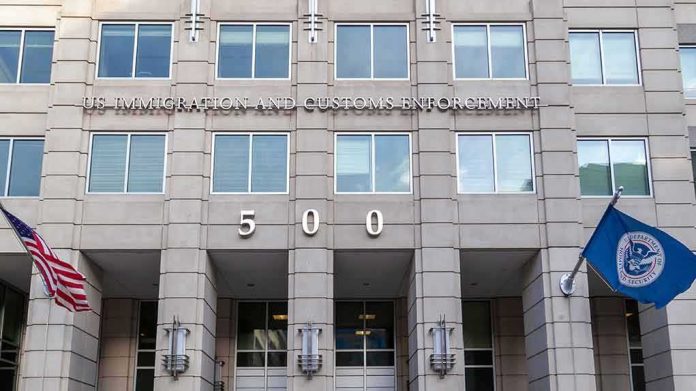
On a Tuesday morning before 7 a.m., four people sat in a vehicle at a Wawa gas station on State Road 16 near St. Augustine, Florida, when agents from Immigration and Customs Enforcement and Homeland Security Investigations approached the car. Florida Highway Patrol says all four fled on foot during the encounter, and one man ran into the busy road, where a tractor-trailer struck and killed him. The truck driver stopped immediately and tried to give aid, but the man died at the scene.
State officials first identified the victim only as a 28-year-old Mexican national, without sharing his name or immigration status. A Florida Highway Patrol spokesperson said the man slipped on wet grass in the median as he crossed the highway, which put him in the path of the truck. This detail has shaped early coverage, focusing attention on the mechanics of the accident instead of the choices that led federal agents to stage an operation next to a busy road.
Who Juan Jairo Coronilla Durán Was — And Why That Matters
A local farmworker advocacy group, Colectivo Árbol, later identified the victim as **Juan Jairo Coronilla Durán**, a 28-year-old father of two from San Luis de la Paz in Guanajuato, Mexico. The group told reporters Juan was visiting Florida on a valid tourist visa and had a flight booked to return home, meaning he was not a criminal fugitive or undocumented migrant hiding from the law. His status as a lawful visitor undercuts any claim that this was simply tough enforcement against dangerous people and raises deeper questions about who gets pulled into these sweeps.
Colectivo Árbol’s representative said Juan was on vacation and had planned to go back to Mexico within days. Mexican media reported he had only been in the state for two days when the operation occurred. For many Americans across the political spectrum, the idea that a paying tourist with a ticket home can die during a roadside immigration stop plays directly into fears that federal agencies are acting with more focus on quotas and arrests than on basic common sense and human safety.
A Third Death In A Week And A Wider Pattern Of Risky Tactics
Juan’s death was not an isolated event. His killing came just days after federal immigration officers shot and killed Lorenzo Salgado Araujo in Houston on July 7 and Johan Sebastián Durán Guerrero in Biddeford, Maine, on July 13. That made Juan the **third person in a single week** to die following an encounter with immigration agents. National outlets have reported that at least ten fatalities have been linked to immigration sweeps during President Donald Trump’s current mass deportation push.
Recent reporting shows a broader shift toward traffic stops and roadside encounters as a main tool for Immigration and Customs Enforcement. Analysts have found that many shootings and deaths under Trump’s second term involve officers making contact with people in vehicles, often in public spaces where any chase or panic can turn deadly fast. For citizens on both the right and left who already feel the government is careless with ordinary lives, each new case looks less like a fluke and more like the cost of an aggressive strategy that puts numbers over safety.
Conflicting Details, Missing Answers, And Shared Public Frustration
Florida Highway Patrol and the Department of Homeland Security describe the Florida event as a lawful operation where a man chose to run and tragically slipped into traffic. Yet officials have not explained why agents targeted this particular car at that gas station or released any video showing what the agents did as the occupants fled. Local witnesses and immigrant advocates have raised questions about whether agents were clearly identifiable and how close they came to the road, but those claims remain hard to verify without dashcam footage or body cameras.
The man has been identified as Juan Jairo Coronilla Duran, who was in the U.S. on a tourist visa and already had a plane ticket to go back to Mexico. https://t.co/JiO8Dv7zAa
— The New Republic (@newrepublic) July 21, 2026
Critics argue that federal agencies keep the public in the dark after deadly encounters, offering brief statements while internal investigations drag on. Supporters of strong immigration enforcement, many of them older conservatives, worry that backing down would mean more illegal crossings and weaker borders, yet they also expect professional, disciplined policing that does not kill tourists with valid paperwork. Older liberals, angry about deportations and racial profiling, see Juan’s case as proof that the system treats brown bodies as expendable. Both sides share a core fear: a powerful federal machine making life-and-death decisions with little transparency and less accountability.
Why This Case Hits Basic American Values
For many Americans, this story cuts to the heart of what the country is supposed to stand for. A visitor followed the rules, obtained a legal visa, and bought a ticket home, yet he ended up dead on a U.S. highway after contact with his own host government. That feels wrong to people who believe the American dream should be open to anyone willing to play by the rules, and it intensifies doubts about whether federal agencies still respect individual dignity and due process.
Veterans groups and immigrant advocates in Florida have already held vigils for Juan, demanding answers and changes in policy. They are not all aligned on broader politics, but they share a belief that law enforcement should be careful, clearly marked, and accountable when things go wrong. As traffic stops and street operations remain central to Trump-era immigration enforcement, the death of a tourist like Juan Jairo Coronilla Durán is likely to fuel growing pressure from both sides for a government that protects people instead of putting them in avoidable danger.
Sources:
feedpress.me, nytimes.com, newsweek.com, excelsior.com.mx, actionnewsjax.com, newsbreak.com, wokv.com, ground.news, krvs.org, wlrn.org, facebook.com