
A federal lawsuit says more than 1 million gallons of unpaid fuel flowed to discount stations that President Trump promoted for low prices.
Story Snapshot
- Mansfield Oil sued KRSM Inc., alleging over 1 million gallons were taken without payment.
- The complaint ties deliveries to at least 10 Freedom Fuel stations selling under-market gas.
- KRSM denies theft and calls it an accounting dispute over misplaced invoices.
- Freedom Fuel’s structure and rapid growth already raised questions about ownership and pricing.
What The Lawsuit Alleges And Why It Matters
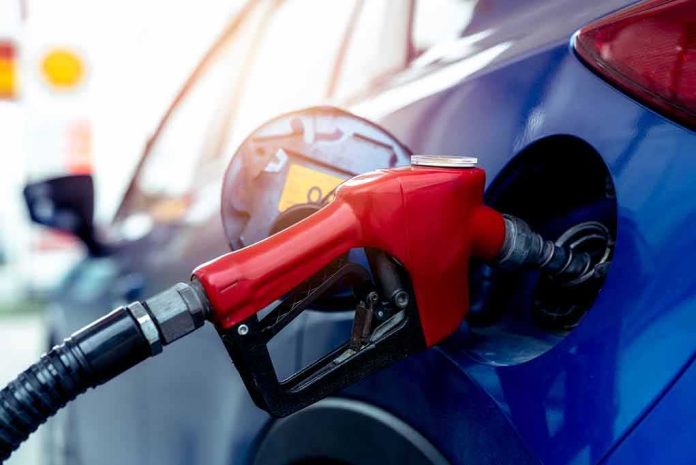
Mansfield Oil filed a civil suit in federal court on August 19, 2026, accusing KRSM Inc. of moving more than 1 million gallons of fuel from a Sunoco terminal without paying, then reselling it downstream. Mansfield’s counsel said the fuel reached at least 10 Freedom Fuel locations, where pump prices undercut the market. If true, the case points to a supply chain breakdown that rewards bad actors, hurts honest competitors, and shorts tax collections that fund roads and schools.
KRSM denies the charge and told reporters the fight is a bookkeeping conflict over fuel invoices that Mansfield misplaced, not theft. Mansfield’s counsel rejected that, saying KRSM failed to pay for fuel lifted on Mansfield’s account. A source described as familiar with Freedom Fuel also said KRSM and Syed Kazmi are not part of the Freedom Fuel Network. These claims set up a clean clash that a judge and discovery must sort out.
How Freedom Fuel Expanded And Priced Its Gas
Freedom Fuel stations appeared quickly across the Philadelphia region and parts of New Jersey, often by rebranding former stations with simple signs and lower prices. Local reporting found no business registrations in Pennsylvania or New Jersey under “Freedom Fuel Network,” adding to public confusion over who owns and runs the brand. One Bucks County site sold gas at around $3.47 per gallon, roughly thirty cents below the national average at launch, drawing long lines and attention.
Analysts warned that deep discounts are hard to sustain unless supply costs are unusually low or someone is subsidizing the spread. Freedom Fuel locations often reused existing pumps and tanks, which reduced startup costs but did not explain the pricing gap by itself. That gap is central to Mansfield’s theory that unpaid fuel helped fund cheap pump prices. It also explains why drivers cheered the savings while competitors asked regulators to take a closer look.
Why This Dispute Hits Nerves Across The Aisle
Americans feel squeezed by high costs and weak trust in institutions. A market that lets mystery networks sell cut-rate gas raises red flags for both sides. Conservatives see unfair competition, weak enforcement, and potential tax loss. Liberals see consumer confusion, uneven oversight, and a system that favors insiders. Past fuel-theft and terminal-loss cases show how stolen or misallocated fuel can ripple through prices and public revenue when oversight lags.
FREEDOM FUEL. 🇺🇸
Trump promoted these gas stations as proof his administration was bringing Americans cheap fuel
Now a lawsuit alleges some of the stations were selling stolen fuel
You literally couldn’t write a more perfect metaphor for Trump’s America https://t.co/AXZQHuxfLd
— Bucky (@BuckyNoseBest) August 29, 2026
This case also touches politics because President Trump highlighted Freedom Fuel as proof that his team could deliver lower prices fast. The lawsuit does not name Trump or the White House. But the brand link raises stakes for public trust. If a court finds simple accounting errors, the story becomes poor administration in a complex supply chain. If a court finds unpaid fuel funded discounts, it becomes a cautionary tale about rushing to cut prices without guarding the pipeline.
What Comes Next And What To Watch
Federal litigation will force records, bills of lading, terminal logs, and bank trails into view. That paper trail should show whether product left the terminal on Mansfield’s account, where it went, and who paid. Watch for motions to preserve station video, carrier records, and tax filings. Regulators may also check whether stations met licensing, labeling, and tax rules. Drivers want cheap gas, but they also want fair play and safe fuel measured by honest pumps.
Sources:
mediaite.com, en.wikipedia.org, nfsa.gov.in, sunocolp.com, forbes.com