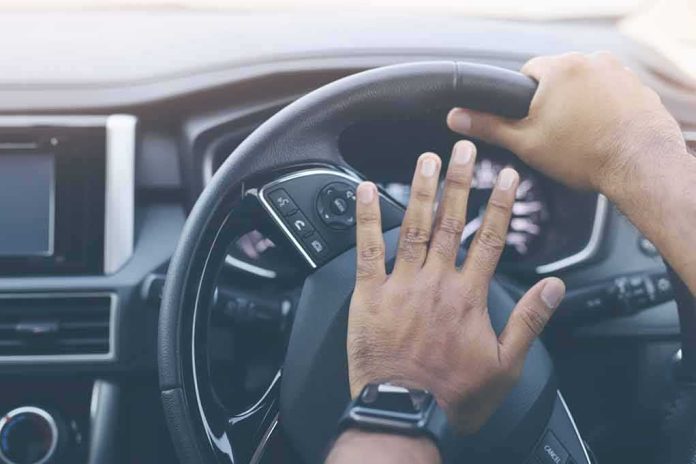
Volkswagen just patented a steering wheel that crams turn signals, headlights, and song controls into buttons built right into the rim, promising to end the dreaded stalk-fumbling every driver knows.
Story Snapshot
- Volkswagen filed a patent in Germany for a steering wheel with capacitive touch buttons built into the rim itself.
- The design would move turn signals, headlights, and media controls off separate stalks and switches.
- The idea echoes Tesla’s stalkless wheel, a feature many drivers have criticized as confusing and unsafe.
- Automakers file many odd steering wheel patents that never make it into showroom cars.
What Volkswagen’s Patent Actually Describes
Volkswagen filed its application with the German Patent and Trademark Office, describing a steering wheel that uses capacitive touch switches built directly into the rim. The buttons would handle the functions drivers use most: turn signals, headlights, and skipping songs. Instead of separate stalks or dashboard buttons, everything sits under the driver’s fingers on the wheel itself.
The patent describes two button groups. The left side picks the main function, like signaling a turn. The right side then reveals secondary options tied to that first choice. It works like a menu system, but built into the part of the car drivers already hold onto for hours at a time.
Why This Sounds Familiar To Tesla Owners
Tesla removed its turn signal stalk in some newer models, replacing it with buttons on the wheel. Drivers and reviewers pushed back hard, calling the change confusing and even unsafe during quick lane changes. Volkswagen’s patent follows a similar path, moving physical stalks into the rim rather than removing controls outright.
That difference matters. Tesla’s critics complained about losing a familiar, easy-to-find lever. Volkswagen’s design keeps a physical button you can feel with your fingers, rather than forcing eyes off the road to hunt for a touchscreen menu. Whether drivers notice that distinction in daily use remains untested outside a patent filing.
A Pattern Across The Auto Industry
Volkswagen is far from alone in filing unusual steering wheel patents. General Motors has patented an “adaptive steering wheel rim” that changes thickness using an inflatable bladder, adjusting its grip to a driver’s preference or driving conditions. Porsche has floated a wheel with rectangular screens surrounding the center hub for its high-performance models.
Toyota even patented a wheel that changes how much friction a driver feels under their hands, using airflow similar to an air hockey table. These filings show carmakers constantly test strange ideas on paper long before any of them reach a real driveway. Most patented concepts never appear in a production vehicle at all.
What Drivers Should Actually Expect
A patent filing is not a promise. Automakers file thousands of patents each year to protect ideas, block competitors, and explore concepts that may sit on a shelf for a decade or longer. Nothing in Volkswagen’s filing guarantees this steering wheel will appear in a Golf, ID.4, or any other model sold to the public.
Still, the timing says something about where carmakers think the industry is headed. As vehicles pack in more digital features, companies keep hunting for ways to reduce buttons and stalks without losing the tactile feel drivers rely on for split-second decisions like signaling a lane change or flashing headlights at another car.
Volkswagen is quietly throwing in the towel in India.
JSW—the exact same guys who just bought into MG Motor—are now closing in on buying a massive chunk of Volkswagen and Skoda’s Indian business.
The era of foreign car brands trying to rule Indian roads on their own is totally… pic.twitter.com/S19zn8z3yz
— Parallax Pulse (@PulseParallax) July 22, 2026
For everyday drivers already frustrated by touchscreens replacing simple knobs and switches, this patent lands as a mixed signal. It could mean fewer confusing menus buried in infotainment systems. Or it could mean another redesign that takes years for muscle memory to relearn, especially for drivers who just want their turn signal to work the same way it always has.
Sources:
military.com, data.epo.org, driveteslacanada.ca, thetruthaboutcars.com