
A president’s late-night strike video claiming to kill a foreign gang boss is turning into a test of how much truth Americans can still expect from the people who wield our military and our media megaphones.
Story Snapshot
- President Trump shared dramatic strike footage and said the United States killed Niño Guerrero, the infamous Tren de Aragua leader.
- News outlets report the White House and Trump have often paired edited war clips with sweeping claims that cannot yet be independently checked.
- Journalists and analysts say the video’s exact target, location, and authenticity are still not fully verified.[1]
- Both conservatives and liberals now question whether “showpiece” strike videos are replacing real transparency and accountability.
Trump’s claim: a ‘swift and lethal kinetic’ strike on Tren de Aragua
President Donald Trump announced that United States forces carried out what he called a “swift and lethal kinetic strike” to kill Hector Rusthenford Guerrero Flores, widely known as Niño Guerrero, described as the infamous leader of the Tren de Aragua organization. One statement said the United States military acted with help from “friends” in Venezuela, signaling at least some claimed coordination with local authorities. Trump framed the hit as a major blow against a group his allies call a narco‑terror invasion force.
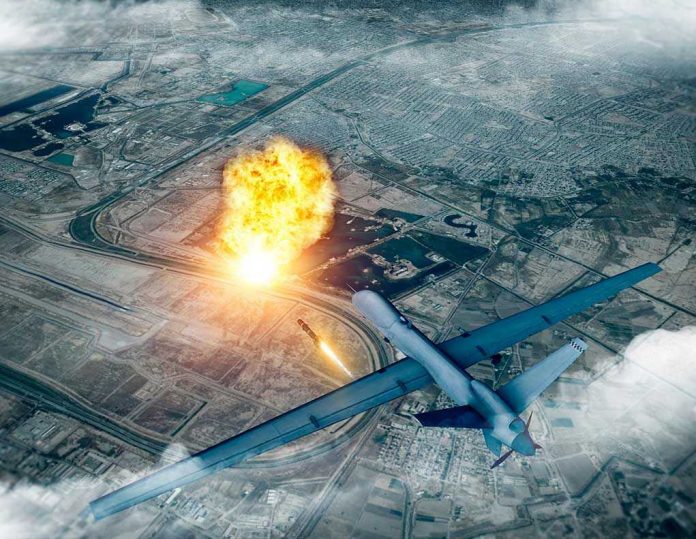
Television posts and social clips repeated Trump’s language and showed nighttime explosions at sea, said to be a strike on a vessel linked to Tren de Aragua. A separate report described “a drug‑running boat operated by a Venezuelan‑based Tren de Aragua being destroyed in an airstrike,” released with video to warn so‑called narcoterrorists to “beware.” Together, the statements and footage create a simple story for viewers: the White House points, the military fires, and a hated criminal kingpin is erased in a flash of light.
The video problem: big claims, thin verification
That clean story starts to fray when you ask basic questions about the video itself. Past coverage of Trump’s posts shows a clear pattern: he shares impressive blast footage and declares that named enemies have been destroyed, while reporters note they cannot verify what the clip really shows.[1] Some outlets have described earlier strike videos as uncensored and uncaptioned explosions that Trump labeled after the fact, leaving location and target details unproven.[4] This new Tren de Aragua clip appears to follow the same script.
Analysts who study online conflict say this gap between “announcement” and “evidence” is now common. Leaders rush to social media with short, dramatic videos long before any documents, satellite images, or battlefield reports are public.[1] By the time newsrooms or watchdogs can check the facts, millions have already watched and shared the first version of the story. That means a single presidential post can shape public belief about war and justice more strongly than later, quieter corrections ever will.
What we know about Tren de Aragua and why this matters
Tren de Aragua has been described by security writers as a cross‑border criminal and terror network that uses drug routes, human smuggling, and violence inside and beyond Venezuela. American commentators who back Trump’s America First agenda argue that such groups are an invasion force that must be hit abroad before they spill deeper into United States streets. For many conservatives, a precise strike on a foreign narco‑terror leader looks like long‑overdue action after years of weak border enforcement and soft talk from globalist elites.
Liberals, however, worry about presidents claiming the right to kill people anywhere on earth based on secret intelligence they cannot see. They ask what happens if a strike is sold as a clean hit on a “world’s most bloodthirsty” figure but later turns out to have missed, hit the wrong person, or killed bystanders. Both sides share a deeper fear: that official war videos and talking points are becoming a kind of political theater, used to boost approval ratings while the root causes of crime, migration, and inequality go unsolved.
Deep‑state distrust, media gaps, and the fight over truth
Many Americans now believe a small class of insiders uses the federal government, the military, and major media as tools to protect its own power. The way this strike story has rolled out feeds that concern. The White House has released polished operation videos before, like the branded clip titled “OPERATION EPIC FURY,” which treats footage of force as a kind of marketing for the administration. Yet the public still cannot see the orders, the targeting rules, or the after‑action reports that would prove what really happened.
Traditional news outlets have also struggled. One network quoted Trump calling another operation a “massive” strike, but clearly stated it had not verified the video’s authenticity.[1] That kind of cautious line may be honest, but it also shows how the people with cameras and missiles can move faster than the people whose job is to check them. In that gap, social media influencers, party propagandists, and foreign trolls all push their own spin, while regular citizens are left wondering who, if anyone, they can trust.
What to watch next: proof, pushback, and precedent
The central unanswered question is simple but vital: can independent investigators confirm that the man known as Niño Guerrero is actually dead, and that this specific United States strike killed him? So far, public evidence is limited to government and media statements, along with a dramatic video whose exact details have not been fully confirmed. Families in both countries, and communities hurt by Tren de Aragua violence, deserve more than a single triumphant clip and a caption.
Going forward, watch for hard proof, not just repeated claims. That means named officials backing the story on the record, verifiable forensic or intelligence details, and consistent reporting from Venezuelan and international sources about Guerrero’s status. It also means asking a bigger question that cuts across party lines: do we want a system where life‑and‑death military actions are first presented as viral content, with the real evidence hidden behind classification stamps and press talking points? For a country built on checks, balances, and citizen oversight, the answer to that may matter even more than whether this one strike hit its mark.
Sources:
[1] Web – BREAKING: President Trump Posts Unclassified Footage of US Military …
[4] YouTube – JUST IN: President Trump Posts Video Of Strikes On …