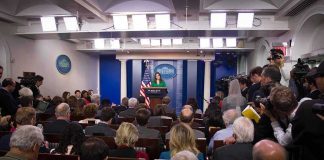

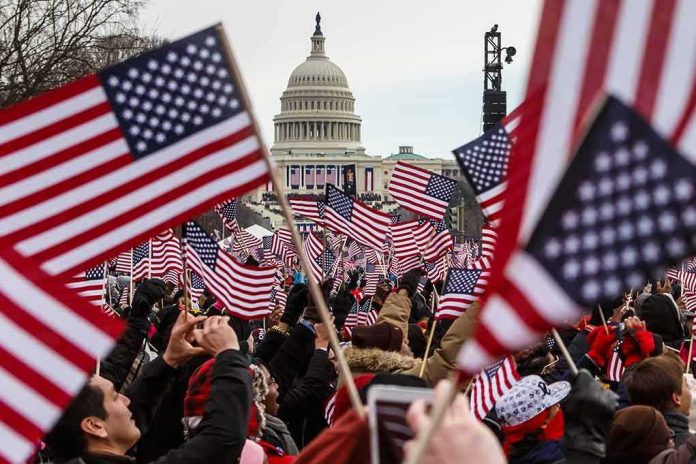
On America’s 250th birthday, President Trump used a “golden age” Fourth of July speech to praise the nation’s greatness while attacking “communists” and doubting modern voting rules, turning a day meant to unite the country into another fight over who really runs America.
Story Snapshot
- Trump called the American Republic the “crowning achievement of human history” and said the country is now in a “golden age.”
- He mixed patriotic history and veterans’ tributes with sharp attacks on “communists,” Democrats, and mail-in voting rules.
- The event cost about $68 million in taxpayer money and used a firm tied to the January 6 Ellipse rally, raising ethics questions.
- News reports and videos showed a smaller-than-promised crowd and technical glitches, feeding anger at federal mismanagement.
Trump’s July 4 Message: Golden Age and Saved Republic
President Trump stood on the National Mall and told Americans they were living in a “golden age of America,” claiming the nation is “doing better now than we’ve ever done before.” He called the American Republic the “crowning achievement of human history” and said that over two and a half centuries the country had proven its greatness. He framed the night as “an evening for the ages” tied directly to America’s 250th birthday, casting his leadership as the reason the country had turned a corner and been “saved.”
Trump described a sweeping turnaround story, saying America is “back—bigger, better, richer and stronger than ever before” and that this era marks a historic “turnaround for the ages.” He claimed the border is now secure, illegal immigration has stopped, fentanyl flows are down, and crime and inflation have fallen, while energy prices, mortgage rates, and retirement accounts are all improving. These claims matched themes from his earlier State of the Union, where he also declared that “this is the golden age of America” and that “our nation is back.”
Patriotic History Blended with Political Combat
The speech did include real history and symbols that many Americans value. Trump talked about artifacts like historic flags, praised the “genius” of the founding fathers, and highlighted figures such as Annie Oakley, Buffalo Bill, and explorers Lewis and Clark. Several veterans came on stage and shared stories of bravery, and Trump thanked them for their service, which fits a long tradition of presidents using Independence Day to honor those who defended the country. This side of the speech spoke to both conservatives and liberals who still believe in the core ideals that made the United States possible.
At the same time, Trump used the nation’s birthday to go after his opponents, which broke from the older norm of holiday speeches that tried to rise above party lines. He warned about a “communist cancer,” attacked Democrats, and demanded laws to sharply limit mail-in ballots, predicting “there will be no mail-in ballots” except for people who are sick or disabled. Reporters at the scene said the speech looked and sounded much like a standard Trump campaign rally, filled with partisan lines rather than an attempt to bring people together on a shared civic holiday.
Cost, Crowd Size, and Questions About Who Benefits
The July 4 event was not only symbolic; it was also expensive. Reports pegged the cost at about $68 million in taxpayer money, much of it flowing to Event Strategies Incorporated, a company run by Trump allies that also helped organize the January 6 Ellipse rally. That link alarmed many Americans on both the right and the left who already feel the federal government and its contractors serve powerful insiders more than regular citizens. The spending fed a growing belief that patriotic branding often hides business deals that help the well‑connected first.
Critics also pointed to Trump’s own financial gains as part of the backdrop for the celebration. Reuters reported that he disclosed more than $1.4 billion in income from cryptocurrency ventures in 2025, with at least $2.3 billion in total crypto-related profits for his family since returning to the White House. When people see billions in private income alongside tens of millions in public funds for a political-style show, it deepens the sense that the “golden age” is more real for elites than for families struggling with housing costs, medical bills, and wages that do not keep up.
Execution Problems and Public Frustration with Government
On the ground, the event did not match the epic image pushed by the White House. Officials claimed more than a million people would pack the National Mall, but news footage and independent videos showed large empty areas and what some outlets called a “sparsely attended” gathering. Even commentators from Fox News, usually friendly to Trump, described the scene as “as empty as advertised,” saying the crowd did not live up to the hype. That mismatch between promises and reality added fuel to the idea that Washington is better at marketing than at delivering.
@CNN
Trump warns of communist 'cancer' at campaign-style July 4 speech (Reuters)Why is Trump talking about communism?
For the 2026 Midterms he will claim ALL Democrats are communists; while Trump praises communists Putin, Orban, and others!
Trump is DESPERATE! pic.twitter.com/NVyUgfYnUS— TheWraithRidesAgain (@TheWraithRides) July 5, 2026
There were also reports of technical troubles, including a malfunctioning ferris wheel and a collapsing arch structure, which became symbols of poor planning. For many Americans watching from home, those glitches did not just look like bad event management; they felt like a metaphor for a federal government that spends big but still struggles to handle basic tasks. When a heavily funded anniversary show cannot run smoothly, it confirms for frustrated citizens on both sides that the system is clumsy, wasteful, and more focused on spectacle than solving everyday problems.
Holiday Speeches in a Time of Deep Distrust
Trump’s July 4 address fits a broader shift in how presidents use national holidays. Scholars who study Independence Day rhetoric note that modern leaders often blend patriotic stories with sharp political messages, using the occasion to rally their base rather than to calm tensions. Earlier presidents, like Ronald Reagan in 1986, stressed that “Republican and Democrat, we are all Americans,” trying to remind people of their shared identity despite policy fights. Trump instead leaned into conflict themes, warning of ideological enemies at home and abroad.
For conservatives over 40, his words about borders, crime, and energy costs spoke to real anger at past “woke” and globalist policies that seem to ignore national pride and working-class pain. For liberals over 40, his attacks on “communists” and push to restrict mail‑in voting sounded like another attempt to shrink social protections and silence opposing voices. Yet beyond these usual divides, many listeners heard something deeper: a government spending huge sums on pageantry while millions still feel locked out of the American Dream. In that sense, Trump’s “golden age” message became another flashpoint in a larger story—Americans from both parties suspect that the system mainly serves those already on top, even when it wraps itself in fireworks, flags, and the language of saving the country.
Sources:
cbsnews.com, youtube.com, facebook.com, instagram.com, nytimes.com, akingump.com, federalregister.gov, jfklibrary.org, tpmap.org