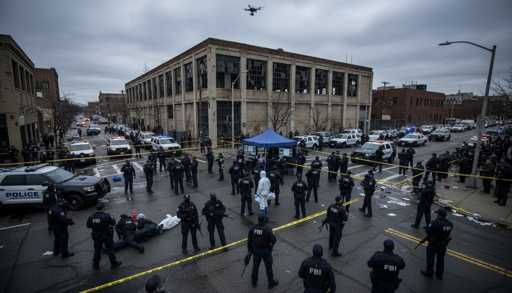
As families looked up at July 4th fireworks in Brooklyn, gunfire from the streets below sent children and adults to the hospital and left many wondering who is really keeping them safe.
Story Snapshot
- Five people, including children, were shot while celebrating around fireworks in Brooklyn as part of a wider July 4th wave of gun violence across New York City.
- Police detained eight people for questioning in the Brownsville shooting but had not filed charges, raising questions about what investigators actually know.
- New York Police Department leaders warn loudly about illegal fireworks, even as shootings spike around holiday gatherings nationwide.
- Both crime data and national figures show fewer shootings in New York overall, yet families still feel exposed when simple celebrations turn into scenes of chaos.
Holiday celebration turns into a crime scene
New Yorkers gathered in Brownsville and other neighborhoods to watch July 4th fireworks when gunfire broke out, hitting at least five people, including two children, in one Brooklyn incident tied to holiday celebrations. Across the city that same night, at least eleven people were shot and two were killed in separate attacks in Brooklyn, the Bronx, and Queens. Local coverage described a “bullet-riddled weekend” with nine shootings, noting that three of the victims were children, underscoring how often kids get caught in the crossfire.
In the Brownsville case, News 12 Brooklyn reported that eight individuals were taken into custody for questioning after the shooting, but no formal arrests were announced by late Saturday morning. That gap between quick detentions and actual charges suggests police did not yet have enough solid evidence to name a shooter or prove a motive. The motive for the broader set of overnight shootings also remains under investigation, leaving residents with more fear than answers as they try to understand why their neighborhoods erupted on a night meant for unity and celebration.
What we know — and what we do not
Authorities and some reports have floated ideas about how many shooters were involved, how many rounds were fired, and whether gangs were behind the attack, but those details are not confirmed by public records or press briefings. No official statement so far clearly ties the Brownsville shooting to a gang, and there is no public ballistics report backing up claims about shooter count or exact round totals. That kind of uncertainty is common after holiday shootings, when police narratives often get out ahead of the hard forensic work that comes later.
Questions also remain about whether the children struck in Brooklyn were targeted or simply nearby when bullets flew. Available reporting confirms that children were among the victims of New York’s July 4th shootings but does not establish intent, target choice, or any personal ties between victims and shooters. Without witness transcripts, surveillance video, or released crime lab findings, the public is being asked to accept early talking points without seeing the evidence. For families on both the left and the right who already distrust “the system,” that lack of clarity feeds anger at both criminals and officials.
Police warnings, fireworks, and a broader pattern of distrust
As the holiday approached, the New York Police Department used social media to warn that illegal fireworks cause fires, serious injuries, and even death, urging residents to call 311 or 911 to report them. Those warnings are real and important, but they also risk sounding out of touch when the same nights bring gunfire into crowded courtyards and streets. National tracking shows more than 500 shootings and at least 180 deaths over one recent July 4th weekend across the country, with several attacks happening at or near fireworks gatherings. For many Americans, fireworks are not the main fear; bullets are.
City leaders point to progress. New York Police Department data and city press releases highlight record-low shooting incidents and shooting victims for long stretches of 2025, including the July 4th weekend, and statewide programs report an eighteen percent drop in shooting incidents with injuries through May 2026 across key jurisdictions. Officials use those numbers to argue that enforcement strategies and anti-violence programs are working. Yet when five people are shot while watching fireworks, statistics feel cold comfort to parents who now scan the crowd for gunmen instead of just looking up at the sky.
Crime, politics, and the sense of a system that is not working
Across the political spectrum, many see the Brownsville shooting and other holiday attacks as one more sign that those in power are not solving basic problems. Conservatives blame years of lenient policies, weak prosecution, and focus on “woke” priorities instead of street crime. Liberals point to deep inequality, easy access to guns, and what they see as over-policing that still fails to stop shootings in poor neighborhoods. Both sides notice that politicians hold press conferences while families patch bullet holes in their walls and their lives.
New York’s own recent history shows how tangled this debate can be. On one hand, city and state leaders celebrate lower overall shooting numbers and tough gang indictments that pull repeat shooters off the streets. On the other hand, national groups tracking gun violence count hundreds of holiday shootings each year, and New York City still sees children shot at cookouts and playgrounds. When eight people can be rounded up for questioning and then walk free without charges, people reasonably ask whether the system is serious about getting to the truth or just managing headlines. That question cuts across party lines and fuels the feeling that a distant “elite” class cares more about winning the news cycle than protecting families on the ground.
Sources:
nyc.gov, brooklyn.news12.com, facebook.com, freep.com, youtube.com, connecticut.news12.com, instagram.com