As millions were pushed into the streets to honor Iran’s slain supreme leader, three of his sons quietly took center stage while the new ruler stayed out of sight.
Story Snapshot
- Three sons of Ayatollah Ali Khamenei — Masoud, Meysam, and Mostafa — joined mourners at his massive state funeral in Tehran.
- New Supreme Leader Mojtaba Khamenei did not appear, deepening questions about power, security, and transparency inside Iran’s regime.
- The funeral drew millions and dozens of foreign delegations, but many Iranians say attendance was forced and tightly controlled.
- The event shows how authoritarian states use grief, family images, and huge crowds to project strength at home and abroad.
Three Sons Step Forward as Iran Bids Farewell
On Sunday in Tehran, three of Ayatollah Ali Khamenei’s sons stood among mourners beside their father’s coffin, drawing global attention to the ruling family’s rare public appearance. State and international outlets reported that Masoud, Meysam, and Mostafa Khamenei were seen praying and crying near the casket as crowds packed the Grand Mosalla prayer complex and surrounding streets. Their presence offered a picture of family unity at a time when Iran is locked in a deadly war with the United States and Israel and its political future is uncertain.
Video from major news agencies and regional broadcasters showed the three brothers in clerical robes and dark suits, moving with senior officials and military commanders through thick lines of mourners. Iran’s President Masoud Pezeshkian and Parliament Speaker Mohammad Bagher Ghalibaf joined prayers behind the coffins, highlighting the funeral as a full display of the Islamic Republic’s political and religious elite. For many Iranians, though, this was not just a family moment; it was a staged image of continuity meant to reassure supporters and warn enemies that the system remains intact despite the leader’s assassination.
Mojtaba’s Absence Raises Hard Questions
Even as the three brothers appeared, one figure was missing: Mojtaba Khamenei, the new Supreme Leader of Iran and the man widely seen as his father’s chosen successor. Multiple reports say Mojtaba did not attend funeral prayers or public ceremonies, with officials citing security fears after Israel reportedly threatened to assassinate him as well. Earlier coverage during the war described Mojtaba as injured and possibly in hiding, with state media giving almost no clear information about his condition or location. This silence has fueled speculation about who truly controls Iran’s war decisions and internal power struggles.
For Americans on both the right and the left, Mojtaba’s absence at his own father’s funeral fits a pattern they recognize at home and abroad: powerful figures shielded from public view while regular people bear the costs. In Iran, the Khamenei family has long held key roles in religious, security, and economic networks, even as officials claim they live modest lives. Now the new Supreme Leader avoids a public farewell, while his brothers step out for carefully managed images. That gap between what citizens see and what elites do feeds distrust — much like when Washington’s political class asks ordinary Americans for sacrifice but dodges accountability themselves.
A Giant Funeral, Forced Crowds, and Regime Messaging
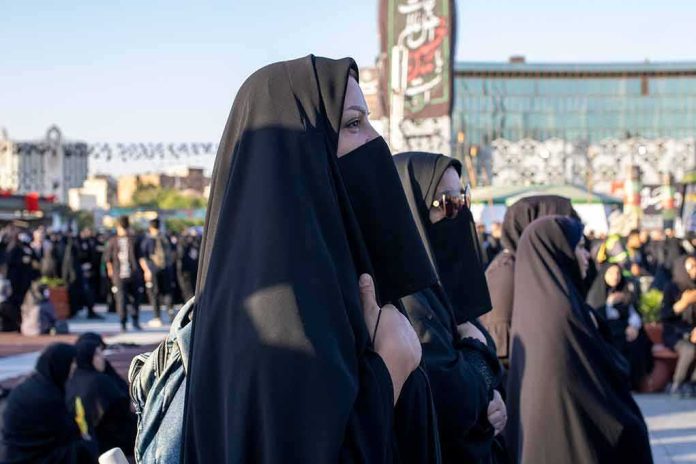
The funeral itself stretched across several days and cities, with Iran and foreign media calling it one of the largest public mourning events in modern history. Officials predicted that between 15 and 20 million people could attend ceremonies in Tehran alone, turning the capital into a stage meant to show defiance toward the West and unity at home. Coffins holding Ali Khamenei and several family members were displayed at major religious sites, including the Grand Mosalla in Tehran and later shrines in Qom, Najaf, Karbala, and finally Mashhad, his birthplace. These stops were chosen to tie the leader’s death to Iran’s core religious identity and regional influence.
Yet behind the sweeping images of crowds, reports from independent outlets and social posts describe another reality: ordinary Iranians pressured to attend. Workers, business owners, and staff at state-linked charities say they were told by authorities to show up at funeral processions or risk punishment or job loss. This use of grief as a political tool is not new. In recent years, families of protesters killed by the regime have tried to turn funerals into acts of defiance, using music, dancing, and public mourning to challenge state control over how citizens say goodbye to loved ones. When a government forces attendance at a leader’s funeral, it signals fear of true public opinion, not confidence.
Why This Matters Far Beyond Iran
For many Americans who feel that elites in Washington and global institutions are failing them, this funeral story in Iran rings uncomfortably familiar. In Tehran, the regime used huge crowds, emotional images of leaders’ sons, and talk of “resistance” to show strength while hiding key truths about succession, war plans, and internal dissent. In the United States, people across the political spectrum have watched their own leaders stage grand ceremonies and speeches, even as everyday problems like rising costs, insecure borders, and widening inequality go unresolved. The common thread is governments that focus more on optics than on honest answers and real solutions.
Three sons of Iran's slain leader Khamenei appear at funeral, not his successor – Reuters https://t.co/uTWSaOH0LN #Iran #Khamenei #MiddleEast #Funeral #News
— Iranian Diaspora Cooperation & Development Council (@Irandiasporaa) July 5, 2026
Ali Khamenei’s funeral also shows how authoritarian states weaponize grief on the world stage. Iran timed the six-day ceremonies to maximize foreign attention and contrast its “martyr” image against America’s 250th anniversary celebrations, according to one analysis. Even the attendance of foreign delegations became a battleground, with Iran claiming the United States pressured other governments not to send officials. For readers in the United States, this should be a reminder: when unelected rulers use funerals to push narratives and rally hate against America, citizens need clear, honest information — not spin — from their own leaders. Trust grows when leaders tell hard truths and respect people’s right to mourn and question power, instead of copying the same elite playbook we now see so clearly on display in Tehran.
Sources:
youtube.com, aljazeera.com, cnn.com, instagram.com, facebook.com, nypost.com, ynetnews.com, apnews.com, iranintl.com, newlinesmag.com, nytimes.com, iranhumanrights.org, washingtonpost.com