

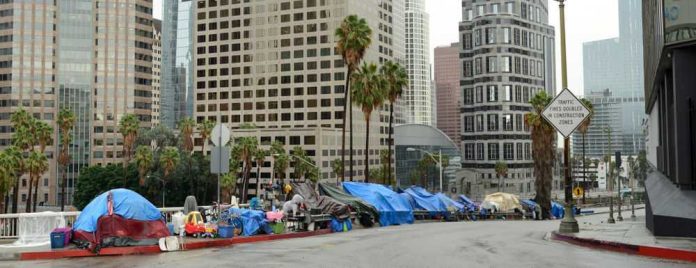
As Atlanta rushes to shine for the World Cup, city crews have quietly thrown away homeless people’s tents, medicines, and IDs just blocks from the stadium, raising fresh questions about who really pays the price when America tries to look good for the world.
Story Snapshot
- Atlanta cleared a major homeless camp near the World Cup zone as part of its Downtown Rising housing push.
- City workers discarded tents and personal items, including medication and identification, from people living there.
- Officials say the sweeps are about safety and housing, while advocates see a pattern of “out of sight” displacement.
- The clash shows how big events can deepen public anger at a government seen as serving optics over ordinary people.
Homeless Camp Cleared As World Cup Arrives
Atlanta police and public works crews recently cleared a large homeless camp near Grady Memorial Hospital, not far from the main World Cup fan areas. The sweep focused on tents and makeshift shelters under the Bell Street bridge, a visible gateway into downtown. City workers loaded tents, bedding, and other belongings into garbage trucks, leaving the space empty for the first time in months. People living there say some lost medications and identification documents in the process, worsening their already fragile situations.
City leaders frame the cleanup as part of a long-planned push, not a last-minute move. The Bell Street closure is under “Downtown Rising,” the first phase of the broader “Atlanta Rising” effort to end unsheltered homelessness. Officials say the goal is to make homelessness rare and brief by moving people into stable housing and support programs. That message matters politically, as Atlanta seeks to show that it has learned from past mega-events where homeless people were swept aside and jailed.
City’s Defense: Safety, Housing, And A Cleaner Downtown
Cathryn Vassell, head of Partners for Home, the group that runs the city’s homelessness strategy, says this sweep was “less about optics” and more about safety for residents and neighbors. She reports that outreach workers tracked people staying under the bridge for months and had already placed most into housing. Six regular residents there moved into permanent homes, and housing for another couple is pending. A wider effort has housed nearly five hundred people ahead of the tournament, with caseworkers and mental health support attached.
Partners for Home describes its approach as “housing first,” meaning the city tries to get people under a roof before anything else. Officials highlight that over ten years, similar programs have rehoused thousands of households, with most staying housed. They argue the Bell Street closure followed this model: first outreach, then offers of housing, then final removal of the camp. For many viewers and voters, this sounds like a more humane option than mass arrests or locking people in detention, which happened when Atlanta hosted the Olympics in the 1990s.
Critics See Displacement And A Familiar Big-Event Pattern
Homeless advocates and some city council members are not convinced this is only about safety. They worry that, as World Cup matches begin, Atlanta will increase arrests and displacement of homeless residents to protect its image for visitors and sponsors. National research shows that sweeps like this often spike before major events and can harm people’s health by taking tents, medicine, and basic supplies they need to survive. Forced camp closures also push people into new areas, often farther from services and support.
Groups that study homelessness say this fits a wider pattern seen around big games and Olympic events in many cities. Past host cities, including Atlanta in 1996, removed thousands of homeless people from core zones to make streets look clean and safe. Critics argue this treats poor citizens as an eyesore to be moved, not neighbors to be helped. That charge hits a nerve with both conservatives and liberals who already feel the “elites” care more about foreign tourists and television cameras than people who live and work in the city year-round.
Public Anger, Shared Distrust, And What Comes Next
On social media, clips of the Bell Street sweep show tents piled into trucks while former residents watch from the sidewalk. Some local posts praise the cleanup as overdue, saying camps had grown large and unsafe. Others call it “heartbreaking” and accuse city leaders of hiding poverty instead of fixing it. This divide mirrors a broader national mood, where people on the right resent urban disorder and people on the left resent harsh crackdowns, yet both increasingly think government serves optics and donors first.
Your cities had to clean up the typical filth just to have the games. Seattle (strongly blue): Officials cleared notorious crime spots and some homeless encampments, increased police presence, and picked up over 45,000 lbs of trash around the stadium during early games. Downtown…
— Yuhrott (@yuhrott) July 11, 2026
Policy experts say encampments will keep returning unless cities prevent people from losing housing in the first place. They recommend warning residents well before sweeps, offering storage for belongings, and providing clear routes into real housing and care. Atlanta’s Downtown Rising program moves in that direction, but the Bell Street cleanup shows how easily a housing effort can look like a public relations campaign when tents and medicines end up in the trash. For many Americans, that gap between promises and lived reality is exactly why trust in government keeps falling.
Sources:
independent.co.uk, ajc.com, atlantaciviccircle.org, reuters.com, apnews.com, instagram.com, shelterforce.org, wabe.org, nationalhomeless.org, reddit.com, pbs.org, endhomelessness.org, ncbi.nlm.nih.gov, sciencedirect.com