

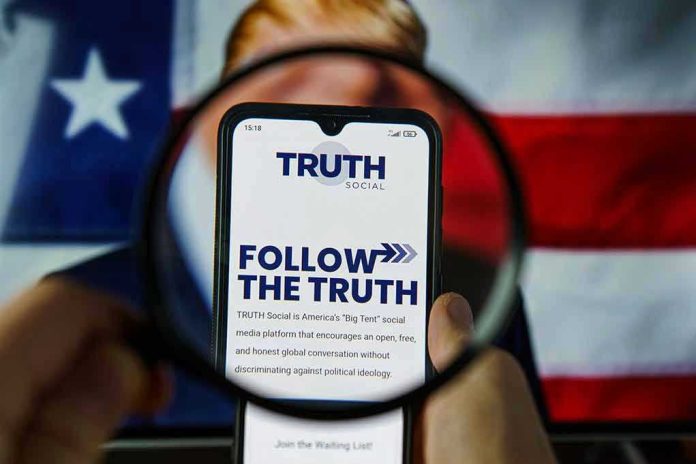
President Trump blasted out AI-made images of himself with George Washington and teased a 2028 “win,” turning a weekend Truth Social spree into a fresh test of politics in the age of synthetic media.
Story Highlights
- Trump posted multiple AI images, including scenes with George Washington and Mount Rushmore.
- The posts included “Trump 2028” themes, despite the two-term limit in the Constitution.
- Outlets tallied dozens of AI images across several hours, mixing history, war scenes, and pop culture.
- Researchers say synthetic media often fuels existing distrust more than it changes minds outright.
Trump’s AI Posting Spree And The Core Imagery
On Saturday afternoon, President Trump shared a burst of AI-generated images on Truth Social. The set showcased him alongside George Washington, including Western-style horse scenes and a Mount Rushmore rescue poster motif. Reports describe a quick series of posts, with timestamps clustering in minutes, and a mix of patriotic, cinematic, and campaign-like visuals. Other outlets have documented similar sprees, with appearances beside Founders and past presidents, tying the images to attention-grabbing political messages.
Some images displayed “Trump 2028” branding or slogans that imply a third run. Reports framed these as nods to a future “win,” even as the Constitution limits any person to two presidential elections. News coverage emphasized that the posts were stylized fanfare rather than formal announcements. Still, the images carried a clear political signal to Trump’s supporters and critics, inviting reaction and media oxygen far beyond Truth Social’s core audience.
How Synthetic Media Shapes Modern Political Messaging
Campaign-style images, even when clearly artificial, can crowd out other debates and keep a figure in the spotlight. Researchers tracking deepfake and synthetic content across elections found relatively few verified cases compared to overall political media, but warned that such content taps into existing distrust and polarization. The main risk is not raw volume. It is how synthetic posts feed anger, fear, or hero worship already present in the audience, making fact-based debate harder.
Trump’s feed has repeatedly used this playbook. Prior sprees mixed war scenes, celebrity cameos, and historical tableaus to cast him as protector, avenger, or heir to America’s founders. Outlets counted dozens of posts over hours, sustaining a steady current of images that kept supporters engaged and opponents reacting. That rhythm can set the news agenda for a cycle, without policy changes or official pronouncements, and with little cost to produce or share.
Why This Resonates With Voters Across The Spectrum
Many Americans feel the federal government is not serving them. People on the right complain about high prices, energy costs, border failures, and cultural excess. People on the left cite inequality, cuts to social support, fossil fuel use, and harsh immigration enforcement. Both sides distrust “elites” and suspect insiders protect their own. Synthetic images link into those emotions. They tell a fast story: strong leader, weak system, simple fix. That is why they spread so quickly.
Trump posts more ai slop than anyone, I reckon that’s why you need all those data centres to keep up with her personal Libary of ai slop
— Dannny (@darkdevotions) August 16, 2026
Trump’s “Trump 2028” nods add a sharper constitutional edge. The Twenty-Second Amendment limits a president to two elections. Legal analysts say workarounds lack support, and that the rule is firm. Media coverage of these posts has stressed that point while also noting the posts’ theatrical style. The tension between spectacle and law keeps the topic hot, and keeps attention on Trump’s account, even among those who reject the imagery or the message.
What To Watch Next
Watch for more cycles of synthetic posts timed to policy fights or breaking news. Expect rapid pushback from critics, which can serve the original goal of keeping the posts in the feed. Also watch for platform rules and disclosure labels on AI content. Researchers argue the problem is not only fake media. It is the demand for simple stories in a complex world. That demand makes synthetic imagery a cheap, repeatable way to shape the national conversation.
Sources:
mediaite.com, news18.com, thenightly.com.au, europarl.europa.eu