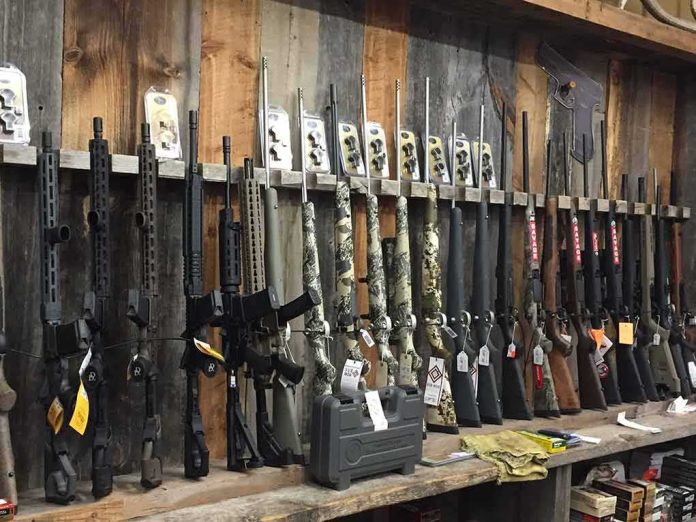
Federal prosecutors say a Nevada resident admitted he helped send 140 guns, including powerful rifles, to Mexican drug organizations over five years.
Story Highlights
- Justice Department says Luis Alberto Osorio pleaded guilty to trafficking 140 firearms to groups operating in Mexico.
- Plea also covers harboring illegal workers and conspiracy to launder money, raising total exposure to 70 years.
- Scheme ran from April 2020 to September 2025, according to the government’s summary.
- Case mirrors a common pattern in gun trafficking built on straw purchases, federal data show.
Guilty Plea Ties 140 Guns to Mexican Drug Organizations
The Department of Justice said Luis Alberto Osorio, of northern Nevada, pleaded guilty to trafficking 140 firearms to people linked to drug organizations in Mexico. Prosecutors said he and co-defendants bought guns, magazines, and ammunition on request, then sold them in Mexico for profit. The plea includes one count each of straw purchasing, trafficking in firearms, harboring certain aliens, and conspiracy to launder money. Sentencing is set for February 11, 2027, and the statutory maximum is 70 years.
The government’s summary places the conduct between April 1, 2020, and September 17, 2025. Officials highlighted that the weapons included “military-style” rifles, which cartels often prize for intimidation and firepower. The U.S. Attorney’s Office in Nevada amplified the announcement on social media the same day, underscoring the case’s focus on the southbound gun pipeline that equips violent groups across the border. The filing did not release the names of co-defendants or list each firearm publicly.
How Straw Purchasing Fuels Trafficking Networks
Federal assessments show straw purchasing is a leading channel in gun trafficking. The Bureau of Alcohol, Tobacco, Firearms and Explosives found that about 39.5 percent of trafficking investigations from 2017 to 2021 involved straw buyers working with licensed dealers. Those cases accounted for tens of thousands of trafficked guns nationwide. That pattern fits the Osorio plea, which centers on buying guns for others and moving them to criminal groups in Mexico, rather than personal use or licensed resale.
The data also show why these schemes persist. Straw buyers can pass background checks and buy multiple guns over time, masking the true end user until guns surface in crimes or border seizures. Investigators then chase sales records, forms, and traces to build cases. Prosecutors prefer pleas in complex, multi-count files because they stop the pipeline faster and avoid long trials that can expose witnesses to cross-border threats. The Osorio plea checks those boxes while signaling tougher penalties for similar conduct.
Why This Case Resonates Across the Aisle
Communities on both sides of the border pay the price when guns flow south and drugs flow north. Families in U.S. towns face overdose deaths and gang violence. Families in Mexican states face kidnappings and murders carried out with imported firepower. A case that links Nevada purchases to Mexican crime networks shows the system’s weak spots: straw buys, quick cash, and thin oversight of repeat purchasers. People left and right see this as government failing to stop obvious harm.
Nevada Man Pleads Guilty to Trafficking 140 Firearms to Mexican Cartels https://t.co/yXTm7XVVZ1
— Ω Paladin (@omega_paladin) August 16, 2026
Many readers also see two connected pressures. First, border security debates often focus on people coming in, not guns going out. Second, working Americans worry that elites profit while communities absorb the damage. This case will test whether federal action can close the loop, not just score headlines. The court set a firm sentencing date, and filings before then may add details on the money, the guns, and who else was involved, within the limits of the public record.
Sources:
townhall.com, justice.gov, x.com