President Trump said the “ultimate intervention is our military” when asked how Washington might calm a turbulent bond market, a remark that stunned both markets and media alike.
Story Snapshot
- Trump linked military power to bond-market turmoil in an on-the-record exchange.
- CNN’s Abby Phillip openly questioned what such an intervention could even mean.
- Treasury is actually using bond buybacks, not troops, to steady longer-term yields.
- Investors remain edgy as policy talk, war risks, and debt costs collide.
What Trump Said And Why It Landed Hard
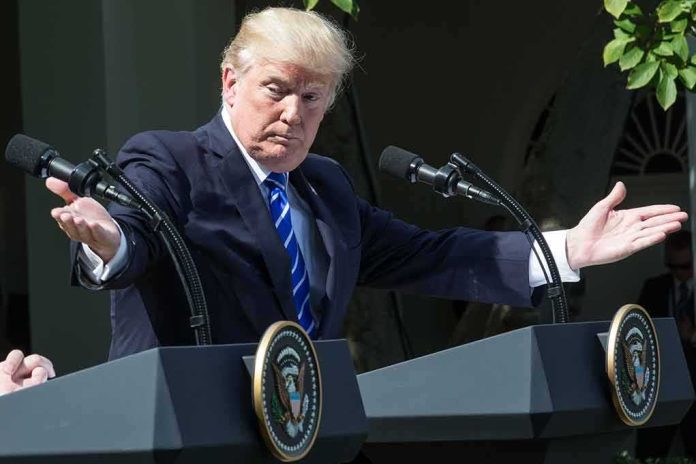
Reporters asked President Trump about more steps to cool rising bond yields after recent moves by Treasury. Trump replied, “The ultimate intervention is our military. And if we have to use that, we will”. The question dealt with market policy tools. The answer pointed to armed forces. That gap drove the reaction. His words did not explain how the military would affect bond prices. The line echoed his habit of linking national security and markets.
Media Reaction And Public Confusion
CNN anchor Abby Phillip voiced what many wondered: “What is he talking about?” She framed the comment as baffling because bond market fixes are financial, not military. Other coverage also called the answer confusing, since no mechanism was named. Critics online mocked the idea. Supporters argued he meant strength and resolve. The White House did not issue a policy memo spelling out any military link to yields, leaving the line open to debate.
The Actual Policy Lever In Play: Treasury Buybacks
The Treasury Department has been buying back longer-dated government debt to ease stress in thin parts of the market. Treasury doubled the size of these operations to at least four billion dollars per buyback in the ten- to thirty-year sector. Officials said the size could rise further if needed. The move briefly pushed yields down and helped liquidity, though the relief has been uneven as debt and inflation worries linger.
Bond buybacks are a known tool. Treasury revived them in recent years to improve trading in older bonds and to support market function. Buybacks do not change total debt on their own. They change which bonds are held and where liquidity sits. Several days of reporting showed yields drop on the announcement and then bounce as doubts returned. That whipsaw shows how fragile confidence is right now.
Why This Hits Voters’ Nerves
Families see higher mortgage rates when long yields jump. Retirees watch savings swing with bond prices. Small firms pay more to borrow. People on the right blame years of overspending and pressure on energy that raised costs. People on the left blame tax breaks for the rich and gaps in wages and care. Both sides feel Washington talks tough but dodges hard tradeoffs. Vague threats feed the sense that leaders reach for headlines, not fixes.
Markets Move On Words, Wars, And Deficits
Recent market days show how comments and geopolitics shake prices. Reports tied swings in oil, stocks, and bonds to statements on Iran and to shifting plans at Treasury. When the government said it would boost buybacks, long yields fell. When doubts about deficits or conflict rose, yields climbed again. Traders keep testing how far leaders will go to cap borrowing costs without stirring new fears about the dollar or inflation.
Trump: "We will fire a rocket into that bond market"
Reporter: "But the bond market is not a physical place"
Trump: "What do you mean? I was at the bond market last year and bought the biggest bonds, and everybody agreed. Only that guy at the corner, sad guy, didn't congratulate" https://t.co/eyV2X8H7XU— G🇪🇺🇺🇦 (@metageg) August 22, 2026
Clear policy beats one-liners in a storm. If the administration has a plan, it can publish steps, timelines, and who is in charge. That means Treasury on buybacks and issuance, the Federal Reserve on interest rates, and Congress on the budget. None of those are the military. Voters want straight talk because they carry the cost when signals are mixed and rates spike. That is the core concern uniting many Americans today.
Sources:
mediaite.com, linkedin.com, wsj.com, theguardian.com, archive.org