

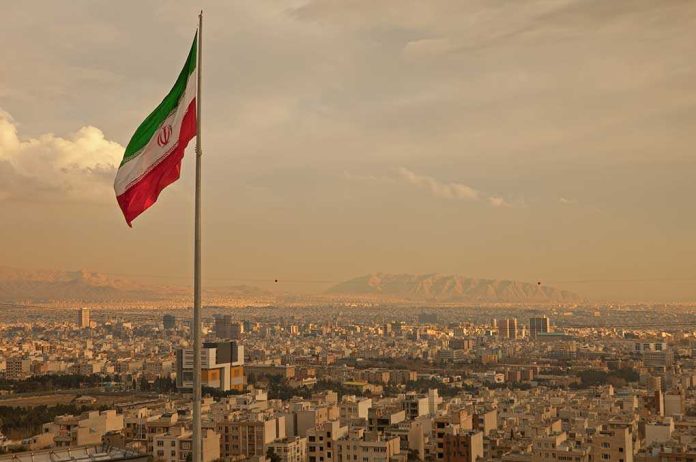
Iran’s real power center isn’t the Supreme Leader’s office anymore—it’s the uniformed business machine that can pick a leader, choke global oil, and survive bombing.
Quick Take
- Killing Ali Khamenei created a vacuum the Islamic Revolutionary Guard Corps moved to fill fast.
- The IRGC’s economic empire matters as much as its missiles because it funds control when the state weakens.
- Reports describe pressure to bypass Iran’s constitutional succession process, a classic coup signal even without tanks on TV.
- Missile attacks around the Strait of Hormuz turned a domestic power grab into a global energy crisis.
What “Coup” Looks Like in Tehran When the Generals Already Own the Store
Ali Khamenei’s death in a U.S.-Israeli strike didn’t just remove a man; it stressed the system that pretended the clerics run everything. The IRGC reportedly pushed to force a rapid, extralegal decision on succession while missiles flew and protests simmered. That combination—constitutional shortcuts, emergency deadlines, and security services dictating politics—fits the practical meaning of a coup, even if Iran’s institutions remain on paper.
https://twitter.com/RedState/status/2036810336792203377
Iran’s constitution assigns supreme leader selection to the Assembly of Experts. The issue is whether that body can operate independently when the strongest armed organization also controls large parts of the economy and internal security. If commanders set the timetable, shape the candidate list, and warn of unrest to justify bypassing procedure, the legal architecture becomes stage dressing. Americans should recognize the pattern: unelected force concentrates power and calls it stability.
The IRGC’s Business Empire: The Quiet Weapon Behind the Loud Missiles
The IRGC didn’t become dominant only by winning battles; it built a parallel economy. Reporting describes holdings and influence across oil, construction, transportation, telecom, banking, agriculture, medicine, and real estate, with major affiliates such as Khatam al-Anbiya tied to big infrastructure. Estimates cited in that coverage argue IRGC-linked “foundations” once controlled more than half of GDP. That scale turns a military organization into an employer, contractor, and gatekeeper.
Sanctions, meant to squeeze Tehran, often strengthened this structure by rewarding black-market logistics and politically protected monopolies. “Economic resistance” became a slogan that justified IRGC-run supply chains, covert shipping, and new workarounds, including cryptocurrencies and illicit networks. When normal commerce collapses, the group that can still move fuel, parts, and cash becomes the state’s circulatory system. That’s why bombs alone rarely break the IRGC; it’s embedded in daily survival.
Why the Timing Matters: Economic Collapse, Street Anger, Then a Leadership Decapitation
Late 2025 into early 2026 brought a toxic stack of pressures: currency collapse, inflation, energy shortages, drought, and protests that were reportedly met with mass killings. Add a recent Iran-Israel war and you get a population squeezed from every side. Then Khamenei dies suddenly. The most plausible fear inside the regime isn’t a philosophical crisis; it’s a stampede in the streets while elites fight over succession and patronage.
That fear explains the reported urgency: name a leader quickly, keep the security chain unbroken, and present continuity before protesters test the system. The conservative, common-sense read is that regimes do this when they know legitimacy is thin. Stable governments don’t need dawn deadlines to select leaders outside normal rules. They follow process and let institutions absorb shocks. Iran’s leadership class, by contrast, seems to treat process as optional when pressure spikes.
Hormuz as Leverage: Turning Internal Succession Into Global Shock
The Strait of Hormuz is Iran’s recurring reminder that it can export its problems. Reports describe missiles fired at vessels and shipping disrupted in a way that threatens a huge share of global oil traffic. That move serves two purposes at once: retaliation externally and discipline internally. If commanders can create an energy panic, they can argue only the IRGC can “defend the revolution,” drowning out civilian voices and sidelining rival factions during succession.
Energy markets don’t care who wins Tehran’s internal knife fight; they react to risk. That makes Hormuz a kind of political amplifier. A leadership vacuum that might have stayed inside Iran becomes a global price spike, a shipping insurance scramble, and an immediate test of Western resolve. For U.S. readers, the lesson is blunt: the IRGC uses economic pain—both Iran’s and the world’s—as a bargaining chip, not a side effect.
Can Airstrikes and Amnesty Split the Guard, or Do They Harden It?
One reported U.S. message offered immunity if the IRGC disarmed, a psychological play aimed at fractures inside the organization. Reports also describe commanders avoiding bases due to strike fears, suggesting real stress. Still, other analysis argues the IRGC’s decentralized structure and its Basij domestic network help it maintain control even under attack. Decapitation strategies often miss the reality of layered security states: they plan for replacements.
American conservative instincts favor clarity: deterrence must look credible, and incentives must look enforceable. An immunity offer can tempt opportunists, but it can also unite hardliners who assume surrender means vengeance later. If Iran’s streets erupt again, the IRGC’s calculus likely centers on survival first, ideology second. That’s the open loop: does pressure finally splinter the machine, or does it produce a tighter, more militarized succession?
The immediate question isn’t whether Iran holds a formal “coup” ceremony; it’s whether a military-economic cartel has reached the point where clerical legitimacy no longer constrains it. If the IRGC can pick the leader, run the economy, suppress the street, and weaponize Hormuz, then the title “Supreme Leader” becomes a brand the Guard licenses. Watch the next succession announcement less for theology and more for who stands closest to the microphones.
Sources:
Iran’s Islamic Revolutionary Guard has a sprawling business empire…
Iran update evening special report march 16 2026
Entrenchment iran security state