A European song contest has turned into the latest battlefield over Israel, boycotts, and double standards that should concern anyone who cares about fairness and Western values.
Story Snapshot
- Five European countries walked away from Eurovision 2026 to protest Israel’s participation.
- Activists are using the contest to accuse Israel of “genocide” and “occupation,” language that remains legally unproven.
- Eurovision’s organizers face charges of hypocrisy after previously banning Russia but not Israel.
- Rule changes and past vote-rigging concerns raise deeper questions about transparency and politicized entertainment.
How A Song Contest Became A Proxy War Over Israel
NBC News and European outlets report that Spain, Slovenia, Iceland, Ireland, and the Netherlands withdrew from Eurovision 2026 in Vienna specifically to protest Israel’s participation, turning what is marketed as light entertainment into a geopolitical pressure campaign.[1] More than 1,000 musicians and cultural workers signed open letters urging a cultural boycott, claiming Eurovision was “whitewashing” Israel’s actions in Gaza and the West Bank.[2] Organizers suddenly found themselves refereeing Middle East politics instead of pop music.
Middle East Eye describes the boycott campaign as an explicit attempt to link a television spectacle to accusations of “genocide,” “siege,” and “brutal military occupation,” with signatories demanding that Israel be frozen out of the event.[2] Critics also frame the withdrawals as a moral stand, arguing that allowing Israel to perform “normalizes” its alleged annexation and military operations.[1][2] Yet these are political and legal claims made in activist letters, not findings from a court or international tribunal, which leaves the public sorting rhetoric from proven fact.
Boycott Claims, Double Standards, And The Russia Precedent
Al Jazeera and other outlets report that human rights organizations and campaigners blasted the European Broadcasting Union for keeping Israel in the lineup while removing Russia after its 2022 invasion of Ukraine.[2] Amnesty International reportedly labeled the decision not to suspend Israel “an act of cowardice” and an example of “blatant double standards,” pointing directly to Russia’s exclusion as the comparison.[2] For many protesters, that earlier decision became the benchmark, even though the underlying contest rules have not been transparently published in these reports.
Coverage notes that European Broadcasting Union officials defended Israel’s eligibility by citing a formal vote of member broadcasters from late 2023, saying a majority backed new rules and Israel’s continued participation. They also argued that Israel’s public broadcaster is not a direct state propaganda arm in the way Russia’s outlet was characterized, pointing to internal dissent and a more pluralistic media environment. That institutional distinction may matter under contest bylaws, but it has done little to cool public anger among activists who see only unequal treatment of two wartime countries.
Street Protests, Arena Backlash, And The Limits Of “Apolitical” Entertainment
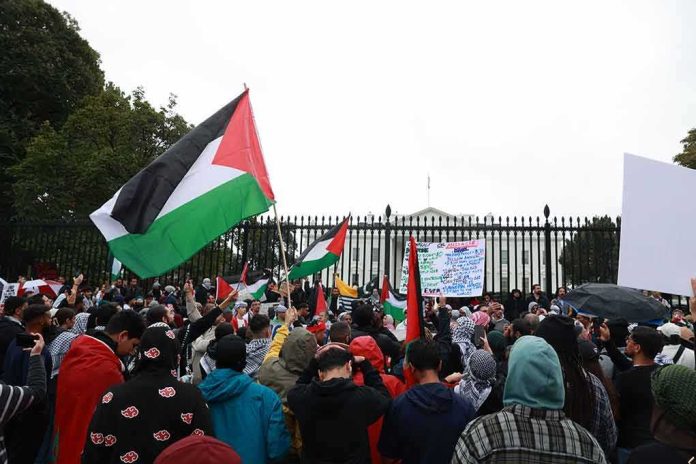
NBC News and other networks describe large pro-Palestinian demonstrations outside the Vienna venue, with marches organized throughout Eurovision week to pressure broadcasters, performers, and sponsors.[1] Inside the arena, Israel’s semifinal performance reportedly drew loud booing from parts of the audience, and security ejected at least two protesters who tried to disrupt the live broadcast.[1] Those scenes directly undercut Eurovision’s long-standing claim to be an “apolitical” celebration of unity, exposing how fragile that branding becomes when real conflicts spill onto the stage.
Analysts interviewed by major outlets argue that Eurovision has always carried political undertones, from bloc voting to symbolic performances, but that the 2026 boycott is “unprecedented in scale and politically sensitive.” When a cultural institution insists on neutrality while hosting countries locked in bitter conflicts, critics on one side or the other inevitably accuse it of taking a stand. The result is a spectacle where families tuning in for music suddenly confront charged slogans, national flags used as weapons in cultural battles, and pressure campaigns that mirror wider debates over sanctions and boycotts.
Voting Controversies, Rule Changes, And What Conservatives Should Watch
Underlying the boycott story is a deeper trust problem: previous reporting revealed that the Israeli government financed a large digital campaign encouraging viewers to exploit Eurovision’s old rule allowing up to 20 votes per person for its entry, far beyond the official individual limit.[1] A New York Times investigation cited by NBC News found the government poured hundreds of thousands of dollars into ads and online promotion to maximize votes.[1] That does not definitively prove rigging, but it shows how easily political actors can game entertainment systems.
Five Countries Boycott Eurovision Over Israel — The Contest Goes On Without Them
Ireland, Spain, the Netherlands, Iceland, and Slovenia pulled out of the 2026 Eurovision Song Contest in Vienna over Israel's participation.https://t.co/n9rd9Gjeq1#UnbiasedHeadlines #News pic.twitter.com/xH0pu8wMK9
— Unbiased Headlines (@UnbiasedHdlns) May 16, 2026
The European Broadcasting Union responded by cutting the vote cap from 20 to 10, conceding that the prior rules were vulnerable to manipulation.[1] Yet organizers have not released detailed voting data or independent audits that would reassure skeptics, leaving both pro-Israel and anti-Israel camps suspicious of the process. For conservatives, this Eurovision saga highlights a broader pattern: elite cultural institutions speak the language of neutrality while operating opaque systems that are easily bent by political money, activist pressure, and selective outrage.
Sources:
[1] YouTube – Israel’s participation in 2026 Eurovision Song Contest sparks boycotts
[2] Web – Eurovision 2026: Over 1000 artists call for boycott for ‘normalising …