One tunnel, one storefront, one ton of cocaine, and a case that exposes how much of border enforcement is won or lost before a jury ever hears a word.
Quick Take
- Federal prosecutors say a Homeland Security Task Force investigation uncovered a sophisticated cross-border tunnel beneath a Buy 4 Less storefront in Otay Mesa.[2]
- Authorities say they seized 1,029.60 kilograms of a substance that field-tested positive for cocaine, with an estimated street value of $45 million.[2][3]
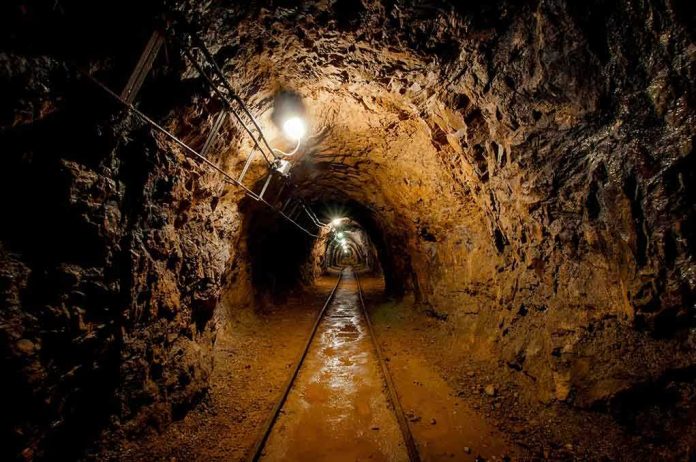
- Four defendants were charged, and prosecutors said the tunnel included reinforced walls, rail, ventilation, electricity, and a hydraulic lift.[2][3]
- The cartel connection remains an allegation in the public record, not a proven court finding.[1][2][3]
The Tunnel Story That Grabs Attention
The headline writes itself because the details feel like something from a border-security thriller: a fake storefront, a deep underground passage, and enough cocaine to make the numbers blur.[2][3] But the real story is not just the seizure. It is how quickly a dramatic government case becomes accepted as settled fact before the defense has even had a meaningful chance to answer it.[1][2][3]
According to the Justice Department, the investigation produced charges against four people and uncovered a tunnel stretching from Tijuana to a supposed retail store near the Otay Mesa Port of Entry.[2] The tunnel was described as about 1,933 feet long, 55 feet deep, and equipped with reinforced walls, rail, ventilation, and electricity.[2][3] Those details give the case its punch, but they also explain why the public reaction has been so immediate.
What Prosecutors Say They Found
The strongest fact in the record is not speculation about motive or organization. It is the seizure itself. Prosecutors said agents found 851 packages across three vehicles, with a combined weight of 1,029.60 kilograms, and a sample field-tested positive for cocaine.[2] That is why the phrase “more than a ton” keeps appearing in coverage: it is not rhetorical flourish, it is the government’s accounting of the load.[2][3]
Agents also said they secured search warrants after the seizure and then entered the Buy 4 Less site, where they located the tunnel entrance beneath a storage room floor.[2][3] That sequence matters because it shows the case did not rest on a single roadside stop. It was a layered operation involving surveillance, traffic stops, seized packages, and then a warrant-backed search of the storefront.[2][3]
Why the “Cartel” Label Needs Care
The phrase “Jalisco New Generation Cartel” appears in the public reporting, but it appears as attribution or belief, not as a courtroom finding.[1][2][3] That distinction matters. A press release can describe what investigators think happened; it cannot, by itself, prove the full chain of command, financing, or ownership behind the tunnel. Right now, the public record supports a trafficking allegation, not a final adjudication of cartel control.[1][2][3]
🔴 US agents seize $45M cocaine in cross-border tunnel beneath Tijuana-San Diego
A tunnel running beneath the US-Mexico border between Tijuana and San Diego was discovered by authorities, allegedly used to smuggle drugs and weapons. The passage ran underneath a fake discount… pic.twitter.com/ynVeTfAHp1
— NewsTongue (@NewsTongueX) June 2, 2026
That caution is not a defense of anyone charged. It is a reminder that government cases often move in two stages: first the spectacular seizure, then the slower legal fight over who knew what, who controlled what, and whether every evidentiary link holds up under scrutiny.[1][2] In a politically charged border case, that second stage is usually where the truth gets sharper or the narrative gets smaller.
Why This Case Feels Bigger Than One Tunnel
This seizure fits a familiar pattern along the California-Mexico border: authorities uncover a highly engineered tunnel, announce a major narcotics bust, and frame the discovery as a blow to transnational organized crime.[2] That framing is not frivolous. Tunnels with rails, ventilation, power, and concealed access points are real, recurring tools of smuggling networks. But the historical pattern also shows how often public certainty outruns public evidence.
Local reports reinforce that tension. Some outlets said investigators had watched the storefront for months and saw minimal legitimate customer activity, which supports the idea that the site functioned as a front.[3][4] Yet the public materials still do not identify the store owners, the leaseholders, or the people who truly controlled the property.[1][3] That missing ownership picture is the difference between a strong suspicion and a fully mapped conspiracy.
The Part That Will Matter Next
The next decisive documents will not be the headlines. They will be the criminal complaint, search warrants, affidavits, lab reports, and testimony that show how investigators linked the tunnel, the storefront, the vehicles, and the defendants.[1][2] Those records will answer whether the case is merely dramatic or genuinely airtight. Until then, the most honest reading is that prosecutors have presented a serious trafficking case, but not yet the last word on it.[1][2][3]
Sources:
[1] Web – BUSTED: Homeland Security Task Force Uncovers Sophisticated Cartel …
[2] Web – Four Charged with Trafficking More Than $45 Million Worth of …
[3] Web – Four charged after suspected cartel tunnel found in Otay Mesa
[4] Web – Massive secret tunnel discovered under fake SoCal store, feds say