

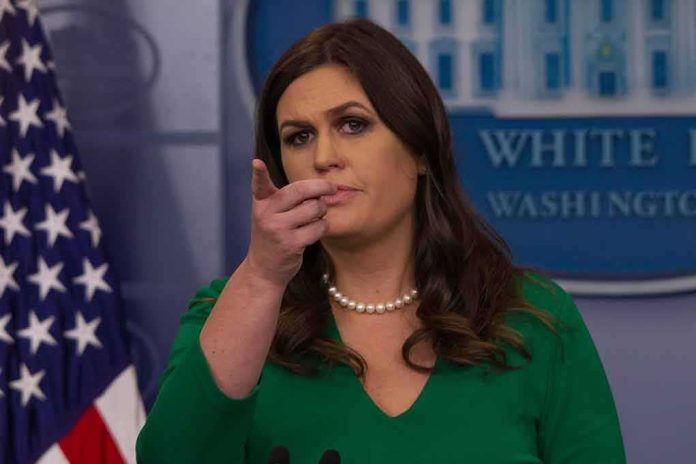
A former top Trump aide just asked a judge to step between her and a sitting House Republican, and this time the battle is not about politics—but about who controls the story of alleged abuse.
Story Snapshot
- Former White House press secretary Stephanie Grisham filed a temporary restraining order against Representative Max Miller.
- The move follows years of bitter defamation litigation and a confidential settlement over Grisham’s abuse claims.
- Courts previously refused to stop Grisham from repeating her allegations, signaling strong protection for speech.
- The new filing drops into an already crowded docket of restraining orders and accusations around Miller.
How a White House Romance Turned into a Courtroom Fight
Stephanie Grisham did not start as a legal adversary. She started as a fellow aide to President Trump and later served as White House press secretary. During that period, she dated Max Miller, a rising Trump staffer who would go on to win a seat in Congress. Years later, Grisham publicly said that relationship “turned abusive,” describing physical aggression and emotional harm by a fellow White House staffer later identified as Miller.
Miller denied the accusations and answered not with silence but with a defamation lawsuit in Cuyahoga County, Ohio. He claimed Grisham lied and damaged his reputation as he ran for Congress. He did more than sue for money. He asked a judge for a temporary restraining order to stop her from repeating the abuse claims in interviews or articles. The court turned him down. The judge refused to gag Grisham before any trial verdict, citing strong limits on prior restraints under Ohio law.
Why Grisham Is Back in Court Now
The first case did not end with a jury ruling on who told the truth. It ended in 2023 with a confidential settlement and a dismissal “with prejudice,” which closed the lawsuit permanently. Reporting on that settlement says both sides agreed not to make disparaging comments about each other, a common term when powerful figures want the fight off the front page. That quiet deal might have kept the harshest evidence sealed away from public view.
Grisham now argues that Miller broke that peace. Her July 2026 lawsuit claims Miller made public remarks about her during a separate battle with his ex-wife, Emily Moreno, and that those remarks violated the non-disparagement terms of their deal. She says Miller did this at least three times. That dispute over the settlement sets the stage for her next, sharper move: asking a court for a temporary restraining order to keep him from targeted contact and further harmful statements.
The New Restraining Order in a Pattern of Allegations
Grisham’s filing arrives as Miller faces more than one accuser and more than one restraining order. Moreno, his ex-wife, has alleged that Miller scalded, hit, and threatened her and their young child, accusations he firmly denies. Her lawyer recently asked a judge for a restraining order, claiming Miller grabbed him and another attorney’s bag during a tense courthouse encounter. Another court filing notes that, so far, Miller himself is the only person who has actually been granted a restraining order in this tangle of claims.
BREAKING: MAGA Rep. Max Miller just got SERVED with a new lawsuit and restraining order by his ex-girlfriend Stephanie Grisham as well as one from his ex-wife’s lawyer.
Congressman Max Miller's pattern of alleged violence and intimidation just keeps growing pic.twitter.com/7c3B6HXkFH
— The USA Startup (@theusastartup) August 4, 2026
Media coverage now describes a “long-running dispute” pattern around Miller, where intimate partner claims turn into defamation suits, injunction requests, and settlement fights. Grisham’s story sits inside that pattern as one of two former partners accusing him of abuse, the other being Moreno. From a common-sense conservative view, this is a problem that goes beyond gossip. Families and staff who live around public power need safety and predictability, not chaos and legal warfare.
Free Speech, Reputation, and Conservative Values
Court records from the earlier Miller suit show why judges hesitate to silence abuse allegations before trial. A key Ohio decision, cited by legal analysts, explains that a permanent injunction against defamation can be allowed only after a full trial clearly finds statements to be libelous. The judge in Miller’s case followed that rule by denying his request to block Grisham’s speech up front. That approach reflects a core American value: government does not muzzle speech lightly, especially on alleged misconduct by people in power.
At the same time, conservatives care deeply about false accusations and reputational harm. Defamation law exists to protect people from lies that wreck careers. Miller’s decision to sue Grisham and later to settle suggests he balanced risk and reward. A settlement avoids the danger of a jury siding with Grisham, but it also avoids a clear vindication. That choice left the public without a firm answer to who was right. Now, with Grisham alleging he broke the settlement, Miller faces a new test of judgment and self-control.
Why This Story Matters Beyond Washington Drama
Many readers over forty have seen this pattern before: private pain turned into public theater, lawyers on TV, and little clarity at the end. Yet something important sits under the noise. Allegations of abuse against high-ranking figures send a signal to every ordinary woman deciding whether it is worth speaking up. When a former White House press secretary has to seek a restraining order against a congressman she once loved, the message is clear. Status does not guarantee safety.
This case also spotlights the hard line between law and politics. A judge will not decide who to vote for. A judge will decide whether one party crossed legal boundaries of contact, threats, or defamation. For citizens who value order, family stability, and responsibility, the key question is simple. Do our leaders show the self-control and respect they demand from the rest of us? The answer in Miller’s world now depends on what the next Ohio judge says—and what further evidence finally comes out.
Sources:
mediaite.com, people.com, gibsondunn.com, chandralaw.com, ndtv.com, legalaiinsights.com, facebook.com, ohiocapitaljournal.com, cleveland.com, cpdocket.cp.cuyahogacounty.gov