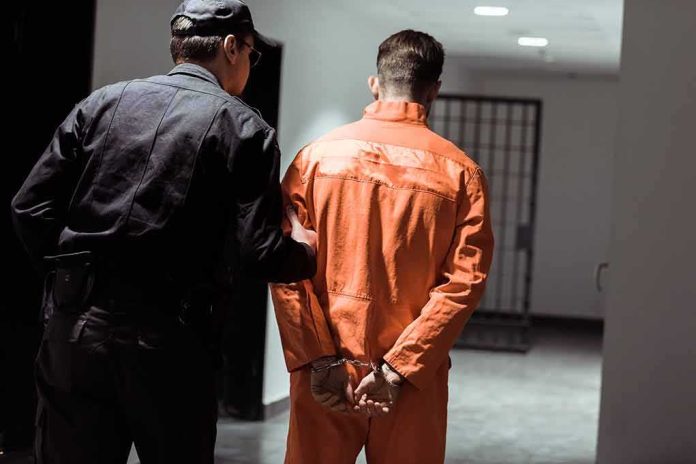
A 66-year-old rabbi was beaten on a Brooklyn sidewalk in a 20-second attack that police say followed another assault minutes earlier.
Story Snapshot
- Police arrested Eric Avrutov, 31, after two reported assaults in Kensington/Borough Park.
- Video showed the rabbi being struck; he was hospitalized in stable condition.
- Police said the case was not being treated as a hate crime at this time.
- Reports cited five prior arrests for the suspect, including one similar case days earlier.
What Police Say Happened On Dahill Road
New York City police identified Eric Avrutov, 31, as the man who allegedly cornered and struck a 66-year-old rabbi on Dahill Road near Cortelyou Road around 9:20 p.m. in the Kensington and Borough Park area. Officers charged him with assault, criminal obstruction of breathing, and harassment after the arrest, according to local reporting. The attack lasted about 20 seconds and was captured on video released by a neighborhood safety group, which shows the suspect hitting the rabbi and then fleeing.
Emergency crews took the rabbi to Maimonides Medical Center. Hospital staff listed him in stable condition after treatment, according to multiple reports. Police said they were not treating the case as a hate crime at this time. That statement leaves room for changes if new facts surface, but it sets the current posture for the investigation and charges now filed in the case.
A Second Assault Minutes Earlier, Officials Say
Police linked the rabbi’s assault to another incident minutes earlier at a nearby gas station. In that case, a 60-year-old man who was pumping gas was punched without warning, according to the same reporting. Police treated that encounter as a separate assault and harassment complaint tied to the same suspect. The close timing and location suggest a brief spree that began at the pump and ended on the sidewalk.
Local reporting also said Avrutov had five prior arrests and that one was a similar incident two days earlier. Those claims help explain the speed with which officers connected the two assaults on the same night, but the stories did not include docket numbers or case outcomes for those earlier arrests.
Why The Hate Crime Label Matters In Brooklyn
New York law requires proof that a person targeted a victim in whole or in part because of a protected trait for a hate crime charge. That includes targeting people for religion or religious practice. Police and prosecutors must match evidence, like words, symbols, or patterns, to that standard. Without that showing, a case stays a regular assault, even when the victim is a member of a group that faces frequent attacks.
Eric Avrutov, 31, allegedly cornered the 66-year-old religious leader without warning and dealt multiple blows on Dahill Road near Cortelyou Road in Kensington around 9:20 p.m.
He was charged with assault, criminal obstruction of breathing and harassment.
The act is not being… https://t.co/nlkJNvZ8zu
— Crime In NYC (@Crime_In_NYC) September 25, 2026
Brooklyn has seen a rise in antisemitic assaults, with reports showing 50 such attacks last year, a 56 percent jump from the year before. Many victims were Orthodox Jews. That backdrop explains why many residents watch cases like this so closely and why the first classification can stir strong reactions across the city.
What This Means For Public Safety And Policy
Neighbors in Kensington and Borough Park want clear streets, quick arrests, and judges who keep repeat offenders from cycling back to the block. Faith groups want fast answers on motive and fair use of the hate crime label. Police want evidence that fits the law so charges stick in court. This case shows how those goals can pull in different directions when video is clear, but motive is still being sorted.
People across the political spectrum see a system that often reacts after harm is done. Conservatives point to repeat arrests and demand tougher follow-through. Liberals point to mental health gaps and want better intervention upstream. Both sides agree that random street violence erodes trust and freedom of movement. A city that cannot protect a senior walking near home is a city that feels off-mission to many residents, no matter their party.
What To Watch Next
Prosecutors will decide whether to add or upgrade charges after reviewing full evidence, including any new witness accounts or video angles. Investigators may also seek emergency-room records that describe injuries from the reported blows. If new facts suggest bias intent, police could refer the case for hate crime review. Court filings will also clarify the exact degrees of the listed offenses and the official timeline for both reported assaults.
For now, the record shows two quick street attacks, a fast arrest, and a rabbi recovering in stable condition. The neighborhood will expect a clear court path and a public explanation that fits what many watched on their phones. In a city where people feel government too often fumbles basic duties, steady policing, careful charging, and transparent updates are the baseline for rebuilding trust.
Sources:
nypost.com, us.headtopics.com, israelnationalnews.com